 How-to
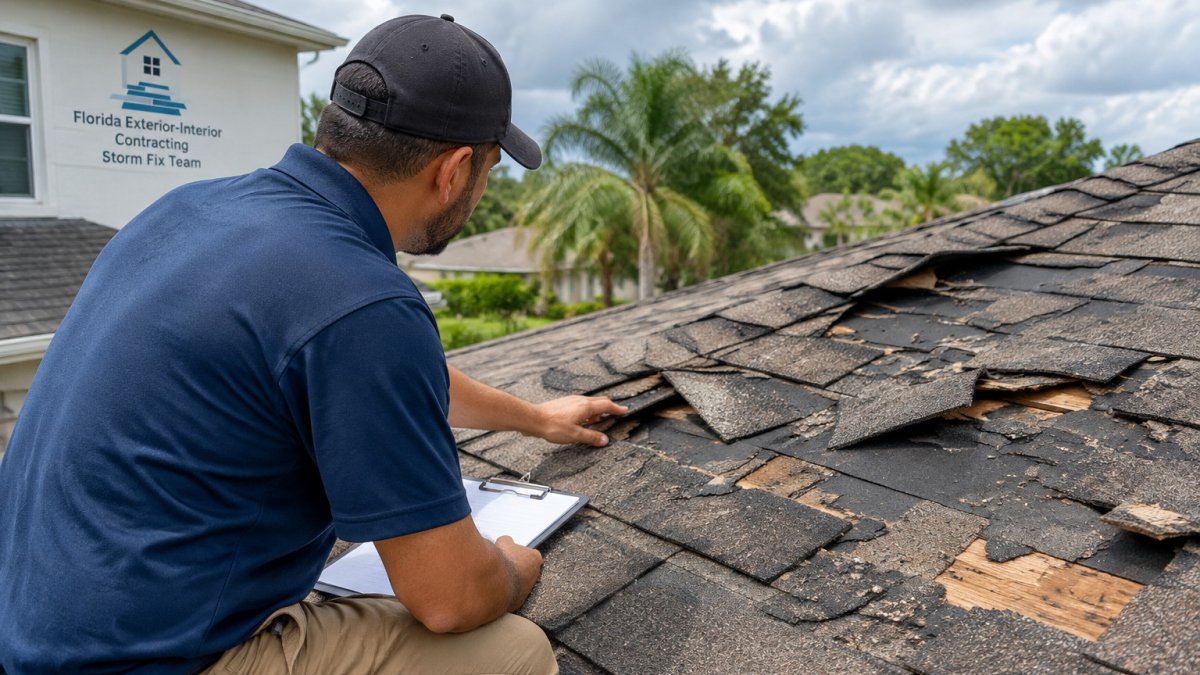
7 Warning Signs of Storm Roof Damage to Check Now
Last Updated: November 22, 2026
Quick Summary
The signs of storm roof damage you can spot from the ground include missing, lifted, curled, or cracked shingles, granule loss, dents and impact marks, gutter and fascia damage, and interior water stains. Check each slope from your yard with binoculars and stay off the roof.
- Wait until the storm has passed and the roof is dry before starting any inspection.
- Work clockwise around the house and scan each slope in sections so no side is missed.
- If you can slide a finger under a shingle tab, the seal is likely broken.
- Dented vents and flashing confirm hail reached the roof and shingles took hits too.
- Call a professional right away for active leaks, sagging, or daylight in the attic.
Table of Contents
- 7 Signs of Storm Roof Damage You Can Spot From the Ground
- How to Safely Inspect Your Roof After a Storm
- Roof Damage From Wind: Lifted Shingles, Broken Seals, and Missing Pieces
- Hail Damage Shingles: What Impact Marks and Bruising Look Like
- Hail, Wind, or Ordinary Wear: Telling Storm Damage Apart
- When to Repair, Replace, or Call a Professional Right Away
- Documenting Damage for a Storm Damage Roof Insurance Claim
- What Roof Damage Repair Cost Depends On
- Frequently Asked Questions
7 Signs of Storm Roof Damage You Can Spot From the Ground
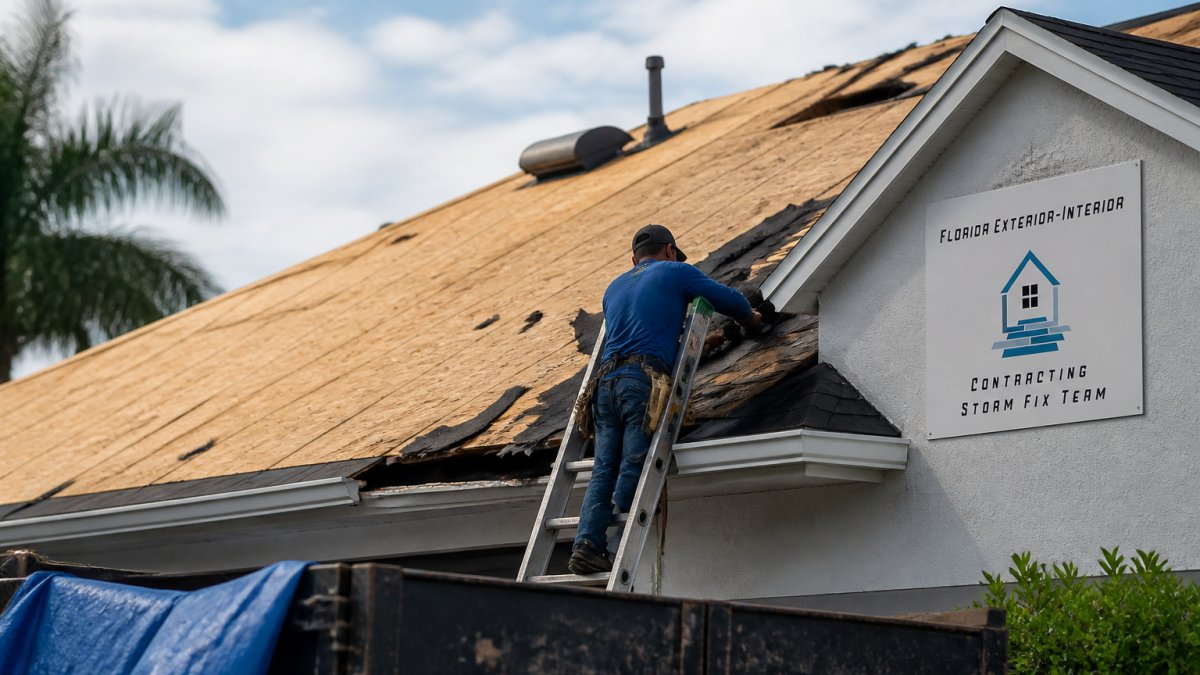
The fastest way to find signs of storm roof damage is to look up from your own yard. You do not need to climb anything. A pair of binoculars and a careful look from the yard can catch many problems before a leak reaches your ceiling.
Here is what to look for:
- Missing shingles. Bald patches after high winds are the clearest sign.
- Lifted or curled shingles. Edges that stick up or wave instead of lying flat.
- Cracked shingles. Visible splits, often along the tabs.
- Granule loss. Dark, bare spots on shingles, or grit piling up at downspouts.
- Dents and impact marks. Small round bruises on shingles, vents, or flashing.
- Gutter and fascia damage. Bent gutters, loose downspouts, or pulled fascia boards.
- Interior clues. Water stains on ceilings or walls, which mean water intrusion has already started.
Storm damage rarely announces itself. A roof can look fine from the street and still be compromised at the seals. That is why a careful ground-level check beats a quick glance every time.
How to Safely Inspect Your Roof After a Storm
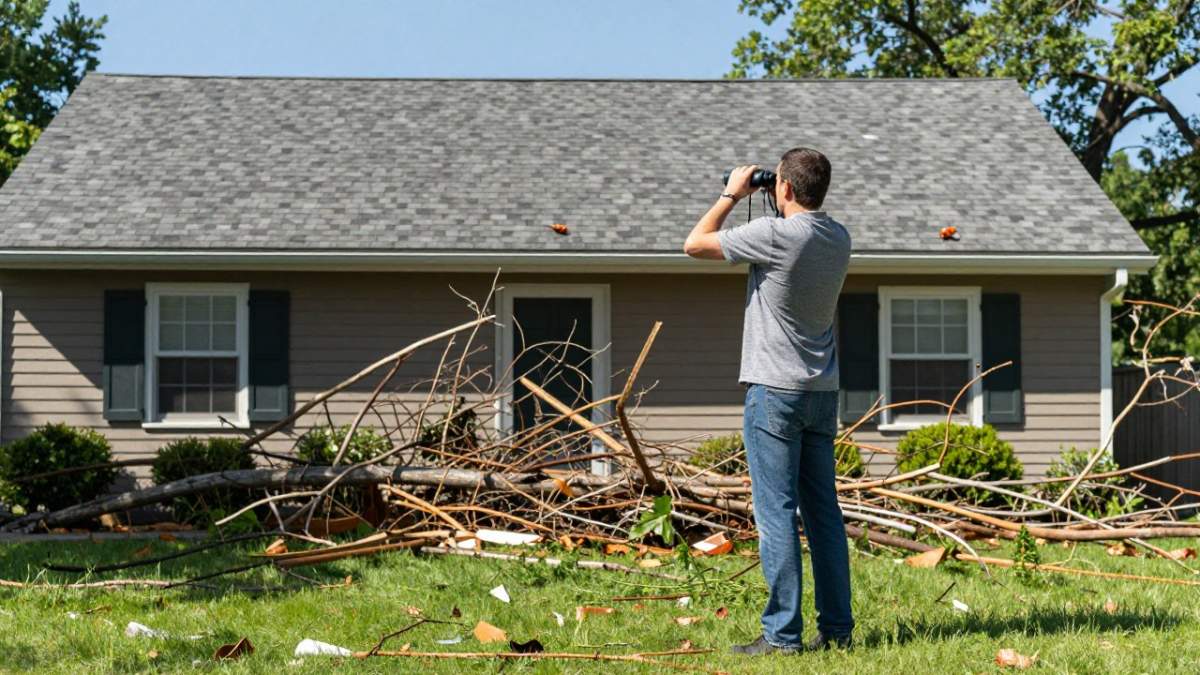
Safety comes first, and it is not close. Many storm-related injuries happen during self-inspections, not during the storm itself. Stay on the ground, use binoculars, and let a professional handle the walking.
Before You Start: Set Up a Safe, Useful Inspection
- Wait until the storm has fully passed and the roof is dry. Wet shingles and wet ladders are the two most common causes of falls.
- Wear closed-toe shoes and work gloves, and keep a phone in your pocket.
- Bring binoculars, a strong flashlight, a notepad, and a camera or phone for photos.
- Tell someone you are walking the exterior, and keep children and pets inside.
Watch out: never walk a roof that is wet, steep, mossy, or more than one story without fall protection. If you cannot see a slope safely from the ground, that slope is a job for a professional.
Ground-Level Checks, Step by Step
Start at one corner of the house and work clockwise so you do not miss a side. At each stop, look up and then look down.
- Look up at the roof edge. Check the rake and eave lines for missing, lifted, or curled shingles. Edges catch wind first.
- Scan each slope in sections. Divide the roof into quadrants in your mind and check one at a time instead of staring at the whole roof.
- Check the ridge and valleys. These are where wind and water concentrate. Look for exposed nails, torn shingles, or displaced ridge caps.
- Inspect penetrations. Vents, chimney flashing, skylights, and satellite mounts are common leak points. Look for lifted metal, cracked sealant, or dents.
Attic and Interior Checks
Go inside with a flashlight and check the attic if it is safely accessible from a pull-down stair or hatch.
- Look for daylight through the roof deck. Any pinhole of light is an opening.
- Check rafters and the underside of the deck for dark water stains, streaks, or active drips.
- Feel insulation for dampness, especially near chimneys, vents, and exterior walls.
- Look for crushed or displaced insulation, which can signal water weight or wind-driven intrusion.
Then check the living space. Water stains on ceilings and walls, bubbling paint, peeling tape at drywall seams, and sticking doors or windows can all be downstream signs of roof water intrusion.
A common mistake is skipping the attic because the ceilings look fine. Water often travels along the deck before it ever shows up as a ceiling stain.
When to Stop and Call a Professional
Stop your inspection and call a roofing professional if you see any of the following:
- Sagging roof lines or a spongy feel underfoot in the attic.
- Daylight through the roof deck or active drips.
- Exposed decking, underlayment, or fasteners.
- Damage across more than one slope or a large area of missing shingles.
Roof Damage From Wind: Lifted Shingles, Broken Seals, and Missing Pieces
Wind damage is sneaky. High winds do not always tear shingles off. Often they break the seal that holds each shingle tab down, leaving the roof vulnerable to the next driving rain.
What to check after a windy storm:
- Lifted shingles that no longer sit flat.
- Broken shingle seals along the edges and ridge.
- Missing pieces at corners, ridges, and roof edges where wind grabs hardest.
- Loose flashing around vents and chimneys.
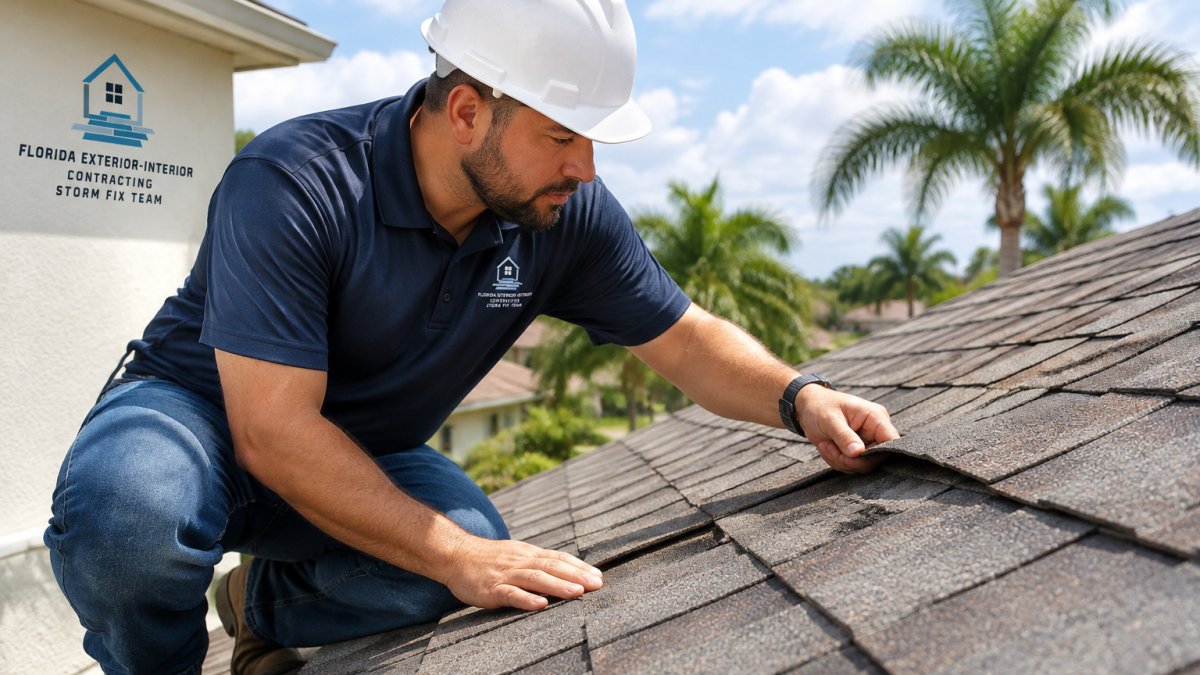
If you can slide a finger under a shingle tab, the seal is likely broken. That is a repair item now and a leak later.
Hail Damage Shingles: What Impact Marks and Bruising Look Like
Hail damage shingles look different from wind damage. Instead of missing pieces, you get impact marks. Hail bruising shows as soft, dark spots where the shingle's surface has been knocked down but not torn.
From the ground, look for:
- Round dents on metal vents, flashing, and gutters.
- Dark spots scattered in a pattern, not in one random area.
- Granule loss around the impact points.
Hail impact is easiest to confirm on soft metals. If the vents and flashing are dented, the shingles above them took hits too. A roofing contractor can check the shingle mat for bruising that the eye cannot see from below.
Hail, Wind, or Ordinary Wear: Telling Storm Damage Apart
Telling storm damage from ordinary wear is the question that decides most claims. The difference usually comes down to pattern, timing, and what the damage looks like up close. Use the guide below to interpret what you found rather than just check it off a list.
| Clue | Storm Damage | Ordinary Wear |
|---|---|---|
| Pattern | Clustered on one slope or side | Even across the whole roof |
| Shingle edges | Lifted, cracked, or missing | Curled and worn with age |
| Granules | Fresh piles after a storm | Gradual loss over years |
| Metal parts | Dents and impact marks | Rust and slow corrosion |
| Timing | Appeared after a known storm | Built up slowly |
Reading the Symptoms Like an Inspector
- Missing shingles in a patch. Wind grabbed and tore them. Look at the direction of the tear and which slope lost material; that is usually the windward side.
- Lifted or wavy edges with intact shingles. The seal broke but the shingle stayed. This is wind damage even though nothing is missing, and it is easy to miss from the ground.
- Random round bruises on shingles. Hail. Bruises feel soft when pressed and often show a dark spot with granule loss around it.
- Dents on soft metals. Hail. Check vents, flashing, gutter aprons, and downspouts. If the metal is dented, the shingles above took hits too.
It Depends on the Roofing Material
Shingle symptoms are not universal. Interpret damage by what is on the roof.
- Asphalt shingles: look for granule loss, bruised mats, broken seals, and missing tabs.
- Metal roofing: look for dented panels, loosened fasteners, bent seams, and paint scuffs from hail. Metal can hide leaks at fasteners long after the dent appears.
- Tile and slate: look for cracked, chipped, or displaced pieces. Hairline cracks are easy to miss from the ground and often leak slowly.
- Flat and low-slope roofing: look for punctures, blisters, seam separation, and ponding water. Hail marks show as circular dents in membrane.
Age, Timing, and the Paper Trail
Age matters too. An older roof shows wear on every slope. Storm damage tends to hit the side facing the wind or hail. If the damage is isolated and new, storm is the likely cause. If it is everywhere and gradual, you are looking at roof age, not a storm.
Keep a simple timeline: the date of the storm, the date you noticed the damage, and photos of both.
When to Repair, Replace, or Call a Professional Right Away
Call a professional right away for active leaks, sagging, or daylight in the attic. Those are urgent.
Here is how to think about it:
- Repair now: a few missing shingles, one damaged slope, or dented flashing.
- Replace: widespread granule loss, damage across many slopes, or a roof near the end of its life.
- Call immediately: water intrusion, ceiling stains spreading, or storm debris that punctured the deck.
Watch out: temporary repairs like tarps stop more water damage but do not fix the cause. Left too long, a small repair becomes a full replacement.
If you are weighing repair against replacement, you can get your instant quote today or read answers to common roofing questions before you decide.
Documenting Damage for a Storm Damage Roof Insurance Claim
A storm damage roof insurance claim lives or dies on documentation. Take photos before anyone touches the roof. Capture wide shots of each slope, close-ups of damage, and any interior stains with a date reference.
Build a simple file:
- Photos of the roof from the ground, one per slope
- Close-ups of missing, lifted, or cracked shingles
- Photos of dented vents, flashing, and gutters
- Interior ceiling and attic photos
Most claim problems start with thin documentation, not bad luck. Knowing why homeowners insurance denies roof claims helps you avoid the common mistakes before you file.
What Roof Damage Repair Cost Depends On
Roof damage repair cost depends on the size of the damaged area, the roofing materials involved, roof pitch and height, and whether water damage reached the deck or interior.
The biggest cost drivers:
- Scope: one slope versus several.
- Material: asphalt shingles versus metal roofing or tile.
- Access: steep pitch and height add labor.
- Hidden damage: soft decking or wet insulation.
For more maintenance tips and roofing insights, explore our roofing services and blog.
Storm season does not wait, and neither should your roof inspection. Florida Exterior-Interior Contracting is a veteran-owned, bilingual business with over a decade of hands-on experience.
Frequently Asked Questions
What are the first signs that my roof has been damaged by a storm?
Start with what you can see without climbing: shingle granules collecting in gutters and downspouts, missing or lifted shingles, dents on metal roofing or vents, and water stains on ceilings or attic walls. Inside the attic, look for daylight through the roof deck and damp insulation. Any one of these signs of storm roof damage is worth a professional inspection, because surface symptoms often point to deeper problems with flashing or shingle seals.
Does homeowners insurance cover roof damage from a storm?
Most standard homeowners policies cover sudden storm damage, such as wind tearing off shingles or hail bruising them, while excluding damage from age or poor maintenance. The key is documenting the damage quickly with photos and a written record, then filing a storm damage roof insurance claim promptly. Coverage and deadlines vary by policy, so review your declarations page or ask your adjuster before scheduling repairs.
How can I tell if wind has damaged my roof?
Wind damage often leaves shingles lifted at the edges, creased, or missing in patches, especially along ridges and corners where uplift is strongest. Check for broken shingle seals that let the next rain drive underneath, and look for granules washed into gutters. Roof damage from wind can also bend flashing around vents and loosen gutters or fascia, so inspect those edges too. If shingles lift easily when you press them, the seal is likely broken.
Should I inspect my roof myself after a storm?
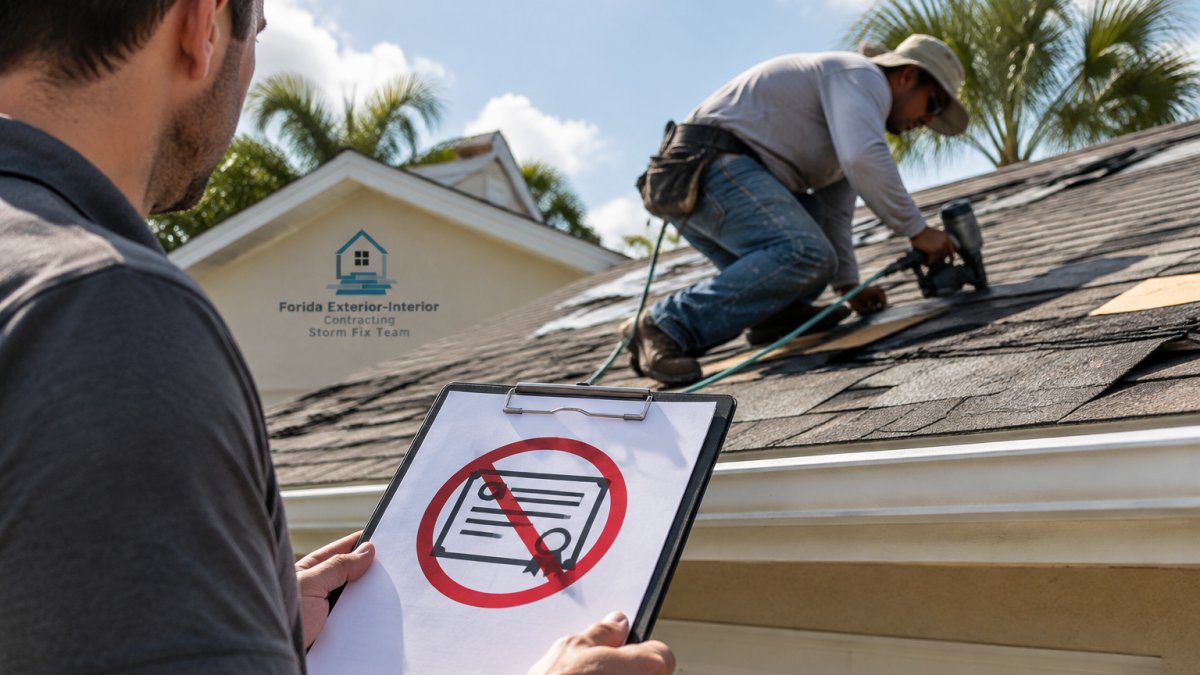
You can safely check from the ground with binoculars and inspect the attic from inside, but avoid walking on a storm-damaged roof. Lifted shingles, wet surfaces, and weakened decking make falls likely, and walking on hail-bruised shingles can void a claim by making damage look like wear. A certified roofing contractor can complete a full inspection safely and document what they find for your records.