 How-to
How to Get Florida Roof Replacement Assistance
Last Updated: November 1, 2026
Quick Summary
Yes, there is a Florida roof replacement program, but it is not a single statewide fund that pays for every new roof. The state runs the My Safe Florida Home program, which offers matching grants for wind-hardening upgrades, including roof work. Separately, local housing programs may help income-qualified owners with critical repairs.
- My Safe Florida Home is a matching grant, not a full payout, so the homeowner pays the remainder.
- Grant-funded work is tied to the wind mitigation inspection report, so get the inspection first.
- PACE financing is repaid through a property tax assessment and is tied to the property, not the person.
- Do not sign a contract or schedule an install until written grant approval is in hand.
- If a program is closed or the roof is urgent, check insurance for storm damage first.
Table of Contents
- Is There a Florida Roof Replacement Program?
- My Safe Florida Home Roof Grant: What It Covers and Who Qualifies
- Florida Roof Replacement Assistance Compared: Grant, Loan, or Financing
- Florida PACE Home Repairs for Roofs and Storm Hardening
- Eligibility Requirements and Edge Cases Homeowners Miss
- How to Apply: Step-by-Step Checklist and Timeline
- When Your Roof Is Urgent or a Program Is Closed
- Get Started with a Roof Assessment and Financing Options
- Frequently Asked Questions
Is There a Florida Roof Replacement Program?
Yes, there is a Florida roof replacement program, but it is not a single statewide fund that pays for every new roof. The state runs the My Safe Florida Home program, which offers matching grants for wind-hardening upgrades, including roof work (Frequently Asked Questions). Separately, local housing programs may help income-qualified owners with critical repairs.
At Florida Exterior-Interior Contracting, we talk with Orlando-area homeowners every week who assume a state agency will simply buy them a roof. That is not how it works. The money is real, but it is limited, competitive, and tied to strict rules.
Here is the short version:
- My Safe Florida Home gives matching grants for storm hardening, and roof replacement can qualify.
- Local housing programs help low-income owners with critical repairs.
- PACE and financing cover the rest when a grant is not an option.
Below, we break down each path, who qualifies, and how to apply without wasting months.
My Safe Florida Home Roof Grant: What It Covers and Who Qualifies
The My Safe Florida Home program is the state's flagship wind-hardening initiative, administered by the Florida Department of Financial Services. It is a matching grant, not a full payout: the state reimburses a portion of the cost of qualifying wind-mitigation improvements, and the homeowner pays the remainder. Roof replacement and roof-to-wall connection upgrades are the most common funded items, but the grant only covers work recommended in a wind mitigation inspection and performed by a licensed contractor.
How the match works
Grant matching levels depend on household income and property value, and the state's contribution is capped per home. Confirm the current match terms on the official program site before planning a project.
Who qualifies
Eligibility is narrower than most homeowners assume. The core requirements are:
Eligibility depends on program rules that change over time. Check the official program site for current requirements on residence status, property type, build date, income and value limits, and contractor approval.
What the grant covers
Funded improvements are tied to the inspection findings. Work not recommended in the inspection report is generally not covered.
Funding status and how to check it
The program has run in funding cycles, and applications have paused when funds were exhausted. Before you plan around the grant, confirm the current status on the official program site. My Safe Florida Home program details and current status lists the current grant terms, inspection process, and whether applications are open. Treat any grant amount you see online as subject to change until you confirm it on the official page.
The inspection is the gate
The process generally starts with a wind mitigation inspection. That report lists the recommended upgrades, and grant-funded work is tied to the list. Get the inspection first, read the report carefully, and only then decide whether the grant path fits your roof and your budget.
Florida Roof Replacement Assistance Compared: Grant, Loan, or Financing
Florida roof replacement assistance comes in three main forms, and choosing the wrong one costs you money. A grant is money you do not repay. A loan is money you repay with interest. Financing is a payment plan through a lender or contractor.
Here is how the options stack up:
| Option | Repay? | Best For | Watch Out |
|---|---|---|---|
| State matching grant | No | Owners who pass inspection and income rules | Limited funding, partial match only |
| Local repair program | No | Low-income and senior owners | Tight income limits, waitlists |
| PACE assessment | Yes, via property tax | Owners with equity and no cash upfront | Tied to the property, not the person |
| Contractor financing | Yes, monthly | Owners who want to start now | Check rates and terms carefully |
A common mistake is waiting on a grant when a roof is failing. If the deck is soft or a storm just opened it up, a grant timeline may not fit your timeline.
Florida PACE Home Repairs for Roofs and Storm Hardening
PACE financing generally funds eligible improvements through an assessment on the property tax bill, repaid over time. Confirm current eligibility and terms with an approved PACE provider.
Who it fits:
- Owners with solid equity who want to avoid a large upfront bill
- Landlords and commercial property owners with multi-building needs
- Households that do not qualify for income-based grants
PACE is a debt tied to your property, and it can affect a future sale or refinance. Before signing, ask how the assessment is repaid and confirm the contractor is approved for PACE work. Consumer Financial Protection Bureau guidance on PACE loans explains the risks in plain terms.
Eligibility Requirements and Edge Cases Homeowners Miss
Eligibility requirements for these programs go beyond owning a home in Florida. Review each program's official rules before applying.
Check each program's fine print on property types, roof age and condition, insurance status, and ownership, since these details can affect eligibility.
For answers to the questions we hear most, our roofing questions answered page covers the common sticking points.
How to Apply: Step-by-Step Checklist and Timeline
Delays in these programs often come from missing documents and out-of-order steps. The sequence below outlines the general process from inspection to final payment. When you are ready to move forward, get your instant quote today.
Phase 1: Confirm eligibility before you spend time
- Confirm the home is your primary residence and you hold a homestead exemption
- Confirm the property type qualifies under the current program rules
- Check the household income and property value limits against the current program rules
- Confirm the home carries active homeowner's insurance
- Confirm the home meets the program's build-date requirements
Phase 2: Get the inspection
- Request the free wind mitigation inspection through the program
- Review the report and list every recommended upgrade
- Confirm a roof replacement or roof upgrade is actually on the list
The inspection report is the scope of your grant. Work not on the report is not funded.
Phase 3: Prepare documents and quotes
- Gather the insurance declarations page and policy number
- Collect proof of income if the program applies a cap
- Collect proof of homestead exemption
- Get quotes from licensed contractors who will work under program terms
- Compare quotes against the inspection scope, not against each other alone
Phase 4: Apply and wait for approval
- Submit the grant application with all documents attached
- Respond quickly to any request for additional information
- Wait for written approval before any work starts
This is often the longest wait point. Approval timelines vary with application volume and funding availability. Do not sign a contract or schedule an install until approval is in hand.
Phase 5: Complete the work and get paid
- Sign the contract with the approved contractor
- Schedule the install after approval
- Keep receipts, permits, and inspection records
- Complete the final inspection required by the program
- Submit the reimbursement paperwork and wait for the state's payment
Grants are often paid as reimbursement after the work is completed and inspected. You or your contractor may need to carry the cost until payment. Confirm with your contractor how the reimbursement timing is handled before you sign.
Realistic timeline
Timelines vary; document gaps and funding availability can extend the process considerably. Build the timeline into your decision: if the roof cannot wait, the grant path may not fit, and the alternatives below are the better route.
When Your Roof Is Urgent or a Program Is Closed
A closed program or a leaking roof changes the plan. Grant funding can run out. If your roof cannot wait, you need a backup path.
Start with your insurance. Storm damage may be covered, and a claim can move faster than a grant. Document the damage with photos before any repair. If a claim is denied, it helps to know why insurers deny roof claims so you can respond with evidence.
If no program fits, these options keep the project moving:
- Contractor financing with monthly payments
- A PACE assessment tied to the property
- A phased repair that buys time before a full replacement
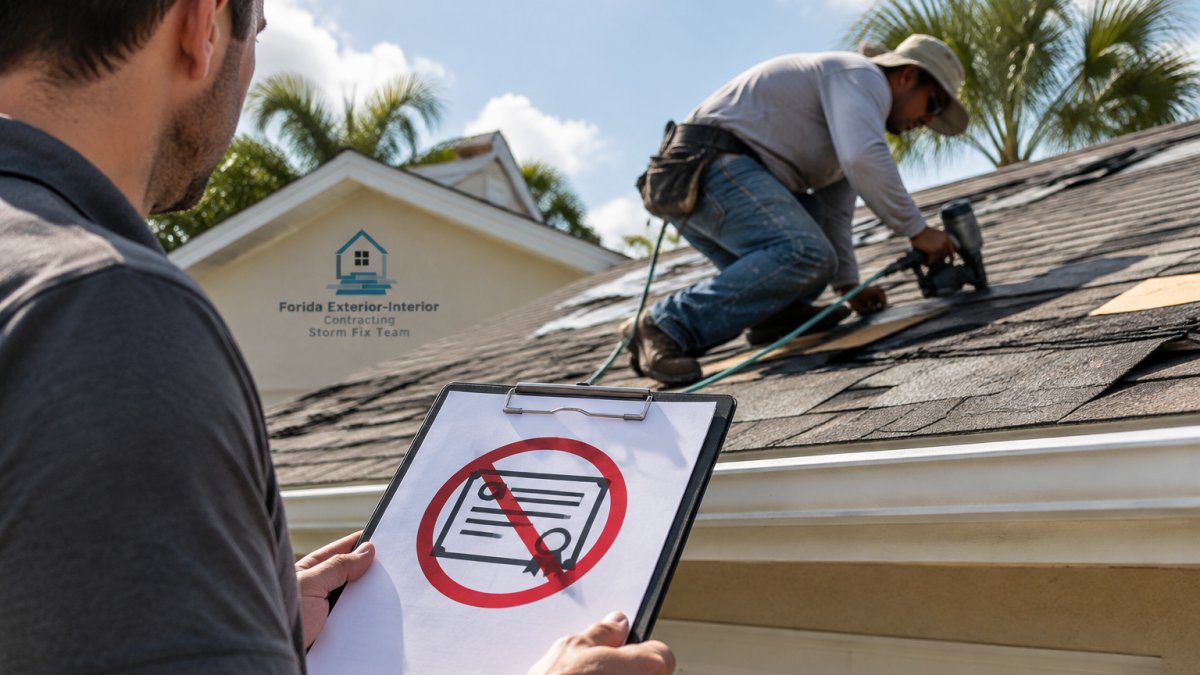
Watch out: work with a licensed contractor rather than an unlicensed crew when patching a failing roof. Poor roof patching can hide damage that grows more expensive.
A useful first step is an honest assessment, then choosing the funding that fits. Florida Exterior-Interior Contracting can help you review the options before you commit to anything.
Get Started with a Roof Assessment and Financing Options
The funding question gets easier once you know what your roof actually needs. A clear assessment tells you whether you need a full replacement, a targeted repair, or just storm upgrades.
Here is how we help. As a veteran-owned, bilingual team with over a decade of hands-on experience, we inspect your roof and explain the findings in plain language, in English or Spanish. We build to code. Financing may be available for those who qualify.
You can see our completed re-roofing work to judge the craftsmanship before you call.
Do not let a grant deadline or a storm-damaged roof make the decision for you. Get a straight answer on what your roof needs and what it will take to fund it. Get started with Florida Exterior-Interior Contracting and protect your home with a roof built to last.
Frequently Asked Questions
Does My Safe Florida Home pay for a full roof replacement?
No. The My Safe Florida Home roof grant is a matching grant, not a full funding source. It reimburses a portion of the actual cost of qualifying roof hardening work, and the homeowner pays the rest out of pocket. Awards are generally limited, so a full replacement will usually require homeowner contribution. Get a written inspection report first so you know which improvements qualify before you sign a contractor agreement.
Who is eligible for Florida roof replacement assistance?
Eligibility varies by program. Eligibility varies by program and changes over time. Check the official program rules on residence status, property type, insurance and permit requirements, and income limits before applying. Confirm current rules with the administering agency before applying.
Can I get a free roof in Florida?
A completely free roof is rare. Most Florida roof replacement assistance comes as a matching grant, a low-interest loan, or property-assessed financing, all of which require some homeowner contribution or repayment. Some local repair programs may cover roof work for qualifying homeowners, though funding is often limited. Be skeptical of any offer promising a no-cost roof with no inspection and no application.
What other programs can help pay for urgent home repairs in Florida?
Beyond My Safe Florida Home, some local housing and repair programs may help eligible homeowners with critical repairs. PACE financing generally uses a property assessment repaid through taxes; confirm current eligibility with an approved provider. Some local governments and nonprofits also run repair programs. Compare the repayment terms and restrictions side by side before choosing.