 How-to
How to Tell If Your Roof Needs Replacement: 8 Warning Signs
Last Updated: November 19, 2026
Quick Summary
You can tell your roof needs replacement by spotting warning signs like missing, cracked, or curled shingles, granule loss, ceiling water stains, damaged flashing, moss, attic moisture, or a sagging roof deck. Any one of these signs means it is time for a professional assessment to confirm whether roof replacement is needed.
- Missing or damaged shingles are the clearest early signal that a roof covering is failing.
- A heavy buildup of dark grit in gutters is a quiet sign of granule loss.
- A sagging roof deck is a structural problem that needs urgent attention.
- You can safely check your own roof from the ground and inside the attic, never by climbing on it.
- Replace a non-leaking roof when shingles curl, granules are lost, or it has reached its expected lifespan.
Table of Contents
- 8 Warning Signs You Need a New Roof
- Missing, Cracked, or Curled Shingles
- Granule Loss and Bald Spots
- Leaks, Water Stains, and Ceiling Discoloration
- Damaged Flashing, Moss, and Attic Moisture
- Sagging Roof Deck and Structural Problems
- How Do I Know How Old My Roof Is?
- When to Replace Roof Shingles vs. Repair Them
- Should I Replace My Roof If It's Not Leaking?
- Safe Homeowner Inspection Steps and Checklist
- What a Professional Roof Inspection Should Include
- Schedule Your Roof Assessment
- Frequently Asked Questions
8 Warning Signs You Need a New Roof
Knowing when to schedule a roof replacement starts with spotting damage early, before a small problem becomes a flooded ceiling. Across many roofs, the same handful of clues show up again and again.
Most homeowners wait too long. A single missing shingle today can mean a soaked attic in three months. The good news: roofs almost always warn you first.
Missing, Cracked, or Curled Shingles
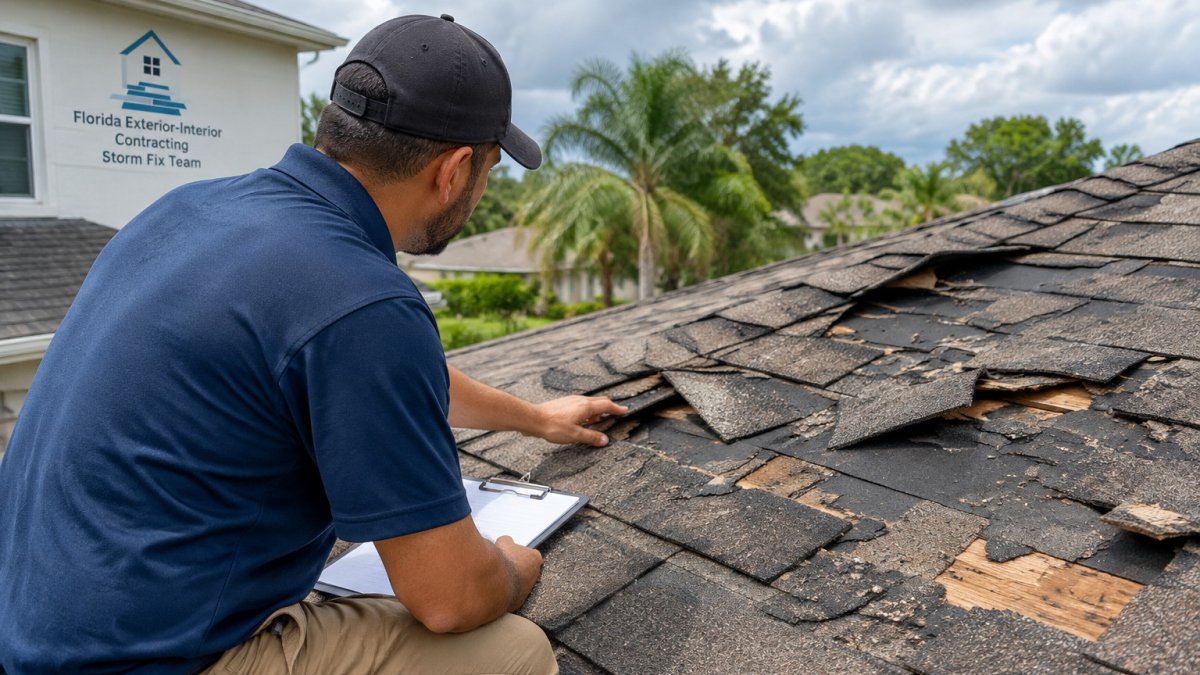
Missing or damaged shingles are the clearest early signal that a roof covering is failing. When shingle tabs crack, curl, or disappear, the layer beneath is exposed to sun and rain.
Look for:
- Missing shingles after wind or storms
- Curled or cupped shingles that lift at the edges
- Cracked shingles with visible splits
A common mistake is replacing a few shingles and calling it done. If shingles are curling across a wide area, the whole roof covering is aging, not just one spot.
Granule Loss and Bald Spots
Granule loss means the protective surface of asphalt shingles is wearing away, and bald spots are the visible result.
Check your gutters. A heavy buildup of dark grit after rain is a quiet sign of granule loss. On the roof itself, look for smooth, dark patches where the texture is gone.
Once bald spots spread, the shingle is near the end of its life. No coating fixes this.
Leaks, Water Stains, and Ceiling Discoloration
Water stains on ceilings or walls mean water is already getting past the roof. That is roof damage you can see from inside your home.
Watch for:
- Brown or yellow ceiling stains
- Wall discoloration or bubbling paint
- Peeling paint near the ceiling line
A leak rarely appears right below the actual hole. If you are seeing stains and wondering what your insurance will cover, our guide on why homeowners insurance denies roof claims explains the common reasons claims get turned down.
Damaged Flashing, Moss, and Attic Moisture
Damaged flashing, moss, and attic moisture point to water intrusion that often hides from view. Flashing is the metal that seals joints around chimneys, vents, and roof edges. When it rusts or pulls loose, water slips in.
Moss and algae are more than a look problem. Moss holds moisture against the shingles and speeds up rot. In the attic, check for:
- Damp or dark roof decking
- Mold or a musty smell
- Rot around rafters
Attic moisture damage is easy to miss. Bring a flashlight and look up.
Sagging Roof Deck and Structural Problems
A sagging roof deck is a structural problem that needs urgent attention. If the roofline dips or waves, the decking underneath may be soft or rotted.
Signs to look for:
- A sagging roof visible from the street
- Dips or valleys in the roofline
- Doors or windows that stick near the top floor
This is not a repair-and-wait situation. A soft deck means the roof can no longer carry its own weight safely. Call a professional right away.
How Do I Know How Old My Roof Is?
You can find your roof's age from the installation records, a home inspection report, or the original permit filed with your local building department. If none of those exist, a roofer can estimate age from the material and wear.
Age matters because every roof covering has a lifespan. A roof near the end of its expected years is a stronger candidate for roof replacement, even without major leaks.
Expected Roof Lifespan by Material
Roof lifespan depends on the material and the local conditions it faces. Here is how the common roof coverings compare:
| Roof Material | Typical Lifespan | Notes |
|---|---|---|
| Asphalt shingles | 15-25 years | Most common; shorter in intense sun |
| Architectural shingles | 20-30 years | Thicker, heavier than standard |
| Metal roofing | 40-70 years | Long-lived; resists wind and sun |
| Tile | 50+ years | Heavy; needs strong framing |
| Concrete | 40-50 years | Durable but heavy |
Heat, sun, and storms shorten these ranges. In a hot, storm-prone climate, expect the lower end.
Expected Roof Lifespan by Material
When to Replace Roof Shingles vs. Repair Them
The repair-or-replace decision is generally not one sign, but a combination of factors: how severe the damage is, how many separate areas are affected, how much service life the roof has left, and how many repairs it has already absorbed.
A Four-Factor Decision Framework
Work through these in order. The first two tell you what is wrong; the last two tell you whether fixing it is worth it.
1. Severity of the damage.
- Cosmetic or isolated: a few cracked shingles, a stained vent boot, a small flashing gap. These are repair candidates.
- Functional but contained: an active leak traced to one penetration, localized granule loss on one slope. Repair is still reasonable if the surrounding shingles are sound.
- Structural or widespread: soft decking, sagging, rot in rafters, shingles failing across multiple slopes. These point to replacement.
2. Number and spread of damaged areas.
- One cluster on one slope usually means a localized cause, a tree limb, a bad vent, a chimney leak.
- Damage on three or more slopes, or in unrelated spots, usually means the covering itself is aging uniformly. Patching each spot separately costs more over time than replacing once.
3. Remaining service life.
- If the roof is in the first half of its expected lifespan, repair protects your investment.
- If it is in the last quarter of its expected lifespan, a repair buys months, not years, and the next failure is already scheduled.
- A roof past its expected lifespan with any active leak is a replacement candidate regardless of how small the leak looks.
4. Repair history.
- One or two repairs over the roof's life is normal.
- Three or more repairs in the last few years, especially in different areas, is a pattern. Each patch is a signal that the next weak point is already forming somewhere else.
Putting the Factors Together
A practical way to combine them:
- Repair when severity is isolated, damage is confined to one area, the roof has more than half its lifespan left, and there is little repair history.
- Repair with a plan when the damage is contained but the roof is aging, fix the immediate problem, but budget for replacement within a few years rather than treating the patch as permanent.
- Replace when any two of these are true: damage spans multiple areas, the roof is in its final quarter of life, there is a history of repeat repairs, or there is any structural or decking damage.
Watch out: a contractor who quotes a full replacement without walking the attic, checking the decking, and asking about repair history is guessing. A contractor who patches the same slope every year without discussing replacement is also guessing.
The honest question is not "can this be patched?" but "will a patch actually last?" A patch over an aging roof buys months, not years. Seeing finished re-roofing results helps many homeowners picture what a full replacement looks like before deciding.
Should I Replace My Roof If It's Not Leaking?
You do not need an active leak to replace a roof. A roof can be failing long before water reaches your ceiling, and waiting for a leak usually means paying for interior damage too.
Replace a non-leaking roof when:
- Shingles are curling or losing granules across the surface
- The roof has reached the end of its expected lifespan
- Flashing or decking shows wear
Catching it early is cheaper than fixing water damage later. That is the whole point of a roof inspection.
Safe Homeowner Inspection Steps and Checklist
You can safely check your own roof from the ground and inside the attic; never climb onto the roof to inspect it yourself. A fall from height is not worth the risk.

Ground-Level and Attic Checks
Work through this checklist from the ground and the attic:
- Scan the roofline from the street with binoculars for missing, curled, or cracked shingles
- Look for sagging or dips along the ridge and edges
- Check gutters for granule grit and shingle pieces
If any box gets checked, it is time for a professional assessment.
What a Professional Roof Inspection Should Include
A professional roof inspection should cover the shingles, flashing, decking, attic, and drainage, and end with a written report you can keep. Anything less is a quick glance, not an inspection. The difference matters because the report is what supports a repair-or-replace decision and, when storm damage is involved, what supports an insurance claim.
What the Inspector Should Actually Do
Ask whether the inspection includes each of these, and expect a yes:
- Walk the full roof covering, not just view it from the ladder, checking shingle condition slope by slope.
- Check every flashing joint at chimneys, vents, skylights, and roof-to-wall intersections, including sealant condition.
- Enter the attic and inspect the decking for damp spots, staining, mold, rot, and daylight.
Evidence to Request in the Report
A report you can act on should contain more than a verdict. Ask for:
- Photos of every problem area, labeled by slope or location, so you can see what the inspector saw.
- The approximate square footage and pitch of the roof, since both drive replacement cost.
- A list of damaged areas separated into repair items and replacement items, so you can see what is urgent and what can wait.
Questions to Ask Before You Book
- Will the inspector walk the roof, or only view it from the ground?
- Will they go into the attic?
- Do I get photos and a written report, or just a verbal summary?
Watch out: a "free inspection" that ends with a same-day pressure to sign a replacement contract is a sales visit, not an inspection. An inspection can lead to a quote, and you should leave with documentation you can review.
Ask for the report in writing. It protects you and supports any insurance claim. If you have questions before booking, our roofing FAQ covers the ones homeowners ask most.
Schedule Your Roof Assessment
The signs above are your early warning system, but only a trained eye confirms what your roof actually needs.
Get your instant roof quote and find out exactly where your roof stands.
Your roof will not fix itself, and small warning signs turn into big bills fast. Let Florida Exterior-Interior Contracting give you a straight answer with owner oversight, bilingual communication, and certified workmanship from start to finish.
Frequently Asked Questions
What are five signs that my roof needs to be replaced?
Five reliable signs are missing, cracked, or curled shingles; granule loss and bald spots on asphalt shingles; water stains on ceilings or walls; damaged flashing around chimneys and vents; and sagging roof decking. Any one of these warrants a professional roof inspection. Two or more together usually point toward roof replacement rather than a spot repair.
Should a 20-year-old roof be replaced?
Not automatically. A 20-year-old asphalt shingle roof is near the end of its typical 20- to 25-year lifespan, so it deserves a professional assessment. If shingles are curled, granules are gone, or flashing is failing, replacement is likely. If the roof is intact and the attic is dry, a repair and maintenance plan may buy more time.
How can I tell if my roof needs replacing if it is not leaking?
Leaks are a late symptom. Look for curled or cupped shingles, granule buildup in gutters, rusted or loose flashing, moss growth, and daylight showing through the attic roof boards. These signs mean the roof covering is failing even before water reaches the ceiling. A professional roof inspection can confirm the roof condition before a leak starts.
How much does it cost to replace a roof on a 2,000-square-foot home?
Roof replacement pricing varies widely by material, pitch, decking condition, and local labor, so no single figure fits every home. Rather than quote a number, ask a licensed contractor for a written estimate that itemizes tear-off, underlayment, shingles, flashing, and permits. Florida Exterior-Interior Contracting offers financing for those who qualify. For current pricing or a quote, contact us directly.