 How-to
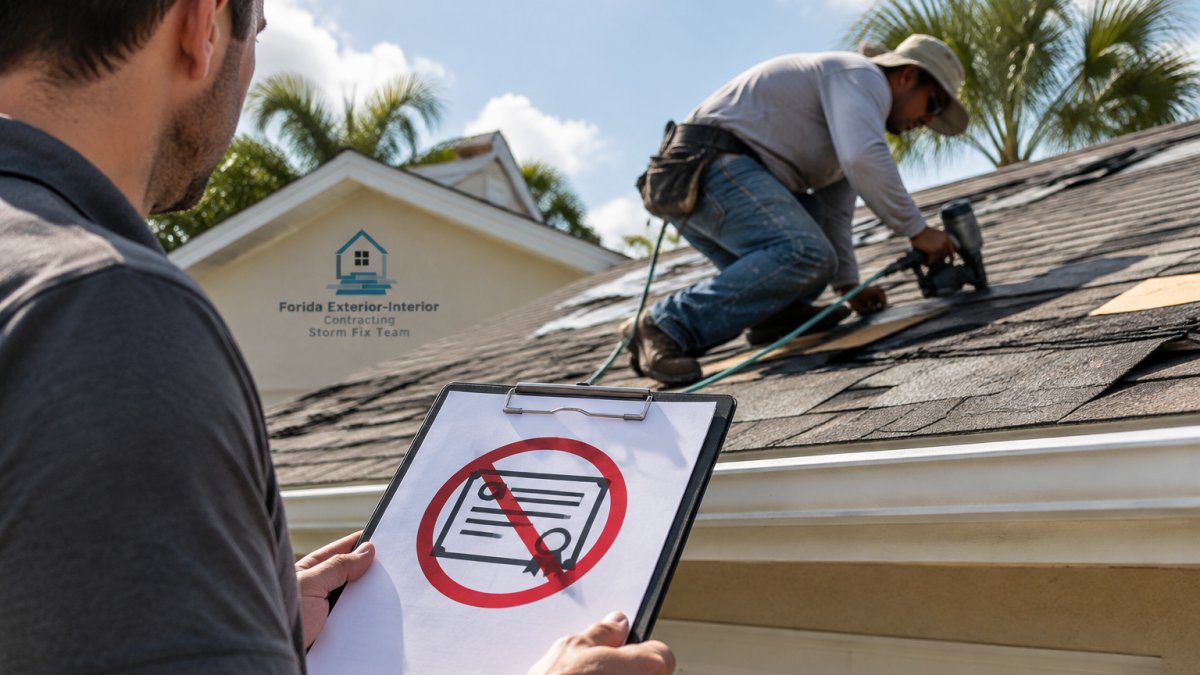
Risks of Hiring Unlicensed Florida Roofers
Last Updated: November 21, 2026
Quick Summary
Hiring unlicensed Florida roofers can void your manufacturer warranty, leave you liable for worker injuries, and cost you the entire value of the job in redo work. You also lose the complaint channel a state license provides, so recovery is limited or nonexistent.
- Unlicensed crews often skip building permits, which can trigger code violations and work stoppages.
- If an uninsured worker is hurt on your roof, your homeowners policy may become the target.
- A Florida roofing contractor license lookup through the DBPR takes about five minutes and confirms active status.
- Ask for a certificate of insurance and call the insurer to confirm the policy is active.
- If you already hired an unlicensed roofer, stop payments, document the work, and get an independent inspection.
Table of Contents
- Why an Unlicensed Roofer Is a Risk to Your Home and Wallet
- The Legal and Financial Risks of Hiring an Unlicensed Roofer
- Penalties for Unlicensed Contracting in Florida
- Unlicensed Contractor Liability in Florida: Who Pays When Something Goes Wrong
- How to Run a Florida Roofing Contractor License Lookup
- Florida Roofing Permit Requirements and Code Compliance
- What to Do If You Already Hired an Unlicensed Roofer
- Get Your Roof Inspected by a Licensed Contractor
- Frequently Asked Questions
Why an Unlicensed Roofer Is a Risk to Your Home and Wallet
Hiring unlicensed Florida roofers can void your manufacturer warranty, leave you liable for worker injuries, and cost you the entire value of the job in redo work. The risks of hiring unlicensed Florida roofers rarely show up on day one.
An unlicensed contractor is a person who performs roofing work without a valid state or local license. Florida treats this as a serious problem, not a paperwork slip.
The Legal and Financial Risks of Hiring an Unlicensed Roofer
The biggest financial risk is simple: when something goes wrong, you have almost no legal path to recover your money. A licensed contractor carries a state-issued license that gives you a formal channel for complaints. An unlicensed one does not.
Here is how the exposure stacks up:
- No warranty and no recourse. Manufacturers often require licensed installation to honor a warranty. Hire unlicensed, and that coverage can be voided.
- Insurance gaps and homeowner liability. If a worker falls off your roof, your homeowners policy may be the only thing on the hook.
- Permits pulled by you, not them. Unlicensed crews often skip building permits entirely, which can trigger code violations.
- Financial loss with no recovery. Deposits vanish, work stalls, and you pay twice to have it done right.
| Situation | Licensed Contractor | Unlicensed Contractor |
|---|---|---|
| Warranty protection | Usually honored | Often voided |
| Worker injury | Covered by their workers' comp | May fall on your policy |
| Permit filed | Yes, by the contractor | Often skipped |
| Complaint channel | State licensing board | Limited or none |
| Redo cost | Recourse available | You pay out of pocket |
No Warranty and No Recourse for Poor Workmanship
Poor workmanship is the most common complaint we hear about. A roof leak traced to substandard flashing or skipped underlayment can mean costly repairs just months after installation.
Manufacturer warranties typically hinge on proper, licensed installation. Check your manufacturer's warranty terms for the installation requirements that apply to your roof. A contract with an unlicensed roofer is also weak ground for a lawsuit, since the agreement itself may be unenforceable.
Insurance Gaps and Homeowner Liability
General liability insurance protects your property if the crew damages your home. Workers' compensation covers a worker who gets hurt on your roof. Unlicensed roofers frequently carry neither.
That gap lands on you. If a worker is injured on your property and has no coverage, your homeowners insurance can become the target. This is where homeowner liability turns a cheap quote into an expensive problem.
Penalties for Unlicensed Contracting in Florida
The penalties for unlicensed contracting in Florida include criminal charges, fines, and civil liability. Florida treats unlicensed contracting as a serious offense, not just a paperwork issue.
Under Florida law, unlicensed contracting can carry criminal charges and fines depending on the circumstances (Statutes & Constitution :View Statutes : Online Sunshine).
The practical takeaway: this is not a gray area. You can review the official rules through the Florida Department of Business and Professional Regulation, the state agency that licenses contractors.
Unlicensed Contractor Liability in Florida: Who Pays When Something Goes Wrong
Unlicensed contractor liability in Florida usually lands on the homeowner. When a project goes bad, the unlicensed contractor often disappears, leaving you to cover the damage.
Consider the common scenarios:
- A worker falls and has no workers' comp. Your policy may pay.
- A roof leak damages interior drywall and flooring. Your insurer may deny the claim.
- The crew walks off mid-job with your deposit. You have little legal use.
An insurance claim can be denied when the work was performed by an unlicensed party. That is the hidden trap. For a deeper look at why claims get denied, see this guide on why homeowners insurance denies roof claims.
How to Run a Florida Roofing Contractor License Lookup
A Florida roofing contractor license lookup takes about five minutes and is the single best protection you have. The state maintains a public database through the Department of Business and Professional Regulation (DBPR) where you can check a contractor's license status (myfloridalicense.com).
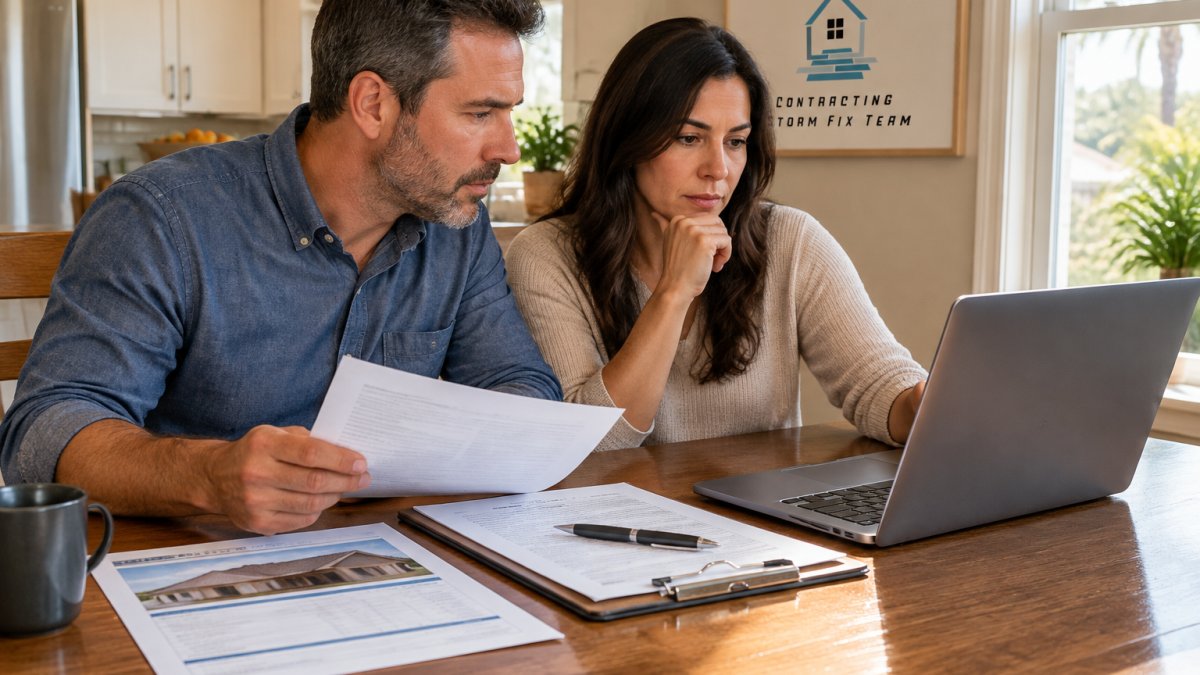
Before you search, understand that Florida issues more than one kind of credential that can legally touch a roof. Confirm with the state licensing database and your local building department which credential a contractor holds and where it is valid.
A contractor who cannot explain which credential they hold, and where it is valid, is a red flag. Ask directly: "Are you state-certified or locally registered, and what is your license number?"
Here is the step-by-step process:
- Get the contractor's full legal business name, license number, and the name of the qualifying individual (the person who actually holds the license).
- Search the state licensing database by name or license number.
- Confirm the license status is active, not expired, suspended, revoked, or delinquent.
- Confirm the license type and scope cover roofing work, and confirm whether it is state-certified or locally registered.
- Verify the name on the license matches the person or company quoting you, and that the qualifying individual is associated with the business entity on your contract.
- Check the license history for disciplinary actions, complaints, or prior revocations.
If the license does not appear, the status is anything other than active, or the name does not match, walk away. If you have questions about what a verified contractor should provide, our roofing questions answered page covers the common ones.
Checking Insurance and Workers' Compensation
A license alone is not enough. Ask for a certificate of insurance and read it, rather than accepting a verbal "we're insured." The certificate should show:
- General liability coverage with the policy effective dates current and the limits visible.
- Workers' compensation coverage for the crew, or a valid exemption if the contractor is a sole proprietor who qualifies.
- The named insured matching the business entity on your contract, not a different company or an individual's personal policy.
Call the insurer or agent listed on the certificate to confirm the policy is active and that the certificate was not altered. A contractor who says "we're insured" but cannot produce a current certificate is a red flag.
Watch out: a certificate that lists a different company name than the one on your contract can mean the coverage does not apply to your job at all.
Florida Roofing Permit Requirements and Code Compliance
Florida roofing permit requirements exist for a reason: a building permit triggers an inspection that confirms the work meets building code. Unlicensed crews often skip permits to save time and money.
Skipping the permit creates two problems. First, the work may not pass inspection, forcing a work stoppage and redo. Second, unpermitted work can complicate a future home sale or insurance claim. A code-compliant roof is not optional in a storm-prone state.
What to Do If You Already Hired an Unlicensed Roofer
If you have already hired an unlicensed roofer, act quickly. Stop any further payments, document everything, and get an independent inspection. The order matters, because each step preserves options the next one depends on.
Here is what to do, in order:
- Stop payments. Do not hand over more money, and do not sign a new change order or "final" invoice until you understand the situation. If you paid by credit card, contact the card issuer about your dispute rights and the deadline to file.
- Document the work. Photograph the roof from multiple angles, including any exposed underlayment, flashing, or decking. Save the contract, all receipts, text messages, emails, and the contractor's license number or lack thereof. Keep a written timeline of dates, payments, and conversations.
- Get an independent inspection. A licensed roofing contractor or a licensed home inspector can assess whether the work is safe, complete, and code-compliant, and can put findings in writing. That written report becomes the backbone of any complaint or claim.
- File a complaint. Report the contractor to the state licensing authority through the DBPR, and also to your local building department if permits were skipped. Keep the complaint number.
- Check your insurance. Ask your insurer whether any resulting damage is covered, and ask specifically how unlicensed work affects the claim. Get the answer in writing if you can.
- Consider legal guidance. Contract enforceability and recovery options depend heavily on the facts, what was signed, what was paid, and what was promised. A brief consultation with a Florida-licensed attorney can clarify whether you have a viable path before you spend more.
Documenting the Work and the Contract
The contract itself is evidence. Keep the original, and note whether it includes a license number, a scope of work, a payment schedule, and a notice of cancellation. If the contract is missing those elements, that is worth recording. Photograph the roof before any corrective work begins, because once a new crew covers the old work, the evidence is gone.
Reporting and Recovery Options
Complaints to the state and to the local building department serve two purposes: they create a record, and they can trigger an investigation. Recovery is a separate question. A contract with an unlicensed contractor may be unenforceable in some circumstances, which can cut both ways, it may limit the contractor's ability to collect, but it can also complicate your own claim.
Watch out: waiting to document or report can let the contractor disappear, dissolve the business, or file for bankruptcy, which can leave you with a judgment that is difficult to collect.
Get Your Roof Inspected by a Licensed Contractor
The safest move is to have a licensed professional inspect your roof before and after any work. You can see examples of our craftsmanship that covers you, or get your instant quote today to start with a proper inspection.
The risks of hiring unlicensed Florida roofers are real, and they rarely stay cheap. Protect your home with a contractor who can prove the license, the insurance, and the workmanship.
Frequently Asked Questions
Can I do roof repairs in Florida without a license?
In most cases, no. Florida generally requires a license or registration for roofing work performed by a hired contractor. Confirm the rules for doing your own work with your county building department. Hiring unlicensed Florida roofers exposes you to failed inspections, voided warranties, and liability for injuries on your property. Confirm local rules with your county building department before any work begins.
What are the consequences of hiring an unlicensed contractor in Florida?
The consequences fall on both the contractor and you. The contractor faces penalties for unlicensed contracting in Florida, including fines and possible criminal charges. You face the practical fallout: no permit means no inspection, which can void manufacturer warranties and complicate homeowners insurance claims. If a worker is injured, unlicensed contractor liability in Florida can shift medical costs toward you as the property owner. You may also have limited legal recourse if the work is defective or the contractor disappears with your deposit.
How can I verify a Florida roofing contractor's license?
Start with a Florida roofing contractor license lookup through the state licensing database, then cross-check the license type, status, and expiration date. Ask for the license number in writing and confirm the name on the license matches the company bidding on your job. Request a certificate of general liability insurance and workers' compensation coverage, and call the insurer to confirm the policy is active. A licensed roofing contractor will provide these documents without hesitation.
Can a homeowner be held responsible if an unlicensed roofer is injured?
Possibly. If an unlicensed worker is injured on your property and has no workers' compensation coverage, the resulting medical bills and lost wages can become your problem through a liability claim. This is one of the clearest examples of unlicensed contractor liability in Florida. Licensed roofing contractors carry workers' compensation for their crews, which shields you. Before work starts, ask for proof of coverage and verify it with the insurer rather than accepting a photocopy at face value.