 How-to
Roof Repair and Insurance: What Homeowners Need to Know
Last Updated: November 14, 2026
Quick Summary
Yes, roof repair insurance often covers the repair, but only when the damage comes from a sudden event your policy lists as a covered peril. Wind, hail, fire, or a fallen tree are typically covered, while rot, age, and poor upkeep are typically excluded. The cause of the damage decides the claim, not the age of the roof.
- A roof leak from rain is covered when a covered peril created the opening, not when wear caused it.
- Roof age affects how a claim pays, not whether it pays, because older roofs carry more depreciation.
- Most policies require prompt notice of loss and a sworn proof of loss by a stated deadline.
- Photograph all damage before cleanup, since once debris is gone, proof is gone.
- Compare the adjuster's scope with your contractor's estimate line by line and submit a supplement for missed items.
Table of Contents
- Is Roof Repair Covered by Insurance? The Short Answer
- Does Homeowners Insurance Cover Roof Leaks From Rain?
- Will Insurance Cover a 20-Year-Old Roof?
- How to Get Insurance to Pay for Roof Replacement
- Roof Insurance Claim Documentation You Need
- Distinguishing Storm Damage From Wear and Tear
- What to Do if Your Claim Is Denied or Underpaid
- Schedule a Professional Roof Inspection Before You File
- Frequently Asked Questions
Is Roof Repair Covered by Insurance? The Short Answer
Yes, roof repair insurance often covers the repair, but only when the damage comes from a sudden event your policy lists as a covered peril.
Below, we'll show you how insurers decide, what documents win claims, and what to do when a check comes back smaller than expected.
Roof repair insurance is a coverage question first and a construction question second. Your policy pays for the repair, not the roof itself.
Covered Perils vs. Excluded Causes
A policy is a list of covered perils and a list of exclusions. The covered peril triggers payment; the exclusion kills it.
Covered perils typically include:
- Wind and hail damage
- Fire and lightning
- Falling objects, like tree limbs
Common exclusions:
- Wear and tear
- Lack of maintenance
- Gradual deterioration
The Insurance Information Institute's guide to homeowners coverage explains this structure clearly. Your job is to prove the damage came from the first list, not the second.
Does Homeowners Insurance Cover Roof Leaks From Rain?
Sometimes. A roof leak from rain is covered when a covered peril created the opening. If wind tore off shingles and rain got in, that's a claim.
Two scenarios, two very different outcomes:
- Storm-created opening: wind, hail, or debris damages the roof, rain enters, interior damage follows. Likely covered.
- Age-created opening: missing granules, cracked sealant, or rusted flashing lets water seep in. Usually denied.
Water damage inside the home is often covered as part of a valid claim. But the insurer will still trace the source. If the source is excluded, the interior damage can be denied too.
Will Insurance Cover a 20-Year-Old Roof?
Usually not on age alone. A 20-year-old roof can still be covered for storm damage, but its age changes how much you get paid.
Roof age affects how the claim pays, not whether it pays.
- Replacement cost value (RCV): pays to replace with new materials of similar kind and quality.
- Actual cash value (ACV): pays replacement cost minus depreciation.
Older roofs carry more depreciation. So even an approved claim on a 20-year-old roof may pay far less than a full replacement.
The National Association of Insurance Commissioners consumer resources notes that policy terms vary widely by state and insurer.
How to Get Insurance to Pay for Roof Replacement
To get insurance to pay for roof replacement, you need three things: a covered peril, a documented loss, and a repair estimate that matches the damage. Skip any one and the claim weakens. A roof claim is also a staged process with deadlines that vary by policy and state, and the order you do things in affects what you can recover.
The Claim Timeline, Stage by Stage
Most homeowners policies require prompt notice of a loss, and many set a contractual deadline for filing a sworn proof of loss, often stated as a number of days after the loss or after the insurer's request.
- Emergency mitigation (day 0 to 2). Tarp the roof, board broken openings, and stop water from spreading. Most policies require reasonable steps to prevent further damage, and those costs are often reimbursable. Keep every receipt.
- Notice of loss (as soon as practical). Call your insurer, open the claim, and get the claim number and adjuster contact in writing. Ask what proof of loss is required and when it is due.
- Documentation (before cleanup). Photograph wide shots, close-ups, and interior staining before debris is removed. Date-stamp everything and keep a written storm description with the date.
- Independent inspection (before the adjuster visit). A contractor inspection gives you a line-item estimate and a damage map to compare against the adjuster's scope.
- Adjuster inspection. The adjuster documents the loss and may test shingles or photograph the slope. Be present if you can, and ask what was measured and excluded.
- Proof of loss and estimate submission. Submit the contractor estimate, photos, maintenance records, and temporary-repair receipts by the policy deadline.
- Coverage decision and payment. The insurer issues an approval, partial approval, or denial. Review the scope line by line before you cash anything.
- Supplement and close-out. If the scope missed decking, underlayment, or code-required items, submit a supplement with evidence rather than accepting the first number.
| Stage | What Happens | What You Should Have in Hand |
|---|---|---|
| Mitigation | Stop further damage | Receipts, before photos |
| Notice | Claim opened | Claim number, adjuster name |
| Documentation | Damage recorded | Timestamped photos, storm notes |
| Inspection | Independent estimate | Line-item contractor estimate |
| Adjuster visit | Insurer's scope | Notes on what was measured |
| Proof of loss | Formal submission | Estimate, records, receipts |
| Decision | Approval or denial | Written basis for the decision |
| Supplement | Scope corrected | Evidence of missed items |
Watch out: missing the proof-of-loss deadline stated in your policy can give the insurer grounds to limit or deny the claim even when the damage is covered, so confirm the date in writing when you open the claim.
What Each Stage Actually Tests
Mitigation tests whether you protected the property. Documentation tests whether the damage traces to a covered peril. Inspection tests whether the scope matches the damage. The supplement tests whether you caught what the first pass missed. Insurers approve claims they can verify at each stage, which is why the order matters more than any single step.
Step-by-Step: Filing Your Claim
- Stop further damage. Tarp the roof or board a broken window. Insurers expect mitigation, and most policies require it.
- Photograph everything. Wide shots of the roof, close-ups of damage, and interior water stains. Timestamped photos help.
- Call your insurer and open the claim. Get the claim number and the adjuster's name in writing, and ask for the proof-of-loss deadline.
- Get a contractor inspection. An independent assessment gives you a second opinion before the adjuster visits.
- Submit your proof of loss and estimate. Include the contractor estimate, photos, and maintenance records.
- Review the adjuster's report. Compare it line by line with your estimate. Discrepancies are common.
- Negotiate, supplement, or appeal if needed. You can request a re-inspection, submit a supplement, or file a formal appeal.
| Step | What You Do | Why It Matters |
|---|---|---|
| 1 | Tarp and prevent more damage | Shows mitigation, protects payout |
| 2 | Photograph all damage | Builds your proof of loss |
| 3 | Open the claim | Starts the clock and paper trail |
| 4 | Get a contractor inspection | Gives you an independent estimate |
| 5 | Submit documents | Drives the approval decision |
| 6 | Review the report | Catches missed line items |
| 7 | Appeal if underpaid | Recovers missing payment |
Roof Insurance Claim Documentation You Need
Strong documentation is the difference between a fast approval and a fight.
Gather these before the adjuster arrives:
- Date-stamped photos of the damage, inside and out
- A written contractor estimate with line items
- Maintenance and repair records
Keep a simple claim log too. Note every call, who you spoke with, and what they said. If the claim is disputed later, that log becomes evidence.
The FEMA guidance on documenting disaster damage recommends photographing damage before you clean up or repair. Once debris is gone, proof is gone.
Distinguishing Storm Damage From Wear and Tear
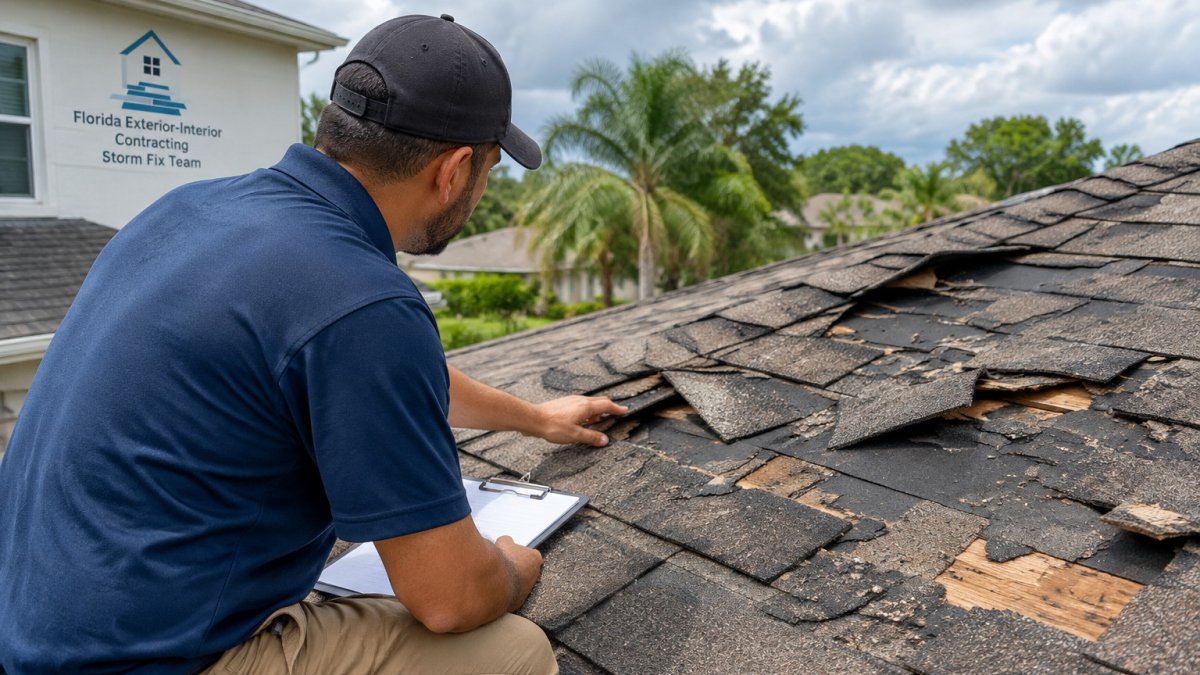
This is the single most contested issue in roof claims. Storm damage is sudden and accidental. Wear and tear is gradual. The two can look similar to an untrained eye, and insurers know it.
What storm damage usually looks like:
- Fresh dents or bruises from hail
- Torn, lifted, or missing shingles
- Impact marks from fallen limbs
What wear and tear usually looks like:
- Granules worn evenly across the whole roof
- Curling, cracking, or dry shingles
- Rusted or deteriorated flashing
A common mistake is pointing at an old, worn roof and calling it storm damage. Adjusters see this constantly, and it hurts your credibility. Instead, match the damage to the storm's direction and timing.
What to Do if Your Claim Is Denied or Underpaid
A denial is not the end. You have options, and partial approvals are often worth challenging.
Start with the denial letter. It should state the reason and identify the policy language relied on. Common reasons include:
- Damage classified as wear and tear
- Damage below your deductible
- Missing or weak documentation
Get the Basis for the Decision in Writing
Ask the insurer, in writing, for the specific policy provisions and factual findings behind the decision. A common pattern is a letter citing a broad exclusion without tying it to the evidence on your roof. Request the adjuster's report, the photos relied on, and any measurements or test results, so you can respond to what the insurer actually decided rather than guessing.
Build the Appeal Record
An appeal is only as strong as the evidence you attach. A practical record includes:
- The denial letter and your written request for the basis of the decision
- Your contractor's line-item estimate and damage map
- Date-stamped photos showing storm pattern, direction, and timing
Match your evidence to the stated reason. If the denial says wear and tear, show the damage is concentrated on one slope or windward side and tied to a dated storm. If it says the damage is below the deductible, get an itemized scope showing the full repair cost, including decking and underlayment.
Challenge a Partial Approval
Half-approved claims deserve the same scrutiny. Compare the adjuster's scope with your contractor's estimate line by line, missing decking, underlayment, or code upgrades are common. Submit a supplement with photos and code references rather than accepting the first number. A supplement is not an appeal; it is a request to correct the scope, and it is often the fastest path to a higher payout.
Escalation Options
- Request a re-inspection with your contractor present.
- Submit a formal appeal with new evidence and a written argument tied to the policy language.
- Ask for the specific policy language used to deny you, and quote it back in your appeal.
Watch out: cashing a partial payment check can, under some policy terms, be treated as acceptance of the scope, so review the scope and note any reservation of rights in writing before you deposit it.
For a deeper walkthrough of denial reasons and how to respond, read our guide on why homeowners insurance denies roof claims.
Schedule a Professional Roof Inspection Before You File
A clear damage assessment helps you understand what you actually need before you file, so you're not guessing or overstating.
Get an inspection before you call the insurer. If you have basic coverage questions first, our roofing questions answered page covers the most common ones.
Ready to move? Get your quote today and schedule an inspection before you file.
Insurance generally won't pay for a roof it can't verify, or for damage it can't trace to a covered peril.
Frequently Asked Questions
Will homeowners insurance pay for roof repairs?
It depends on the cause. Most policies pay for roof repair when damage comes from a covered peril such as wind, hail, fire, or falling objects. Damage from age, wear and tear, or lack of maintenance is typically excluded. File a claim promptly, document the damage with photos, and get a contractor estimate before the adjuster visits so you have a clear picture of what needs fixing.
Does homeowners insurance cover roof leaks from rain?
A leak caused by a sudden storm event, such as wind lifting shingles or hail cracking them, is usually covered. A leak traced to a worn, aging roof that was never maintained is often denied. The adjuster will look at the cause, not just the water damage. Keep maintenance records and report the leak as soon as you notice it to strengthen your claim.
Will insurance cover a 20-year-old roof?
Age alone does not disqualify a roof. Coverage depends on whether the damage came from a covered peril and the roof's overall condition. Many insurers apply actual cash value rather than replacement cost to older roofs, which means depreciation reduces your payout. Some policies also include age-based limits. Review your policy language and ask your insurer how depreciation applies before filing.
What documentation do I need for a roof insurance claim?
Gather photos and video of the damage from the ground and up close, a written contractor estimate, maintenance records, receipts for any temporary repairs, and a dated inventory of damaged interior items. Keep a copy of your proof of loss form and all correspondence with the adjuster. Complete documentation speeds up claim approval and supports an appeal if the first offer falls short.