 blog
Is Roof Underlayment Replacement Worth It?
Last Updated: November 15, 2026
Quick Summary
Roof underlayment replacement is worth it when inspection shows the membrane has dried out, cracked, or torn while the tiles and decking are still sound. Waiting does not avoid the tear-off cost; it postpones it and adds leak repair costs on top.
- Tile roofs are not waterproof, so underlayment catches wind-driven rain and sends it down the slope to the eave.
- A complete estimate should itemize tile removal, breakage allowance, decking repair, flashing work, and permits.
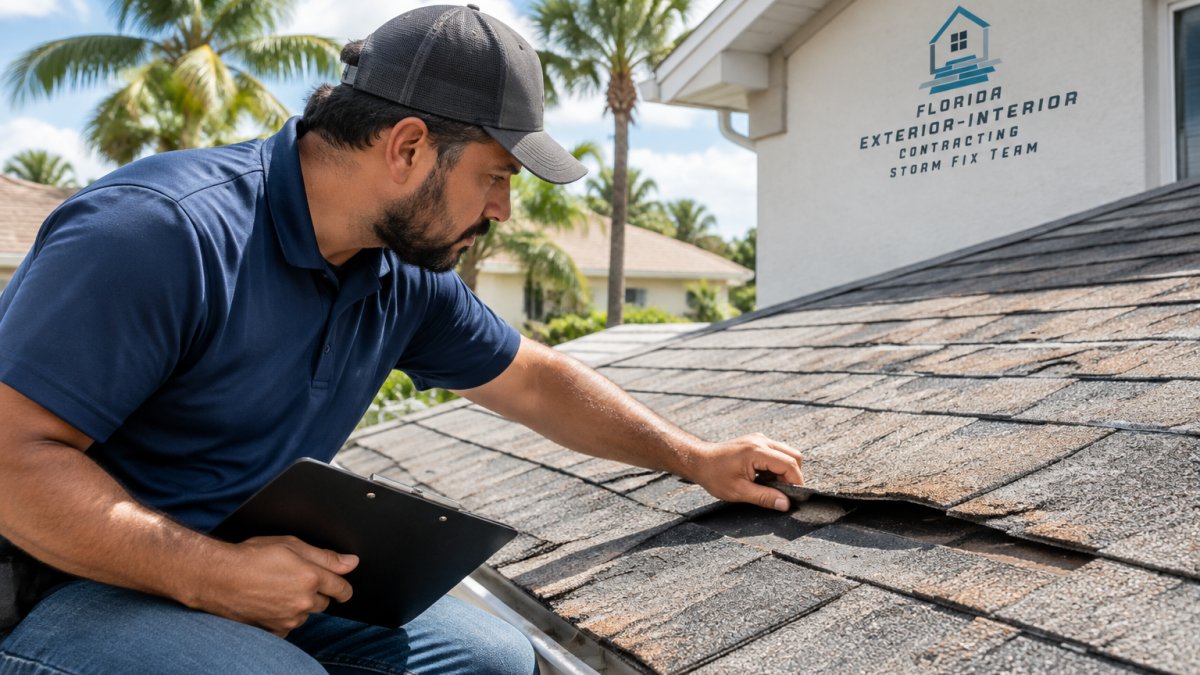
- Membrane that tears or crumbles when a roofer lifts a tile is the clearest sign it has lost flexibility.
- Replacing the whole roof makes sense when tiles are near end of life or decking has dry rot.
- You cannot answer whether replacement is worth it from the ground; someone must lift tiles and check the decking.
Table of Contents
- What Roof Underlayment Does and When Replacement Pays Off
- Tile Roof Underlayment Replacement Cost: What Drives the Number
- How Often Should Roof Underlayment Be Replaced?
- Best Underlayment for Tile Roof: Material Options Compared
- Problems With Synthetic Roof Underlayment
- Replacing Underlayment vs. Replacing the Whole Roof
- Get a Roof Inspection Before You Decide
- Frequently Asked Questions
What Roof Underlayment Does and When Replacement Pays Off
Roof underlayment is the water-resistant layer between your roof deck and the tiles, and roof underlayment replacement is worth it when inspection shows the membrane has dried out, cracked, or torn while the tiles and decking are still sound.
The Job Underlayment Does Under Your Tiles
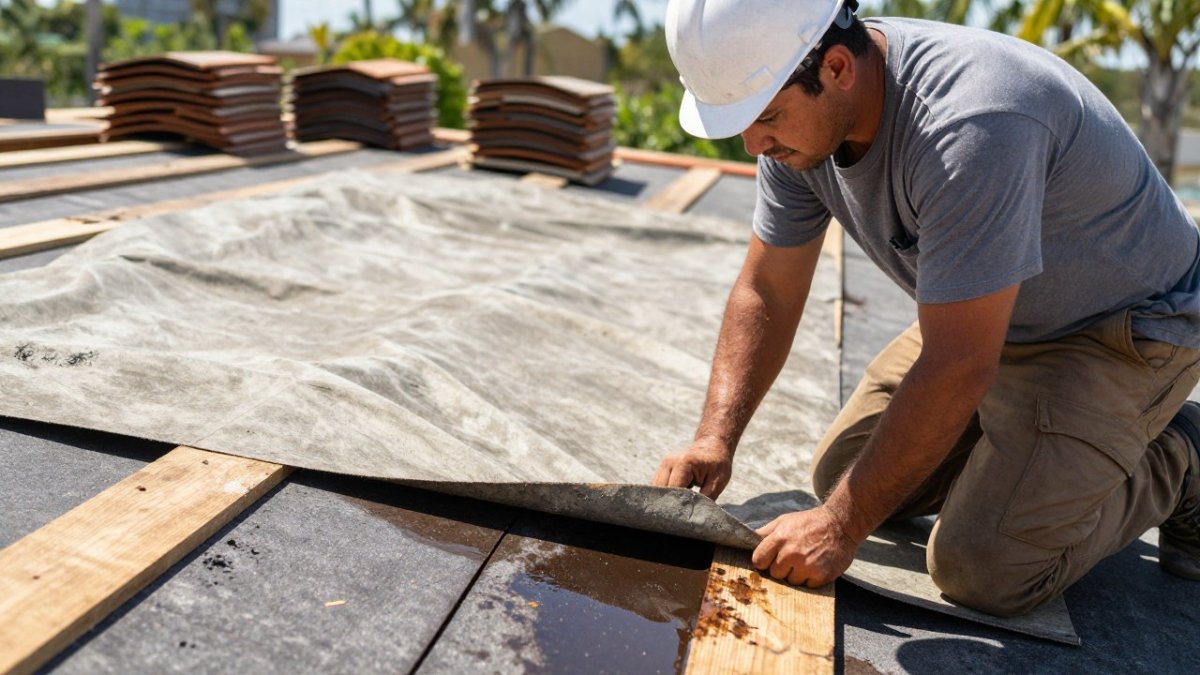
Tile roofs are not waterproof. Concrete roof tile and clay tile shed most rain, but wind-driven rain pushes water sideways and upward, and that water has to go somewhere. Underlayment is the secondary moisture barrier that catches it and sends it down the slope to the eave. It also separates the tile from the wood decking so the two do not grind against each other, and it adds a layer of protection against UV exposure and debris between tiles.
The Signs That Justify Replacement
Watch for these inspection findings. Any one of them is enough to start a conversation about replacement:
- Underlayment that tears or crumbles when a roofer lifts a tile
- Water staining or soft spots on the wood decking beneath
- Cracked tiles or broken tiles letting water reach the membrane directly
- Granule loss or visible wrinkling on the surface of the sheet
- Active roof leaks that reappear after surface repair
If you are weighing storm damage against your policy, it helps to understand why homeowners insurance denies roof claims before you assume a claim will cover the work.
Tile Roof Underlayment Replacement Cost: What Drives the Number
There is no single tile roof underlayment replacement cost, and we will not pretend otherwise. Pricing depends on factors we can only measure on site, so we quote after inspection rather than over the phone. What we can do is show you how the number is built and how to compare it against the cost of waiting.
The Scope of Work Behind the Estimate
A membrane-only job on a tile roof is not a small project. A complete estimate should itemize each of these line items, and if one is missing, ask why:
- Tile removal and staging. Tiles are lifted, stacked, and protected on the lawn or roof. Steep roofs need more staging and safety rigging, which raises labor.
- Tile breakage allowance. Older or brittle tile breaks during removal. A common pattern is a breakage allowance built into the bid, with replacement tile sourced to match.
- Underlayment removal and disposal. Old felt or synthetic sheet comes off, and disposal is a real cost.
- Decking inspection and repair. Soft or rotted wood decking must be replaced before new membrane goes down. This is often the largest surprise line item.
- Flashing and valley work. Chimney flashing, vent boots, and valley metal are resealed or replaced while the roof is open.
- New underlayment installation. Material choice (felt, synthetic, or rubberized asphalt) and fastening pattern drive this line.
- Tile reinstallation. Tiles go back, broken ones are replaced, and ridge and hip tiles are reset.
- Permits and inspection. Local requirements vary, and permit fees belong in the estimate.
Lifecycle Cost: Replace Now vs. Wait
The honest way to answer whether replacement is worth it is to compare two paths over the same horizon.
Replace now. You pay for tear-off, new membrane, decking repair, and tile reinstallation once. The roof is then protected for the service life of the new membrane, and you avoid paying for tile removal a second time later.
Wait. You defer the upfront cost, but you accept three risks: (a) leak repairs that require lifting tile again, (b) interior damage to ceilings, insulation, and drywall if water reaches the deck, and (c) the near-certainty that when the roof is finally replaced, you pay for tile removal and reinstallation anyway. Waiting does not avoid the tear-off cost; it postpones it and adds repair costs on top.
The break-even question is simple: if the accumulated leak repairs and interior damage from waiting approach the cost of doing the membrane job once, waiting has already lost.
Repair or Replace? A Decision Framework
Use this to sort your situation before you call anyone:
| What the inspection finds | Recommended action | Why |
|---|---|---|
| Isolated cracked tiles, membrane intact | Surface repair | Water is not reaching the underlayment yet |
| Worn membrane under a few tiles, decking solid | Partial replacement in that area | Limits cost on a small failure zone |
| Membrane brittle across most of the roof | Full underlayment replacement | Patching a failing sheet just moves the leak |
| Soft decking plus failed membrane | Replacement with decking repair | New membrane needs sound wood to fasten to |
| Tiles at end of life plus failed membrane | Full roof replacement | Paying twice for tear-off makes no sense |
Watch out: a bid that quotes a single lump sum without separating tile removal, decking repair, and flashing work makes it impossible to compare against another contractor or to see what happens if decking damage is found mid-project.
How Often Should Roof Underlayment Be Replaced?
The membrane sits in constant heat and UV exposure, and in hot, sunny climates that ages it faster than the tile above it. How often should roof underlayment be replaced depends on the product and the climate, but the useful answer is not a single number. It is a set of inspection findings that tell you where your membrane is in its service life.
Lifespan by Material
- Roofing felt (organic or fiberglass mat). The traditional choice and the shortest-lived. In high heat it dries out, wrinkles, and becomes brittle well before the tile reaches the end of its life.
- Synthetic underlayment. Lightweight, strong, and resistant to tearing during installation. It generally outlasts felt, but it has its own weaknesses, including wrinkling if not rolled flat and puncture risk during tile installation.
- Rubberized asphalt. A self-adhering membrane that seals around fasteners. It costs more and performs well in wet climates, but it is less forgiving to install and requires a sound, clean deck.
That is why a roof that looks fine from the ground can still need a membrane job.
Inspection Findings That Justify Replacement
The decision should rest on what an inspector finds when tiles are lifted, not on the calendar alone. These findings are the ones that matter:
- Brittleness. The membrane tears or crumbles when a roofer lifts a tile. This is the clearest sign the sheet has dried out and lost its flexibility.
- Cracking. Visible cracks in the sheet, especially along hips, valleys, and penetrations where stress concentrates.
- Adhesion loss. The membrane has pulled away from the deck or from itself, leaving gaps where water can travel sideways.
- Moisture damage. Water staining or soft spots on the wood decking beneath the membrane, which means water has already passed the barrier.
- Localized deterioration. Worn membrane under a few tiles with sound decking elsewhere, which may support partial replacement rather than a full job.
Watch out: a symptom is not a confirmed failure. A stain on the deck may be old, and a wrinkle in the sheet may be cosmetic. The inspector should distinguish visible symptoms from confirmed failure by checking whether the membrane is still flexible, still adhered, and still shedding water.
Climate and Roof-Type Considerations
Recommendations differ by roof type and climate. In climates with intense sun, UV exposure ages the membrane faster. In freeze-thaw climates, trapped moisture can crack the sheet. In heavy rain and wind-driven rain, the membrane is the primary barrier when water is pushed sideways and upward, so its condition matters more. A roof inspection at the first sign of a leak tells you which side of that line you are on. Our roofing questions answered page covers the follow-up questions homeowners ask most.
Best Underlayment for Tile Roof: Material Options Compared
The best underlayment for a tile roof is the one rated for your tile weight, your roof pitch, and your local code. Three families dominate:
- Roofing felt. The traditional choice. Inexpensive, but it wrinkles, dries out, and has the shortest lifespan in high heat.
- Synthetic underlayment. Lightweight, strong, and resistant to tearing during installation. It is the common upgrade, though it has its own weaknesses.
- Rubberized asphalt. A self-adhering membrane that seals around fasteners. It costs more and performs well in wet climates, but it is less forgiving to install.
For more on maintaining a tile roof between replacements, browse our roofing services and insights.
Problems With Synthetic Roof Underlayment
Synthetic underlayment is not a magic fix. The most common problems with synthetic roof underlayment come from installation, not the product itself. If it is not rolled out flat and fastened at the correct spacing, it wrinkles and creates wear points under the tile. On steep roofs, some synthetic products become slippery underfoot, which slows the crew and raises labor. And because synthetic sheet is thin, a careless tile installation can puncture it before the roof is even finished.
Replacing Underlayment vs. Replacing the Whole Roof
Replacing underlayment alone can make sense when the tiles and decking are sound and the membrane is the only failing layer. Replacing the whole roof makes sense when the tiles are near the end of their life, the decking has dry rot, or the roof has already been patched repeatedly. The math is simple: if you will need a full roof replacement within a few years anyway, paying for tile removal twice is money thrown away.
Get a Roof Inspection Before You Decide
You cannot answer "is roof underlayment replacement worth it" from the ground. Someone has to lift tiles, look at the membrane, and check the wood decking. That inspection is the whole decision.
Get your instant quote today and we will tell you honestly whether you need a membrane job, a repair, or a full replacement.
The hard part is not choosing a material. It is getting a straight answer about what your roof actually needs.
Frequently Asked Questions
Can you replace roof underlayment without replacing the roof?
Yes, if the tiles and deck are sound. The tiles are lifted, the old underlayment is stripped, new underlayment is installed, and the tiles go back down. Tiles can crack during removal, so the contractor should plan for spares or matching replacements before starting. If the deck shows rot or the tiles are near the end of their life, a full roof replacement usually costs less per year of service.
How do you know when roof underlayment needs replacing?
The clearest signs are water stains on the deck or ceiling, tiles that look fine while leaks appear below, and underlayment that is brittle, cracked, or torn when checked at valleys and penetrations. Age matters too, since underlayment ages faster in strong sun. A professional roof inspection that lifts a few tiles is the only reliable way to confirm the barrier's condition.
Is tile roof underlayment replacement worth the cost compared with a full replacement?
It depends on the deck and the tiles. If the wood decking is dry and solid and the tiles have decades left, replacing only the underlayment preserves a valuable roof at a fraction of a full replacement. If the deck has soft spots, or the tiles are already cracked and fading, the money is better spent on a complete roofing system. Ask for an inspection report that documents deck condition before committing.
What is the best underlayment for a tile roof in a hot, storm-prone climate?
Self-adhered rubberized asphalt membranes and high-temperature synthetic underlayment are common choices for tile roofs because they resist UV exposure and heat better than standard felt. The right pick depends on roof pitch, local building code, and whether ice dam protection is required. A qualified roofer can match the product to your roof and check manufacturer warranty terms.