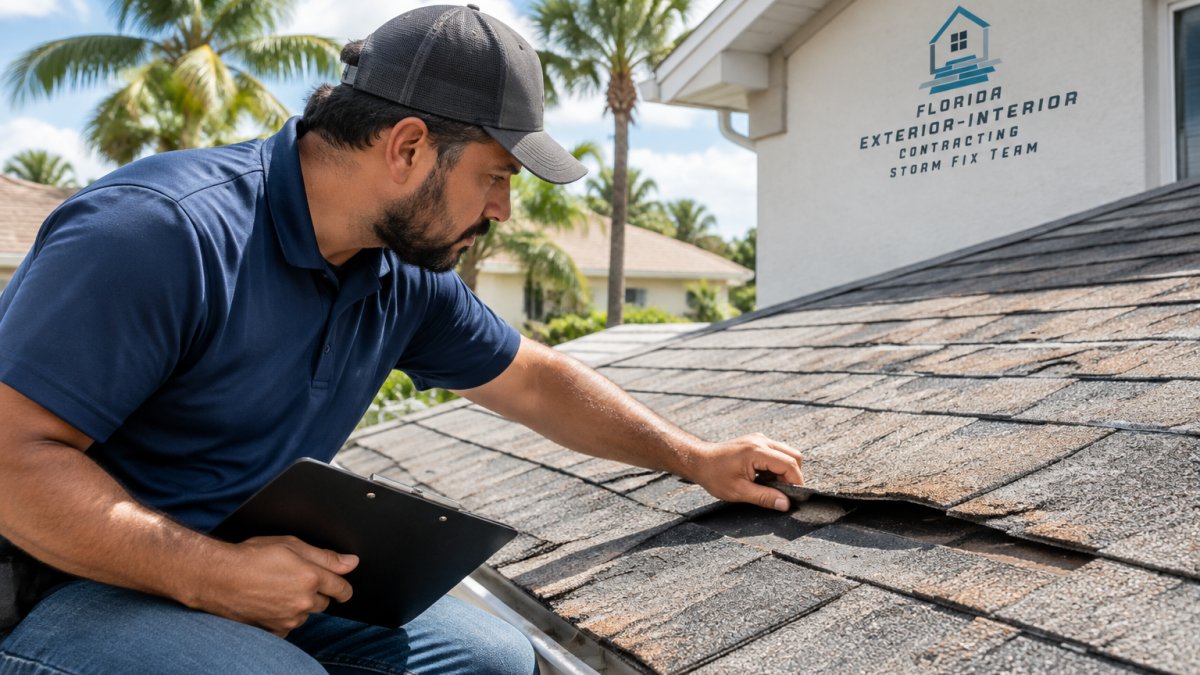
 blog
How to Spot 7 Signs Your Roof Needs Replacing in Florida
Last Updated: November 7, 2026
Quick Summary
Your roof needs replacing when it shows signs like granule loss in gutters, curled or missing shingles, indoor leaks and water stains, or storm damage. Age, widespread damage, and repeated repairs also point to replacement rather than another patch. A professional roofer can confirm whether repair or replacement is the right call.
- Granules collecting in gutters every time you clean them signal shingles wearing thin.
- Curled, cupped, buckling, cracked, or missing shingles mean the roof surface is failing.
- Daylight through roof boards, damp decking, and soft spots show up in attic inspections.
- Wind can break shingle seals without tearing them off, causing leaks weeks later.
- Repair an isolated problem on a young roof; replace widespread damage or repeated repairs.
Table of Contents
- 1. Your Roof Has Reached the End of Its Florida Lifespan
- 2. Granules Are Collecting in Gutters and Near Downspouts
- 3. Shingles Are Curled, Cupped, Buckling, Cracked, or Missing
- 4. Leaks, Water Stains, and Dampness Are Showing Up Indoors
- 5. Storm Damage and Wind Have Compromised the Roof Surface
- 6. Roof Repair vs. Replacement: How to Tell Which One You Actually Need
- 7. Florida Roof Replacement Cost, Insurance, and Permit Realities
- Get a Straight Answer From a Certified Central Florida Roofer
- Frequently Asked Questions
1. Your Roof Has Reached the End of Its Florida Lifespan
Knowing when your roof needs replacing in Florida starts with one number: its age. The exact target keyword matters less than the calendar. Sun, heat, and humidity can wear a roof down faster in Florida, so a roof that looks fine may be nearing the end of its useful life.
How Long Each Roofing Material Lasts in Central Florida Heat and Humidity
Roof lifespan in Florida depends on the material and how well it handles UV exposure and storms. Here is how we think about it:
- Asphalt shingles: the most common choice, but Florida heat and sun shorten their life compared to cooler climates
- Roof tiles: heavy and long-lasting, though cracked tiles and worn underlayment still need attention
- Metal roofing: strong against wind and heat, with a long service life when installed correctly
- Flat and low-slope roof membrane: common on commercial buildings, and it ages fast under constant sun
Age is a warning, not a guarantee, and a roof can still fail in a storm even if it is only a few years past its rated life.
2. Granules Are Collecting in Gutters and Near Downspouts
Granule loss is one of the clearest signs your roof shingles need replacing. Those rough granules on asphalt shingles protect the material underneath from the sun. When they wash into your gutters and pile up near the downspouts, the shingle is wearing thin.
A few granules after a new install is normal. Finding them every time you clean the gutters is not. If the shingles are also starting to look bare or patchy, the surface is breaking down, and that points toward replacement rather than another patch.
3. Shingles Are Curled, Cupped, Buckling, Cracked, or Missing
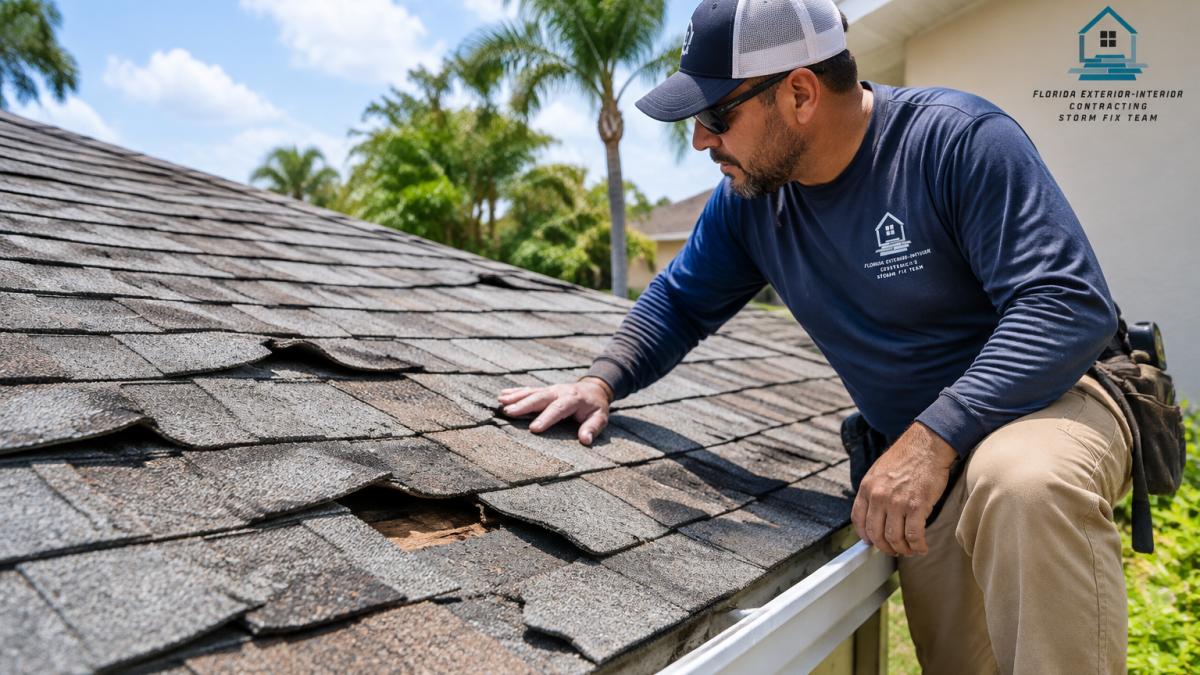
Curled, cupped, buckling, cracked, or missing shingles all signal that the roof surface is failing. Each one means something different, but together they are some of the most reliable signs your roof needs replacing in Florida.
What Each Shingle Problem Actually Means
- Curled shingles: edges lifting away from the roof, often from heat and age
- Cupped shingles: centers rising and edges sinking, a sign of trapped moisture
- Buckling shingles: a wavy look that can point to a ventilation or decking problem
- Cracked shingles: the surface splitting as it dries out and stiffens
- Missing shingles: wind damage that leaves the deck exposed to rain
4. Leaks, Water Stains, and Dampness Are Showing Up Indoors
Roof leaks and water intrusion are the signs you cannot ignore. Once water gets past the shingles, it travels along the decking and shows up far from the actual entry point. Ceiling stains, wall streaks, and a damp attic are all clues.
Reading the Attic: Daylight, Damp Decking, and Soft Spots
An attic inspection tells you what the outside hides. Look for:
- Daylight coming through the roof boards
- Damp or dark roof decking
- Soft spots you can press into
- Mold or a musty smell
If you find any of these, have a professional roofer take a look before the next storm.
5. Storm Damage and Wind Have Compromised the Roof Surface
Wind damage and storm damage are the fastest way a sound roof turns into a problem roof. Hurricane season runs for months, and storms can lift shingles and loosen flashing.
After a storm, check for missing shingles, dented or lifted edges, and granules in the yard. Watch out: damage you can see is only part of the story. Wind often breaks the seal between shingles without tearing them off, and that hidden damage shows up as leaks weeks later.
6. Roof Repair vs. Replacement: How to Tell Which One You Actually Need
The repair versus replacement call comes down to age, spread, and cost over time. A single damaged area on a younger roof is usually a repair. Damage across an older roof points to replacement.
Think of it this way:
- Repair when the roof is relatively young and the problem is isolated
- Replace when damage is widespread, the roof is near its lifespan, or you are facing repeated repairs
If you want quick answers to common roofing questions before deciding, our roofing questions answered page covers the ones we hear most.
The repair versus replacement call comes down to age, spread, and cost over time.
| Decision | When it applies |
|---|---|
| Repair | Roof is relatively young and the problem is isolated |
| Replace | Damage is widespread or the roof is near its lifespan |
| Replace | You are facing repeated repairs |
7. Florida Roof Replacement Cost, Insurance, and Permit Realities
Pricing depends on the material, roof size, and condition of the decking, so there is no single number that fits every home. For current prices or a quote, contact Florida Exterior-Interior Contracting directly.
Roof age can matter to insurers, and older roofs can be harder to insure or renew (How Your Roof Influences Your Home and Business Insurance). Permit requirements vary, so check with your local building department before starting work.
If you are dealing with a denied or uncertain claim, it helps to understand why insurers reject them before you commit to a replacement. Our guide on why homeowners insurance denies roof claims explains the common reasons.
Get a Straight Answer From a Certified Central Florida Roofer
Spotting the warning signs is the easy part. Deciding what to do next is where most homeowners get stuck, and that is exactly where we can help.
Florida Exterior-Interior Contracting is a veteran-owned and bilingual business with over a decade of hands-on experience. The owner provides direct oversight from start to finish, and we offer financing for those who qualify.
If you are ready to move, you can get your instant quote today. Want to see the work first? Browse our completed re-roofing results to see the craftsmanship for yourself.
Get started with Florida Exterior-Interior Contracting and protect your home before the next storm.
Frequently Asked Questions
What are the signs that a roof needs to be replaced?
The clearest signs are granule loss collecting in gutters, shingles that are curled, cupped, cracked, or missing, and interior water stains or attic dampness. Add sagging decking, daylight visible through the roof boards, and repeated leaks after repairs, and replacement becomes the practical choice. In Florida, age matters too: asphalt shingles often reach the end of their useful life sooner than in cooler climates because of heat, humidity, and UV exposure. A professional inspection confirms whether your roof needs replacing or just a targeted repair.
How long does a roof last in Florida?
Roof lifespan in Florida runs shorter than national averages for most materials. Asphalt shingles often have a shorter lifespan than tile or metal roofing in Florida's climate, and lifespan varies with installation and maintenance. Direct sun, heavy rain, humidity, and hurricane-season wind all speed up wear. A roof that faces full afternoon sun or sits under tree cover may age faster than the same material on a shaded home. Regular inspections help you track your roof's real condition rather than relying on the calendar alone.
Can a roof be repaired instead of replaced?
Yes, when damage is isolated. A few missing shingles after a storm, a single failed flashing point, or a small leak with no rot underneath are usually repair-level problems. Replacement becomes the better call when damage covers a large area, the roof is near the end of its lifespan, or leaks keep returning after repairs. The honest test is whether a repair buys you meaningful time or just postpones the inevitable. Ask your roofer to explain what a repair fixes and what it does not.
Should I replace my roof if it is not leaking?
Not leaking does not mean not failing. Granule loss, curled shingles, and soft decking can signal a roof that is close to failure without a single drip inside yet. Get an assessment rather than waiting for a leak to force the decision.