 blog
How to Know If Reflective Roof Coatings Pay Off in Florida
Last Updated: November 10, 2026
Quick Summary
Reflective roof coatings are worth it in Florida when your roof is structurally sound, since they cut cooling costs, add UV resistance and buy time before replacement. The biggest gains come on dark, aging roofs over under-insulated attics, while newer, well-ventilated roofs may see modest savings.
- Reflectance fades as dirt, pollen and mildew build up, so wash the coating at least annually.
- A quote without an on-roof inspection is a guess, not a price.
- Choose reflective shingles if your roof is due for replacement; choose a coating if it is sound.
- A coating is a thin film and adds no meaningful wind-uplift resistance.
- Manufacturer warranties often require approved applicators and documented maintenance.
Table of Contents
- How Reflective Roof Coatings Work and Why Heat Matters Here
- The Real Benefits: Energy Savings, Cooler Rooms, and Longer Roof Life
- Reflective Roof Coating Cost and Payback Period
- Best Reflective Roof Coating for Asphalt Shingles
- Best Heat Reflective Paint for Metal Roof
- Reflective Roof Shingles vs Coatings: Which Path Fits Your Roof
- Hurricane Season, Moisture, and Coating Durability
- Get a Roof Assessment Before You Spend a Dollar
- Frequently Asked Questions
How Reflective Roof Coatings Work and Why Heat Matters Here
Reflective roof coatings are liquid-applied products that form a bright, sun-blocking layer on top of an existing roof surface. They work by bouncing solar radiation back into the sky instead of letting it soak into the roof deck.
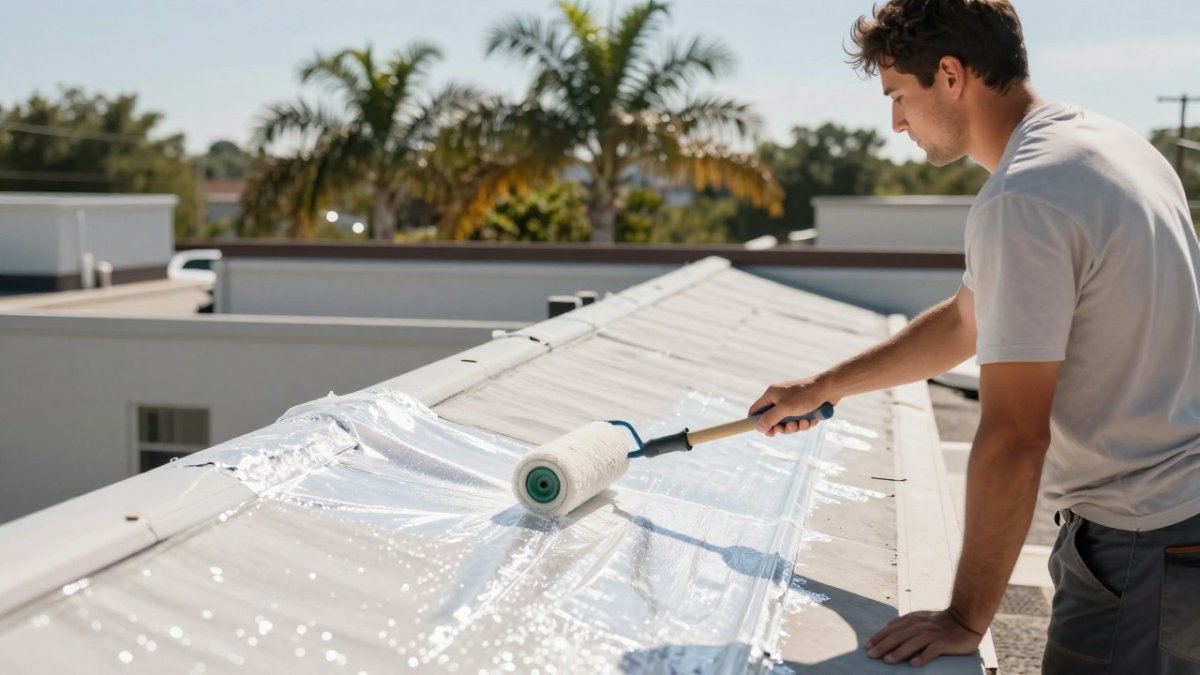
Homeowners and property managers often weigh this trade-off when deciding on a roof. The physics is simple: a dark shingle or metal roof absorbs solar heat, and that heat radiates into the attic and the rooms below.
Two numbers drive the whole calculation. Solar reflectance measures how much sunlight a surface bounces back. Thermal emittance measures how quickly a surface releases the heat it does absorb. A coating that scores well on both stays cooler than one that only reflects.
Here's the catch most sales pitches skip: reflectance fades as dirt, pollen and mildew build up. A coating that starts bright can lose a noticeable share of its reflectivity within a couple of seasons if nobody washes it.
The Real Benefits: Energy Savings, Cooler Rooms, and Longer Roof Life
Lower cooling costs are the headline benefit, but they're not the only one. A cooler roof surface means less heat transfer into the attic, which means your air conditioning unit runs shorter cycles and uses less energy. Rooms directly under the roof feel the change first, especially upstairs bedrooms and bonus rooms.
The second benefit gets less attention: UV resistance. Sun exposure breaks down asphalt shingles and ages roof membranes. A coating adds a sacrificial layer that takes the UV hit so your roof doesn't.
What most guides miss is that the savings depend on your starting point. A dark, aging roof over an under-insulated attic shows the biggest gain. A newer roof with good attic ventilation may show modest results. We tell customers to expect a real but variable benefit, not a guaranteed one.
- Cooler attic and indoor temperatures
- Lower cooling load on the AC
- Added UV and weather resistance
- Fewer bare spots where granules have worn away
Reflective Roof Coating Cost and Payback Period
Cost is where most homeowners get stuck, and honest answers are hard to find. Reflective roof coating cost depends on roof size, roof type, surface preparation and how many coats the manufacturer requires.
That prep is the part that sinks budget estimates. A roof that needs pressure washing, patching and primer costs more than a clean, sound surface. Skipping prep to save money is the fastest way to watch a coating peel within a year.
To make the math usable, break a quote into four line items and ask for each one separately:
- Surface preparation, pressure washing, scraping loose granules, treating rust or mildew, patching blisters and seams
- Primer, required on porous or chalky surfaces and on bare metal; skipping it is a common shortcut that shortens coating life
- Coating material, priced per gallon, and coverage depends on substrate roughness and the manufacturer's specified film thickness
- Labor and access, steep-slope, multi-story and heavily obstructed roofs take longer and cost more per square
A realistic way to think about payback is to compare three numbers side by side for your own roof: the installed coating cost, the annual cooling-cost reduction you can reasonably expect, and the replacement cost you are deferring. Why homeowners insurance denies roof claims is also worth understanding, since claim risks affect your return on investment. A coating on a dark, aging roof over an under-insulated attic generally offers the largest potential cooling reduction, while a newer roof with good attic ventilation may see a smaller one. Because savings scale with the cooling load, a coating that cuts attic heat gain noticeably in July may barely move a mild-month bill.
Payback depends on your roof's condition, color, insulation and prep requirements, so the honest answer comes from a site assessment.
Watch out: a quote given without an on-roof inspection is a guess, not a price. If the deck is soft, the membrane is failing or ponding water sits on the roof, coating money is wasted until the underlying problem is fixed.
U.S. Department of Energy guidance on cool roofs
Best Reflective Roof Coating for Asphalt Shingles
The best reflective roof coating for asphalt shingles is an elastomeric acrylic coating formulated for shingle surfaces. These products expand and contract with the roof and bond to aged asphalt without trapping moisture underneath.
Shingles present a specific challenge. Their granular surface is rough, so coating coverage takes more material than a smooth membrane. Loose granules must be cleared first, or the coating bonds to dust instead of shingle.
Acrylic coatings work well here because they breathe. That matters in a humid climate where trapped moisture causes rot. Silicone coatings are another option but usually suit flat commercial roofs better than sloped shingle roofs.
A common mistake is coating shingles that are already curling or losing their base. Coating slows aging; it doesn't rebuild a failing roof. If your shingles are brittle, get an honest assessment before spending anything.
Best Heat Reflective Paint for Metal Roof
For metal roofs, the best heat reflective paint is typically a white elastomeric or silicone coating rated for metal substrates. Metal expands and contracts more than any other roof surface, so the coating has to stretch with it or it cracks.
Rust is the enemy here. Any corrosion has to be treated and primed before coating, or the paint fails at the first rust spot. Fasteners and seams need attention too, since that's where water gets in.
Metal roofs respond well to reflective coatings because the bare metal conducts heat straight into the building. A white coating cuts that conduction path.
Best for: commercial and residential metal roofs with sound panels and minor surface rust. Skip if: panels are perforated or seams have failed.
Reflective Roof Shingles vs Coatings: Which Path Fits Your Roof
Reflective roof shingles and coatings solve the same problem in different ways. Shingles are a full replacement product with factory-applied reflective granules. Coatings are a retrofit applied over an existing roof.
| Option | Best For | Upfront Cost | Lifespan | Disruption |
|---|---|---|---|---|
| Reflective shingles | Roofs due for replacement | Higher | Full roof life | Multi-day install |
| Acrylic coating | Sound shingle roofs, budget-minded | Lower | Several years, reapply | One to two days |
| Silicone coating | Flat commercial roofs | Moderate | Several years | One to two days |
| Metal roof paint | Sound metal panels | Lower | Several years | One to two days |
Choose shingles if your roof is at the end of its life and you want a permanent fix. Choose a coating if the roof is structurally sound and you want to buy time and cut cooling costs. Both paths can work well, but only when the roof underneath is sound.
Hurricane Season, Moisture, and Coating Durability
Coating durability in Florida comes down to water and wind. Heavy rainfall and constant humidity test every seam, and a coating that traps moisture does more harm than good.
Wind is the second test. A reflective coating is a thin film, not a structural membrane, so it does not add meaningful wind-uplift resistance to a roof. What it can do is protect the surface the wind and sun are already degrading.
Ponding water is the quiet killer on low-slope roofs. Standing water for more than a couple of days after a storm breaks down most coatings and can migrate under the film.
Maintenance is where most coatings actually fail, not at installation:
- Inspect twice a year, before and after storm season, looking for blisters, cracks, peeling edges, ponding and clogged drains.
- Wash the surface at least annually, and more often under trees or near pollen and mildew sources. Reflectivity drops as dirt accumulates, and a dirty coating saves less than the number on the label suggests.
- Recoat on the manufacturer's schedule, typically every several years depending on product, sun exposure and foot traffic. Recoating before the film fails is far cheaper than repairing a failed one.
- Touch up damage promptly, a small crack or scuff left through a rainy season becomes a larger repair.
Warranties are where homeowners get surprised. Before you buy, ask these questions in writing:
- Is the warranty from the manufacturer, the contractor, or both, and how long does each cover?
- Does it require professional application by an approved installer, and is that documented?
- Does it require periodic cleaning or inspection, and does missing that void coverage?
- Does it cover labor and material, or material only?
- What exclusions apply to ponding water, hail, wind damage and pre-existing roof conditions?
Manufacturer warranties often require approved applicators and documented maintenance, so confirm those conditions before you sign. Get the warranty terms before you sign, not after.
Have questions about how coatings hold up through storm season? Our roofing FAQ answers the most common ones.
FEMA guidance on wind and water damage to roofs
Get a Roof Assessment Before You Spend a Dollar
Whether reflective roof coatings are worth it in Florida depends on your roof, not on the product label. A sound roof in a hot climate can benefit. A failing roof needs replacement, not paint.
A site assessment is the right starting point, since it shows whether a coating makes sense or whether saving toward a replacement is the better path. Our certified professionals handle both residential and commercial roofing, with direct owner oversight.
- Veteran-owned, with direct owner oversight on every job
- Bilingual service in English and Spanish
- Over a decade of hands-on experience in Central Florida
Financing is available for those who qualify.
Get your instant quote today and find out what your roof actually needs.
The real question isn't whether coatings work. It's whether your roof is a good candidate. Get a straight answer from someone who inspects the roof before quoting a number. Florida Exterior-Interior Contracting offers free assessments, honest recommendations and code-compliant work backed by a decade of Central Florida experience. Get started with Florida Exterior-Interior Contracting and know exactly where your roof stands before you spend.
Frequently Asked Questions
Does reflective roof coating really work?
Yes, on the right roof. A reflective roof coating raises solar reflectance, so the roof surface absorbs less solar heat and stays cooler. That lowers the heat transfer into the attic or building below and reduces the cooling load on your air conditioning. The effect is strongest on low-slope and flat roofs and on older, darker surfaces. On a steep shingle roof in poor condition, a coating will not fix underlying problems, so the coating performance depends heavily on surface preparation and adhesion.
How much does reflective roof coating cost?
Reflective roof coating cost depends on roof size, roof type, surface condition, and how much prep work is needed. A roof that needs heavy cleaning, patching, or primer will cost more than a sound surface that only needs one or two coats. Because pricing varies that much, ask for a written quote based on an on-site assessment rather than a per-square-foot estimate over the phone. Financing is available for qualified applicants, which helps spread the upfront spend.
Can reflective roof coating be applied to asphalt shingles?
Some coatings are made for asphalt shingles, but not every shingle roof is a good candidate. Granule loss, curling, and existing leaks usually mean the shingles are near the end of their roof lifespan, and a coating will not restore them. When the shingles are sound, a shingle-rated coating can reduce heat absorption and lower roof temperatures. Have a contractor confirm compatibility and surface preparation requirements before you buy.
How long does reflective roof coating last?
Coating lifespan depends on the product, the number of coats, foot traffic, and how well the surface was prepped. Most coatings need reapplication every several years, and roof maintenance inspections help you catch chalking or thinning before the protection fades. In Florida's sun and heavy rainfall, UV resistance and adhesion are the two factors that decide how long a coating holds up. Ask about the manufacturer's warranty terms and what maintenance it requires.