 blog
How to Find Roofing Contractors in Orlando with Financing
Last Updated: November 12, 2026
Quick Summary
To find roofing contractors in Orlando with financing, get a written roof inspection and scope of work first, then compare financing quotes from at least two lenders using that same scope. Compare the amount financed, APR, term, and total of payments, not just the monthly payment, and confirm the lender's name and full terms in writing before signing.
- Ask what total amount is financed, who holds the loan, and what happens if the roof fails in year three.
- Deferred-interest promotions can apply interest retroactively from the original purchase date if the balance is not paid in full.
- A promotional 0% offer is usually reserved for the strongest credit tier, so mid-range scores may get a higher APR.
- Repair loans often run 12 to 60 months, while replacement loans can stretch to 10 or 15 years.
- Document storm damage before any permanent repair begins and get the insurer's scope in writing.
Table of Contents
- What Orlando Homeowners Should Know Before Choosing a Roofing Contractor with Financing
- Roof Financing Options: Loans, Payment Plans, and Promotional Offers
- Roof Financing Approval Requirements: What Lenders Look For
- Roof Replacement Financing vs. Repair Financing: Which Fits Your Situation
- How to Spot Roofing Companies That Offer Payment Plans You Can Trust
- Florida Insurance, Storm Damage, and Financing: What Homeowners Need to Know
- Request a Free Roof Inspection and Financing Consultation
- Frequently Asked Questions
What Orlando Homeowners Should Know Before Choosing a Roofing Contractor with Financing
Finding roofing contractors in Orlando with financing starts with one uncomfortable truth: the cheapest monthly payment is rarely the cheapest roof.

Before you sign anything, ask three questions. What is the total amount financed, including fees? What happens if the roof fails in year three? And who actually holds the loan?
A roofing contractor installs, repairs, and replaces roof systems, and financing is simply a separate lending arrangement attached to that work. The two should be judged on different scorecards.
Roof Financing Options: Loans, Payment Plans, and Promotional Offers
Most roof financing falls into three buckets: unsecured home improvement loans, contractor-arranged payment plans through a third-party lender, and promotional offers with deferred interest. Each carries a different risk.
Unsecured loans are approved on credit and income alone, so the lender takes on more risk and the rate reflects it. Secured options like a home equity loan use your house as collateral, which usually lowers the rate but puts the property on the line.
Third-Party Lenders vs. In-House Payment Plans
A third-party lender is an outside finance company that pays the contractor and collects from you. The contractor gets paid up front, and your relationship is with the lender. In-house plans are arrangements the contractor services directly, which can be more flexible but also less regulated.
Ask who services the loan. If the answer is vague, walk away.
Understanding APR and Deferred-Interest Risks
The annual percentage rate (APR) is the true yearly cost of borrowing, including fees, not just the headline interest rate (What is the difference between a loan interest rate and the APR?). A "0% financing" offer often means deferred interest: if you don't pay the full balance before the promotional window closes, interest can be applied retroactively from the original purchase date.
Watch out: deferred-interest promotions are the single most common way homeowners end up paying far more than the quoted price.
Roof Financing Approval Requirements: What Lenders Look For
Approval for roof financing is a lender decision, not a contractor decision. That distinction matters: a roofing company can offer financing through a partner lender, but the contractor does not approve you, set your APR, or control the loan terms.
Most lenders weigh four things: credit history, income stability, debt-to-income ratio, and the size of the loan relative to the value of the work. The order of importance varies by lender, but credit history usually drives the rate band, while income and debt load drive the approved amount.
What Lenders Actually Review
Expect a soft or hard credit pull depending on the lender and the stage of the application.
Income documentation is usually required for larger loans. Common items include recent pay stubs, bank statements, tax returns for self-employed applicants, and proof of any fixed income such as Social Security or pensions.
Debt-to-income ratio is the share of your gross monthly income that goes toward debt payments.
Credit Profiles and What They Typically Mean for Terms
The table below describes common patterns, not guarantees. Each lender sets its own cutoffs, and those cutoffs change.
| Credit Profile | Typical Lender Response | What to Expect |
|---|---|---|
| Strong credit | Best advertised rates and full promotional offers | Longest promotional windows, lowest APRs, highest approved amounts |
| Mid-range credit | Approval at a higher APR | Shorter promotional periods, possibly a smaller approved amount |
| Limited or damaged credit | Co-signer, secured loan, or in-house plan | Home equity may be required; promotional offers may be unavailable |
A key point competitors tend to blur: a promotional 0% offer is usually reserved for the strongest credit tier. If your score sits in the middle, the advertised rate may not be the rate you receive, and the deferred-interest clock may be shorter than the one in the marketing materials.
Questions to Ask Before You Apply
- What credit score range qualifies for the advertised rate, and can you confirm it in writing?
- Is this a soft or hard credit inquiry, and when does it occur?
- What is the maximum approved amount, and is it based on the contract price or the lender's own estimate?
Be cautious of anyone who promises approval before any credit review, since that describes a sales tactic rather than an underwriting decision. Get the lender's name and the written terms before you sign a roofing contract that depends on financing.
Approval and eligibility are separate from the roofing contract itself. You can be approved for financing and still decide the scope or the contractor is wrong for the job, and you should confirm in writing that the financing is not binding until the roofing agreement is final.
Roof Replacement Financing vs. Repair Financing: Which Fits Your Situation
Repair financing and replacement financing are different products with different risk profiles, and the gap between them is usually larger than the monthly payment suggests. A repair loan is typically smaller and shorter, often structured over 12 to 60 months.
The decision should follow a written inspection and scope of work, not a payment quote. A contractor who quotes a monthly payment before documenting the roof's condition is selling financing first and roofing second.
Comparing the Total Cost, Not the Monthly Payment
The number that matters is total repayment: the sum of every payment plus any origination fee, application fee, or closing cost. Two offers with the same monthly payment can differ by thousands of dollars once the term length and fees are included.
Ask each lender for four figures in writing: the amount financed, the APR, the term in months, and the total of payments. If a lender will not provide the total of payments, treat that as a warning sign. The APR already folds in many fees, but it does not capture everything, so compare the total of payments side by side.
Watch out: deferred-interest promotions are the most common source of surprise cost in roof financing. If the balance is not paid in full before the promotional window closes, interest can be applied retroactively from the original purchase date, and the total can exceed a standard loan with a higher headline rate.
When Repair Financing Makes Sense
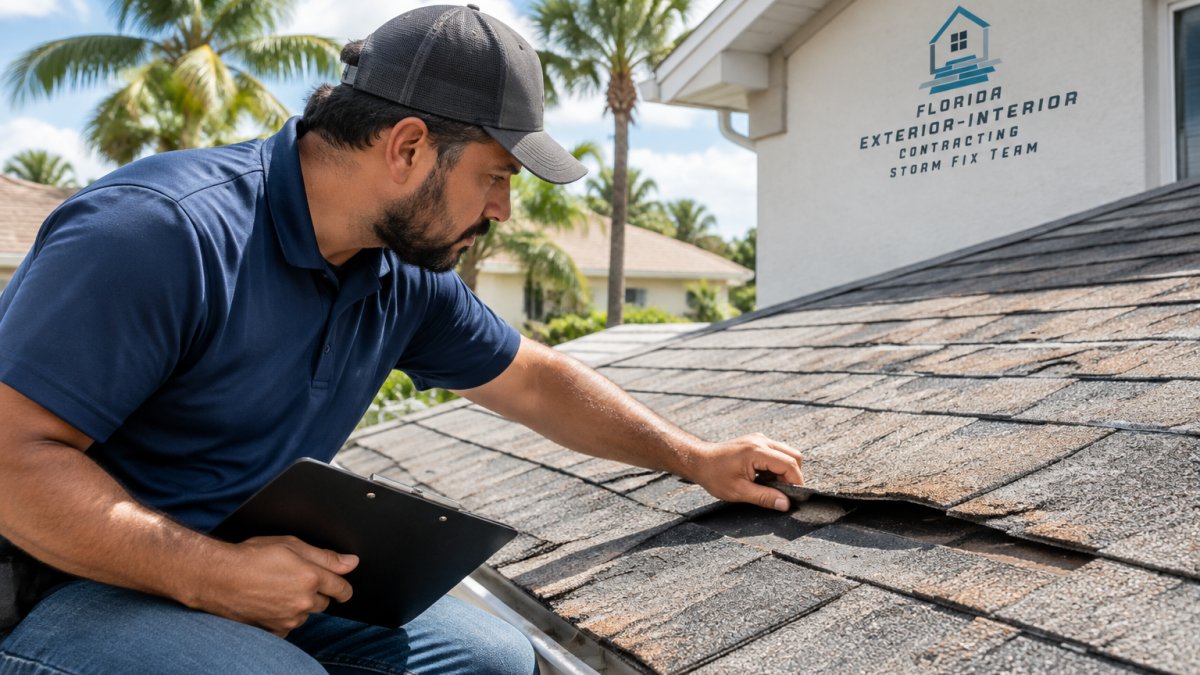
Repair financing fits when the roof deck is sound, the damage is localized, and the repair buys meaningful service life. Examples include a section of damaged shingles, flashing around a chimney or skylight, or a leak traced to one area.
Before borrowing for a repair, confirm the scope in writing. A repair that is really a patch on a failing system is money sunk into a roof that will need replacement soon, and financing it over a long term makes that worse.
When Replacement Financing Makes Sense
Replacement financing fits when the deck is compromised, the roof is near the end of its service life, or storm damage is widespread.
If an insurance claim is involved, document the damage before any permanent repair begins and get the insurer's scope in writing. Financing may bridge a delay, but it does not replace coverage, and borrowing before the claim is resolved can complicate the paperwork.
A Practical Sequence
- Get a written inspection that states the roof's condition and remaining service life.
- Get a written scope of work for the repair or replacement.
- Get financing quotes from at least two lenders using that same scope.
- Compare amount financed, APR, term, total of payments, and any prepayment penalty.
- Confirm in writing that the financing is separate from the roofing contract and that you can cancel the loan if the project does not proceed.
That sequence protects you from financing work you do not need and from discovering the true cost after the loan is signed.
How to Spot Roofing Companies That Offer Payment Plans You Can Trust
Trustworthy contractors share a pattern. They separate the roofing contract from the financing agreement, they disclose the lender's name, and they put the full terms in writing before you sign. Here's a checklist homeowners can use:
- Verify the contractor's state license and insurance certificates
- Confirm the lender's name and ask who services the loan
- Get the total amount financed, APR, and term in writing
Our own roofing questions answered page covers the service and payment questions homeowners ask most before committing, and you can see completed re-roofing work around Orlando to judge the craftsmanship before you decide.
A common mistake is treating a smooth sales pitch as proof of reliability. Ask for the license number and check it yourself. The Florida Department of Business and Professional Regulation maintains the state's license lookup, and the Federal Trade Commission's consumer advice on home improvement scams explains the red flags to watch for in contractor pitches.
Florida Insurance, Storm Damage, and Financing: What Homeowners Need to Know
Storm damage creates a specific financing problem: you may be waiting on an insurance claim while a damaged roof needs attention now.
Document the damage before any permanent repair begins. Our guide on why homeowners insurance denies roof claims walks through the common causes so you can plan the next step with clear eyes.
Florida roofs also face wind-uplift and code requirements that affect both materials and cost.
Request a Free Roof Inspection and Financing Consultation
The right order is inspection first, scope second, financing third. That sequence protects you from financing work you don't need and from discovering the true cost after the loan is signed.
At Florida Exterior-Interior Contracting, we're veteran-owned and bilingual, with direct owner oversight from start to finish.
A roof decision made under pressure is rarely a good one. Get started with Florida Exterior-Interior Contracting and request your instant quote so you can see your options before you commit.
Frequently Asked Questions
Do roofing companies usually offer financing?
Many roofing contractors Orlando homeowners hire do offer financing, though the terms vary widely. Some work with third-party lenders to provide loans with fixed monthly payments, while others offer in-house payment plans. Before you sign, ask whether the financing is through a lender or the contractor directly, what the annual percentage rate is, and whether there are prepayment penalties. A reputable contractor will put the terms in writing and give you time to review them before you commit.
What credit score is needed to finance a roof?
Most roof financing approval requirements vary by lender, but a credit score in the mid-600s or higher typically improves your chances of qualifying for standard terms. Some lenders work with lower scores but may charge a higher APR or require a larger down payment. If your credit is below that range, ask about co-signers, secured options like a home equity loan, or contractor-specific programs. Getting pre-qualified with a few lenders before you shop for a contractor helps you know your budget upfront.
Can I finance a roof repair as well as a replacement?
Roof replacement financing and repair financing are both available from many lenders and contractors. Smaller repair projects may qualify for short-term payment plans or promotional offers, while full replacements often use longer-term loans. The key difference is the total amount financed and the repayment timeline. Ask your contractor whether they offer separate programs for repairs versus replacements, and confirm whether a repair can be rolled into a larger replacement loan if the damage turns out to be more extensive than expected.
What should I compare when choosing roof financing?
Compare the APR, loan term, monthly payment, origination fees, and whether the rate is fixed or variable. Check for deferred-interest promotions, where interest accrues and hits you retroactively if you do not pay off the balance by the deadline. Also compare how each roofing company handles insurance claims and whether financing can be adjusted if the claim changes the scope of work. Get at least two or three written financing offers and read the fine print before signing anything.