 blog
Florida Roofing and Gutters: 2026 Homeowner's Guide
Table of Contents
- Florida Roofing and Gutters: What Homeowners Need to Know in 2026
- Roofing Materials for Florida Homes: A Side-by-Side Comparison
- How to Read Roofing Contractor Reviews Without Getting Fooled
- Your Roofing Estimate Checklist: What Every Quote Should Include
- Roof Replacement Timeline: From Inspection to Final Walkthrough
- Roof Inspection Questions to Ask Before You Sign Anything
- Gutter Systems and Drainage Design for Florida Homes
- Storm Damage, Insurance Claims, and Florida Building Codes
- Frequently Asked Questions
Last Updated: October 9, 2026
Florida Roofing and Gutters: What Homeowners Need to Know in 2026
Choosing roofing and gutters for a Florida home is less about style and more about survival. At Florida Exterior-Interior Contracting, a veteran-owned and bilingual contractor serving Orlando and Central Florida, we have spent over a decade watching storms separate roofs built for this climate from roofs merely installed here. That gap is the whole story of florida roofing and gutters: the difference between a system that sheds water and one that invites it in.
Why Florida's Climate Demands Specific Roofing Choices
Florida roofing systems face intense sun, driving rain, and high wind that most of the country never sees. A roof that performs well in a dry climate can fail here within a few seasons. The consequences show up in three places:
- UV exposure breaks down asphalt shingles faster in the South than in cooler regions.
- Wind-driven rain pushes water sideways, under flashing, and into places a simple shingle overlap will not protect.
- Humidity traps moisture in attics and underlayment, which is where mold and rot begin.
Material choice matters more here than almost anywhere else: the right system is designed around water management, not just coverage.
Roofing Materials for Florida Homes: A Side-by-Side Comparison
No single material wins for every Florida home. The right pick depends on your budget, roof pitch, and how long you plan to stay. Here is how the four common options compare.
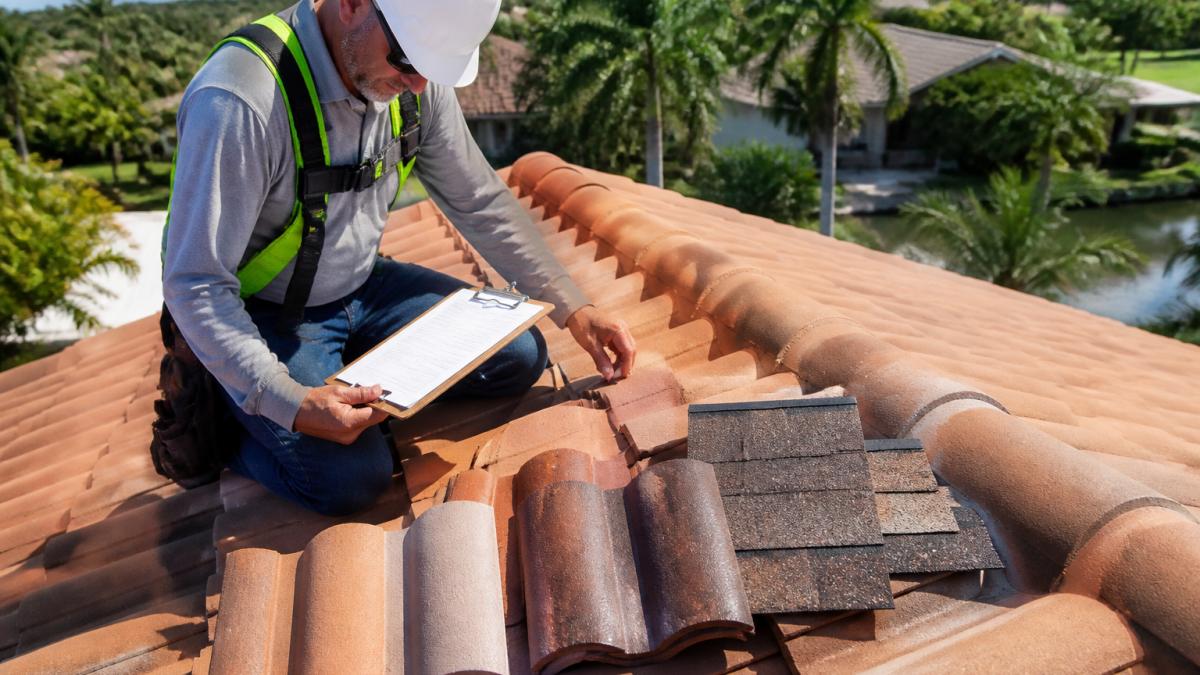
Shingle, Metal, Tile, and Flat Roof Options
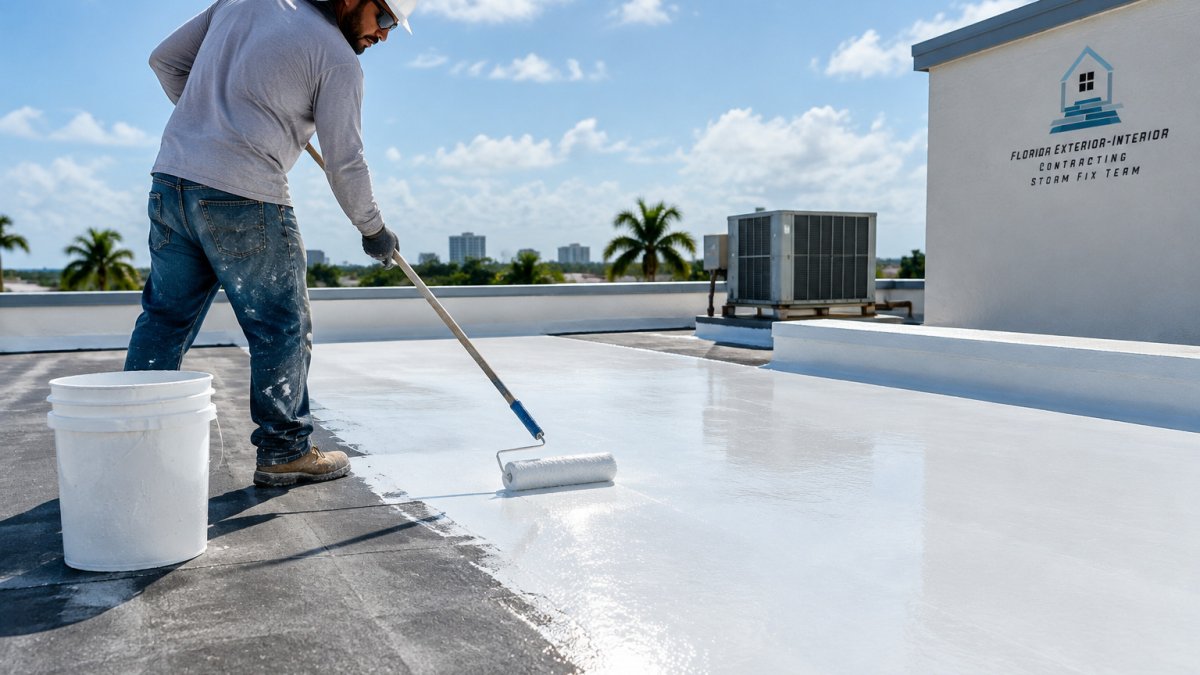
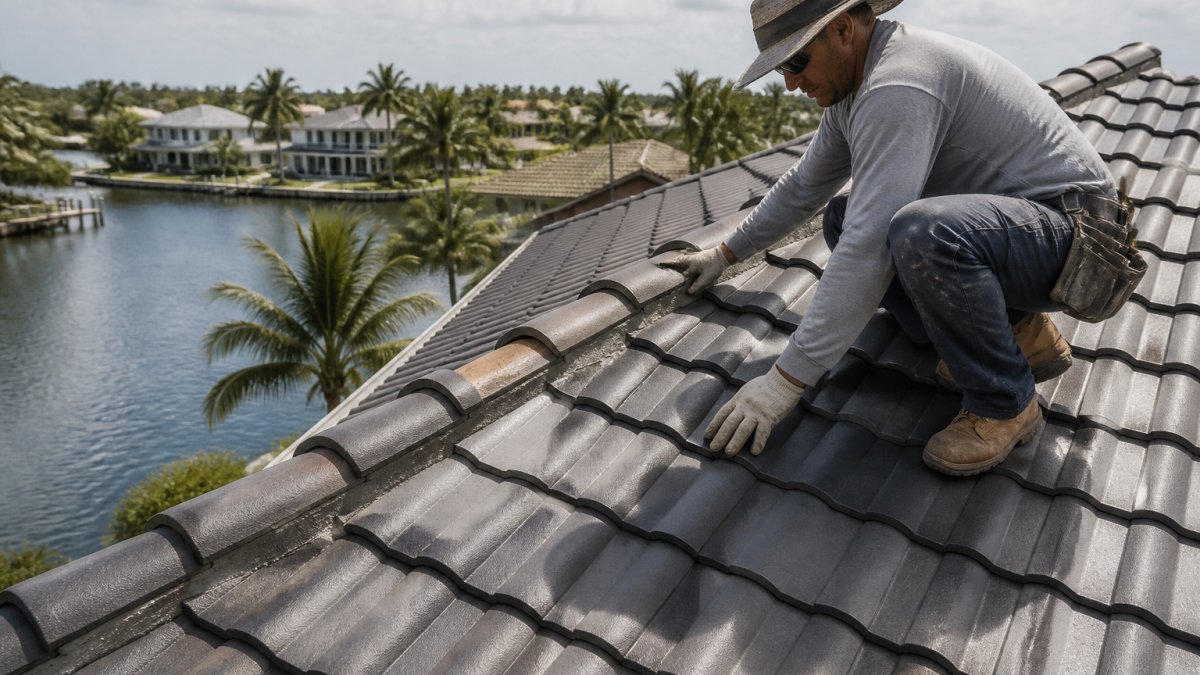
Asphalt shingle roofs are the most common and affordable upfront, but age faster under Florida sun. Metal roofing reflects heat, resists wind, and lasts longer, though it costs more to install. Tile roofing, including clay and concrete, offers longevity and curb appeal but is heavy and needs a structure that can carry the load. Flat and low-slope roofs need a membrane system, since standing water is the enemy on any roof with little pitch.
| Material | Best For | Key Strength | Main Trade-Off |
|---|---|---|---|
| Asphalt shingle | Tight budgets, standard pitches | Lowest upfront cost | Shorter lifespan in sun |
| Metal | Long-term ownership | Heat reflection, wind resistance | Higher install cost |
| Tile | Curb appeal, longevity | Decades of service | Heavy, needs structure |
| Flat membrane | Low-slope and flat roofs | Reliable drainage on flat decks | Requires expert installation |
How to Read Roofing Contractor Reviews Without Getting Fooled
Roofing contractor reviews tell you more about how a company handles problems than how it handles a perfect job. The reviews that matter describe what happened when something went wrong.
When you read reviews, look for these signals:
- Specificity. A review that names the crew, the timeline, or the fix is worth more than "great job."
- Problem resolution. How did the company respond to a callback or a leak?
- Patterns, not outliers. One bad review is noise. Ten similar complaints is a pattern.
Reviews that only praise speed or price, with no detail, tell you very little. Reviews describing communication, cleanup, and follow-through tell you almost everything.
Your Roofing Estimate Checklist: What Every Quote Should Include
A roofing estimate checklist is the best defense against a quote that grows after you sign. The number on the page means nothing if the scope behind it is vague.
Every written quote should clearly state:
- The full scope of work, tear-off and disposal included
- The specific materials and manufacturer by name
- Whether permits and inspections are included
If a quote skips any of these, ask why before comparing it to another. An apples-to-apples comparison is impossible when one quote hides its scope.
Roof Replacement Timeline: From Inspection to Final Walkthrough
A roof replacement timeline usually runs in four phases: inspection, estimate and contract, installation, and final walkthrough. Most residential replacements finish in days once materials arrive, though permitting and scheduling can add time.
Here is how the process typically unfolds:
- Inspection identifies the scope and any underlying damage.
- Estimate and contract lock in materials, price, and timeline.
- Permitting clears the project with your local building department.
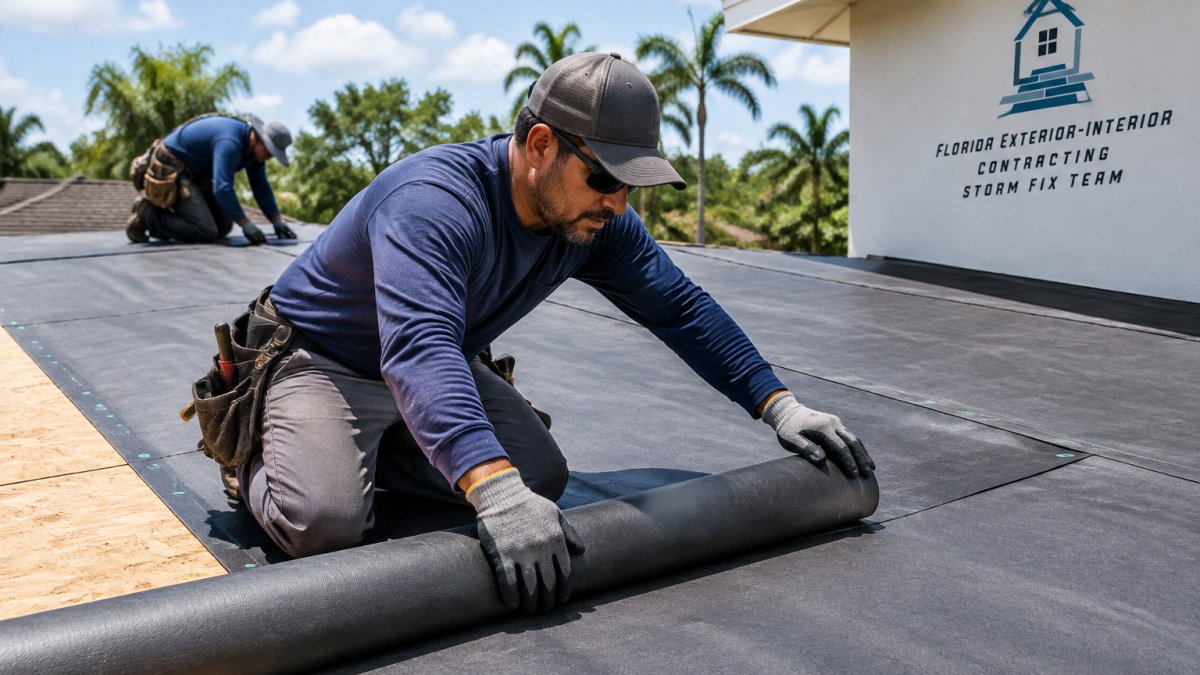
- Installation covers tear-off, decking repair, underlayment, and the new roof.
- Final walkthrough confirms cleanup, drainage, and warranty paperwork.
Ask for the timeline in writing. A contractor who will not commit to one is telling you something.
Roof Inspection Questions to Ask Before You Sign Anything
Roof inspection questions should force a straight answer about what you actually need, separating a repair from a replacement before you commit money.
Ask these directly:
- Is this a repair or a full replacement, and why?
- What did you find under the surface, and can you show me?
- Which parts are storm damage versus normal wear?
A trustworthy contractor will walk you through the findings and show you photos. One who dodges these questions is selling, not inspecting.
Gutter Systems and Drainage Design for Florida Homes
Gutter installation is where most roofing projects quietly succeed or fail. A perfect roof still causes water damage if the gutters cannot move the volume of rain that falls here. Because gutters carry equal billing in florida roofing and gutters, they deserve the same engineering attention as the roof itself, and most guides skip that entirely.
Gutter Types: Seamless vs. Sectional, and Which Materials Hold Up
- Seamless aluminum is the standard for most homes. It is formed on-site in one continuous run, so the only joints are at corners and outlets, fewer joints means fewer leak points under wind-driven rain.
- Sectional (pre-cut) gutters come in fixed lengths joined with seams and sealant. They cost less upfront but the seams fail first.
- Steel resists impact better than aluminum but can rust where the finish is scratched.
For most homes in this climate, seamless aluminum in a heavier gauge is the practical default. Confirm the gauge and the finish warranty in writing before you sign.
Sizing and Downspout Spacing: The Math Most Quotes Skip
Gutter capacity is driven by two numbers: the width of the trough and the number and size of downspouts. A common residential profile is a 5-inch or 6-inch K-style gutter.
A practical rule for downspout spacing is roughly one downspout for every 30 to 40 feet of gutter run, with additional downspouts on long runs and at inside corners where water collects.
Ask your contractor to show you the layout: where each downspout lands, and how far the discharge is carried from the foundation.
Gutter Guards: What They Solve and What They Do Not
Gutter guards reduce the volume of leaves and debris reaching the trough, cutting how often you clean them. They do not eliminate maintenance or increase capacity.
Match the guard type to your debris. Fine mesh handles pine needles and shingle grit; reverse-curve and brush styles handle larger leaves. No guard is maintenance-free, and a guard installed over an undersized gutter will still overflow.
Where the Water Goes: Drainage Design Beyond the Gutter
Drainage design centers on three things: gutter size, downspout placement, and where the water goes once it leaves the roof. The discharge point is the part homeowners notice last and regret most.
- Splash blocks dissipate water at the base of the downspout but only move it a short distance.
- Buried drain lines carry water to a pop-up emitter or a dry well away from the foundation.
- Grading should slope away from the house so surface water does not pool against the slab or crawlspace.
When gutters, downspouts, and grading are designed as one system, storm resilience improves and water damage drops. Treated as separate line items, the weakest link sets the outcome.
Storm Damage, Insurance Claims, and Florida Building Codes
Storm damage claims hinge on documentation, and building codes set the standard your repair must meet. Most search results list services and phone numbers but never explain how to verify a contractor, pull a permit, or read a code requirement. Here is the practical version.
Licensing and Insurance: How to Verify Before You Sign
Roofing is a licensed trade, and the license is issued by the state through the Department of Business and Professional Regulation (DBPR). You can look up any contractor's license status, qualifying agent, and complaint history through the DBPR's public license search.
Insurance is the second check. Ask for a current certificate showing both general liability and workers' compensation coverage, and confirm the policy is active by calling the carrier listed.
A short verification checklist:
- State license number, verified through the DBPR license search
- Certificate of insurance for general liability and workers' comp, confirmed with the carrier
- A physical business address, not just a phone number
Permits and Inspections: Who Pulls What
Most roof replacements require a building permit, which triggers an inspection before the job is closed out. The permit is normally pulled by the licensed contractor, not the homeowner, because the license authorizes the work.
Ask which inspections apply to your project and who schedules them. A final inspection that passes is your proof the work meets the code in force at the time of the permit.
Code Requirements That Affect Your Repair
Building codes are updated on a cycle, and the code in force when your permit is issued governs the work, not the code from when the original roof was built.
Two areas where this shows up most often:
- Wind resistance. Roof coverings and attachments are rated for wind speed, and the required rating depends on your location and exposure. A repair that reuses underperforming fasteners can fail the same way the original roof did.
- Secondary water barrier and underlayment. Requirements for the layer beneath the covering have tightened over time, and a code-compliant repair may require upgrading underlayment even if the visible shingles look fine.
Ask your contractor to cite the specific code section that applies to your repair, and to put it in the written scope. A contractor who can explain the requirement is a contractor who understands it.
Insurance Claims: Documentation Sequence
Storm damage claims hinge on documentation. The sequence that protects you:
- Document the damage with dated photos before any repair or temporary tarping begins.
- File the claim and keep every reference number and adjuster contact.
- Get a written scope from your contractor that matches the code requirements for your permit.
- Compare the adjuster's scope to the contractor's scope line by line, the gap between them is where disputes start.
- Confirm the repair meets current code, not the code from when the roof was built.
A licensed contractor handles the permits and inspections that prove code compliance. Confirm licensing and insurance before work starts, and keep the license number, permit number, and inspection results in your project file.
Frequently Asked Questions
What is the 25% roof rule in Florida?
The 25% rule applies when a roof repair exceeds 25% of the total roof area. Under Florida building code, if damage covers more than that threshold, the entire roof system must be brought up to current code rather than patched. This affects older homes especially. A licensed roofing contractor can measure the affected area and tell you whether a repair or full replacement is required before you file a claim.
How much does it cost to roof a 1,500-square-foot house in Florida?
Pricing for a roof replacement depends on material choice, roof pitch, number of layers to remove, and local labor rates. Asphalt shingle, metal, and tile each carry different costs, and quotes vary by contractor. Request a written estimate from a licensed Florida roofing contractor that breaks down materials, labor, permits, and disposal. Financing options may be available for qualifying homeowners.
Why do some Florida homes not have gutters?
Some Florida homes are built with a slab foundation and graded lot that directs rainwater away from the structure without gutters. Others use a drip edge and French drain system instead. However, homes with fascia, soffit, or landscaping close to the foundation typically benefit from gutter installation to prevent soil erosion, fascia rot, and water pooling near the slab. A contractor can assess whether your home needs them.
Should gutters be replaced when a roof is replaced?
Not always, but it is worth evaluating. If the existing gutters are sagging, rusted, or undersized for your roof's drainage area, replacing them during a roof project saves labor costs since the crew is already on site. If they are in good condition and properly sized, they can often be reattached. Ask your roofing contractor to inspect the gutter system during the roof inspection and include their recommendation in the written estimate.