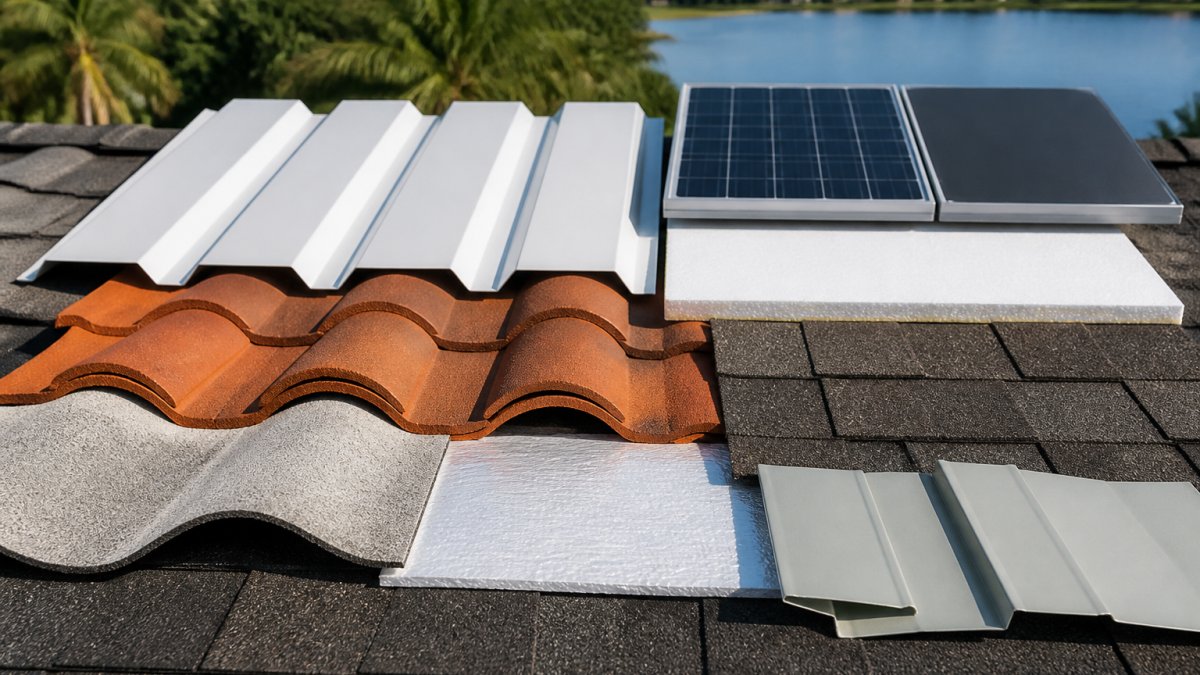
 blog
Energy Efficient Roofing Materials for Central Florida
Table of Contents
- Energy Efficient Roofing Materials for Central Florida: A 2026 Comparison
- Comparison Table: Cost, Lifespan, and Heat Performance
- Energy-Efficient Metal Roofing: Reflectance and Longevity
- Cool Roof Shingles: Asphalt Options That Meet ENERGY STAR Standards
- Tile Roof Energy Efficiency: Clay and Concrete in Florida's Climate
- Roof Insulation and Ventilation: The System Behind the Savings
- Lifecycle Cost, Code, and Insurance: What Central Florida Homeowners Should Weigh
- Choosing the Right Energy Efficient Roofing for Your Home
- Frequently Asked Questions
Last Updated: October 12, 2026
Energy Efficient Roofing Materials for Central Florida: A 2026 Comparison
Choosing energy efficient roofing materials for central in Florida starts with one hard truth: your roof is the largest surface exposed to the sun, and it decides how much heat your air conditioner fights all summer. At Florida Exterior-Interior Contracting, we have spent over a decade installing and repairing roofs across Orlando and Central Florida.
Heat gain works in three ways. The sun's radiation hits your roof surface, conduction carries that heat through the deck and into the attic, and trapped attic air radiates down into living space. The U.S. Department of Energy cool roof guidance explains that reflective surfaces stay cooler and reduce the heat transferred into the building.
How Heat Moves Through a Central Florida Roof
Central Florida's intense sun, high humidity, and heavy afternoon rain punish roofs in ways other climates do not: heat builds on the surface, humidity pushes moisture into every gap, and storm-driven rain tests waterproofing within minutes. A roof that reflects solar heat and sheds water quickly outperforms one that only does one job well, the lens we use to evaluate any material here.
Comparison Table: Cost, Lifespan, and Heat Performance
The table below summarizes how the main options compare. Lifespans are general industry ranges that vary with installation quality, ventilation, and maintenance. Pricing depends on roof size, pitch, tear-off, and deck condition, so we quote each project individually.
| Material | Relative Cost | Typical Lifespan | Heat Performance | Best For |
|---|---|---|---|---|
| Metal (standing seam) | Higher upfront | 40-70 years | Excellent, high solar reflectance | Long-term owners, low-slope and steep roofs |
| Cool roof asphalt shingles | Lowest upfront | 15-25 years | Good when rated reflective | Budget-focused replacements |
| Clay tile | High | 50+ years | Very good, thermal mass | Spanish and Mediterranean designs |
| Concrete tile | Moderate to high | 40-50 years | Very good, thermal mass | Most residential roof styles |
| TPO / PVC membrane | Moderate | 15-25 years | Good on flat roofs | Low-slope and flat roofs |
| Modified bitumen | Lower | 10-20 years | Fair | Flat roof repairs and budgets |
Energy-Efficient Metal Roofing: Reflectance and Longevity
Metal roofing is the strongest performer for heat reflection when it carries a reflective finish. Standing seam panels shed rain fast, resist wind uplift, and hold up to extreme temperatures without cracking.
For long-term homeowners, we usually point to metal first: it handles hurricane resistance, heavy rain, and humidity well, and modern finishes keep their reflectivity far longer than older painted panels.
Cool Roof Shingles: Asphalt Options That Meet ENERGY STAR Standards
Cool roof shingles are asphalt shingles engineered with reflective granules that bounce solar heat away. The ENERGY STAR reflective roof products program lists products that meet its solar reflectance thresholds, and checking that list before you buy is the simplest way to avoid a product that only looks reflective.
The honest limitation is lifespan: asphalt shingles typically last 15 to 25 years in this climate, so you will replace them sooner than metal or tile. For a budget-driven replacement they remain reasonable; for a forever roof, they are not.
Tile Roof Energy Efficiency: Clay and Concrete in Florida's Climate
Tile roof energy efficiency comes from thermal mass: clay and concrete tiles absorb heat slowly and release it slowly, so the attic peaks later and lower.
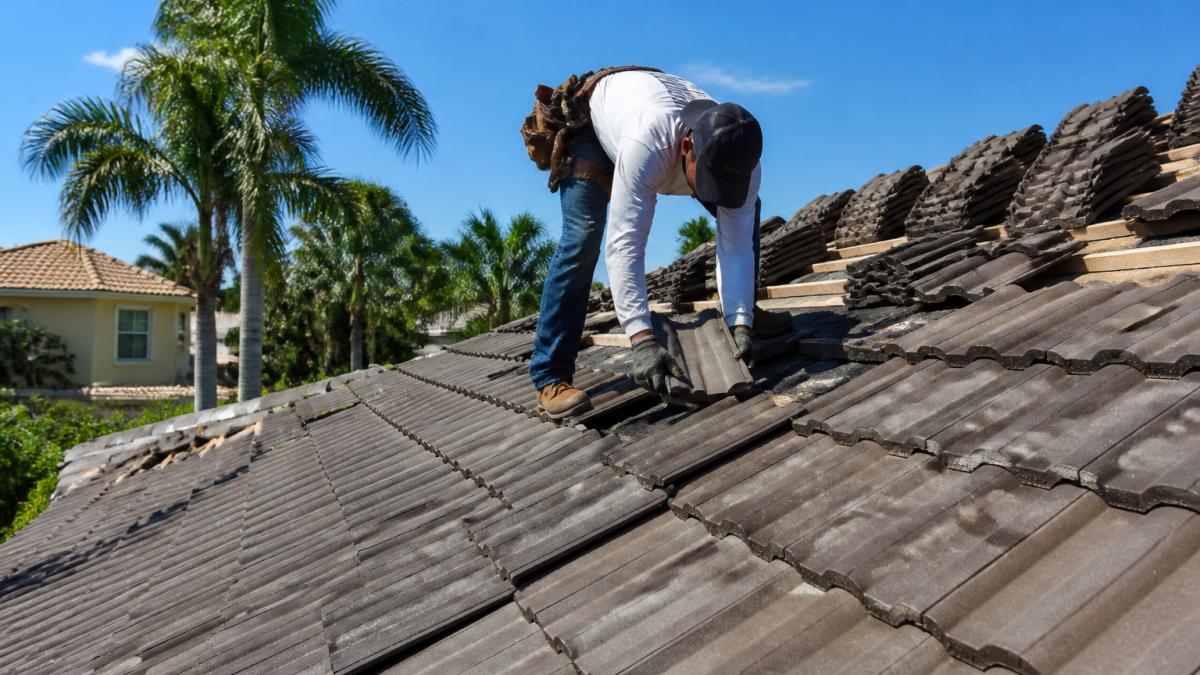
Clay and concrete also resist fire, humidity, and rot, and hold color without repainting. The catch is weight: tile needs a structure that can carry it, so an engineer's review may be required on some homes.
Clay Tile vs. Concrete Tile: Which Performs Better?
Clay tile wins on longevity and colorfastness, lasting 50 years or more without fading. Concrete tile costs less, performs almost as well thermally, and offers more color and profile options. Both handle hurricane resistance and heavy rain well when installed to code. For most Central Florida homeowners, concrete tile delivers the better balance of performance and budget, while clay suits buyers who want maximum lifespan and authentic Spanish or Mediterranean character.
Roof Insulation and Ventilation: The System Behind the Savings
A reflective roof surface is only the first line of defense. What reaches your thermostat depends on how the entire assembly, surface, underlayment, deck, insulation, and ventilation, works together. Skip any layer and the savings from the others shrink.
How the Assembly Moves Heat
Solar radiation hits the surface: some reflects back to the sky, some absorbs and conducts through the deck into the attic. Once there, heat has two paths into living space, conduction through the ceiling assembly (slowed by insulation) and radiation from hot attic surfaces downward (slowed by radiant barriers and a cooler attic).
Reflectance reduces how much heat enters, insulation reduces how much escapes into living space, and ventilation reduces how much heat lingers. Each one multiplies the value of the other two.
Insulation: R-Value and the Attic Floor
In this climate, attic floor insulation is measured in R-value, and most practitioners target R-30 to R-38 for existing homes, with newer construction trending higher. The exact target depends on your ceiling assembly, duct placement, and whether ducts run through the attic. Ducts in a hot attic lose cooling capacity before the air reaches a register, which is why duct sealing and insulation often matter as much as the roof surface.
Two common mistakes we see on inspections:
- Insulation compressed by stored boxes, plywood walkways, or HVAC equipment, which cuts its effective R-value
- Insulation installed tight against the roof deck in a way that blocks airflow from the soffit intake
Ventilation: Intake, Exhaust, and Balance
Ventilation only works when intake and exhaust are balanced. Soffit vents pull in cooler outside air; ridge vents, off-ridge vents, or powered attic ventilators push hot air out. If the intake is blocked by insulation, paint, or debris, the exhaust has nothing to pull and the attic stays hot no matter how many vents are on the roof.
A few practical rules most installers follow:
- Net free area: total intake and exhaust vent area should be roughly balanced, with slightly more intake than exhaust in most designs
- Air sealing first: sealing gaps around recessed lights, top plates, and plumbing penetrations keeps conditioned air from leaking into the attic
- Radiant barrier: a foil radiant barrier stapled to the underside of the roof rafters can reduce radiant heat gain into the attic, though it works best when the attic is already well ventilated
Why This Matters More Here Than Elsewhere
Long cooling seasons, high humidity, and heavy afternoon rain make attic moisture a year-round concern. A poorly ventilated attic traps humid air, which can condense on cooler surfaces and feed mold and wood rot, which is why we treat ventilation as a code and durability issue, not just an efficiency upgrade.
Lifecycle Cost, Code, and Insurance: What Central Florida Homeowners Should Weigh
Sticker price is the wrong number to compare. The right number is total cost of ownership: purchase, installation, maintenance, repairs, energy use, insurance treatment, and replacement interval, divided across the years you plan to own the home. A cheaper roof replaced twice often costs more than one durable roof installed once.
Building a Lifecycle Comparison
A simple framework most contractors use:
- Installed cost, material plus labor, tear-off, deck repair, and disposal
- Annual maintenance, inspections, flashing repairs, and any repainting or resealing
- Energy cost, the portion of your cooling bill attributable to heat gain through the roof
- Repair frequency, how often you expect to patch or replace sections before the full roof is due
- Replacement interval, the expected service life under local sun, rain, and wind exposure
- Insurance and incentive treatment, credits, discounts, or requirements tied to the roof's rated performance
Run the numbers over a 30-year horizon and the ranking often shifts: a roof with a higher upfront cost but a 40- to 50-year service life can beat a lower-cost roof needing replacement every 15 to 25 years, especially once you account for the disruption and labor of a second installation.
The 25% Roof Rule and Permitting
Under Florida law, if you replace more than 25% of a roof's surface in a single year, the entire roof generally must be brought up to current code.
What this means in practice:
- A patch on a storm-damaged section can still make sense if it stays under the threshold and the rest of the roof is sound
- Once you cross the threshold, expect the scope to expand to underlayment, flashing, fasteners, and any other components the current code requires
- A permit and inspection are part of the process, not optional add-ons
The Florida Building Code online resources set the wind and product standards your roof must meet. Wind-borne debris regions, product approval numbers, and fastener schedules are all specified there, and a permit inspection confirms the work matches them.
Insurance and Incentive Considerations
Insurance carriers here often price policies based on roof age, material, and whether the roof carries certain wind or impact ratings. Patterns worth knowing:
- Wind mitigation features, secondary water barrier, reinforced fasteners, and rated attachment methods can qualify a home for premium discounts under the state's wind mitigation inspection program
- Roof age, many carriers will not write or renew a policy on a roof past a certain age, regardless of condition
- Impact-rated products, some carriers offer credits for roofing products that meet impact-resistance standards
Federal and state incentive programs change yearly, so check current program rules before you buy rather than relying on a figure from an old article. What does not change is the documentation requirement: keep receipts, product spec sheets, and the permit record.
Putting It Together
For a homeowner staying 20 years or more, the durable options, metal, clay, and concrete tile, usually win on lifecycle cost once you fold in replacement intervals and insurance treatment. For a shorter horizon or tight budget, a reflective asphalt shingle roof with a properly ventilated attic still delivers meaningful savings at a lower entry price. The right answer depends on your roof pitch, structural capacity, existing roof type, and how long you plan to own the home, which is why we assess each roof individually rather than quote a flat figure.
Choosing the Right Energy Efficient Roofing for Your Home
There is no single best material for every Central Florida home. Match the roof to your situation:
- Staying 20+ years: metal or tile, where lifecycle cost favors durability
- Budget-limited replacement: cool roof shingles with proper ventilation
- Flat or low-slope roof: TPO, PVC, or modified bitumen membrane
A reputable contractor will tell you when a repair is enough and when a replacement is the honest answer. That is the standard we hold ourselves to at Florida Exterior-Interior Contracting.
Roof replacement is a major decision, and quotes vary widely in scope, material, and honesty. Florida Exterior-Interior Contracting removes that guesswork with clear communication, certified roofing professionals, and durable, code-compliant installations built to withstand Central Florida weather.
Frequently Asked Questions
What is more energy-efficient, a metal roof or shingles?
Metal roofing typically reflects more solar heat than standard asphalt shingles, especially when finished with a reflective coating or light color. Cool roof shingles rated by ENERGY STAR narrow that gap, but metal still tends to perform better over decades because the reflective surface does not degrade the way granules do. The bigger variable is your attic insulation and ventilation, since a reflective roof over a poorly insulated attic will not deliver the savings you expect.
Are tile roofs energy-efficient in Central Florida?
Clay and concrete tile perform well in Central Florida's climate. The air gap between the tile and the roof deck lets heat escape before it reaches the attic, and lighter tile colors reflect more solar heat. Tile also resists wind uplift and heavy rain, which matters during hurricane season. Tile roof energy efficiency depends on the underlayment, attic insulation, and ventilation working together, not the tile alone.
What is the 25% roof rule in Florida?
Florida's roof replacement rule generally requires that if more than 25% of a roof's surface is repaired or replaced in any 12-month period, the entire roof must be brought up to current Florida Building Code standards. This affects material choice, underlayment, and attachment methods. A licensed contractor can confirm how the rule applies to your specific roof before work begins.
Do cool roofs actually lower cooling costs in hot, humid climates?
Cool roofs reduce the amount of solar heat absorbed by the roof surface, which lowers attic temperatures and the load on your HVAC system. In hot, humid climates like Central Florida, the savings come mainly from reduced attic heat gain rather than from the roof surface itself. Pairing a cool roof with proper insulation and ventilation produces the largest and most consistent reduction in cooling costs.