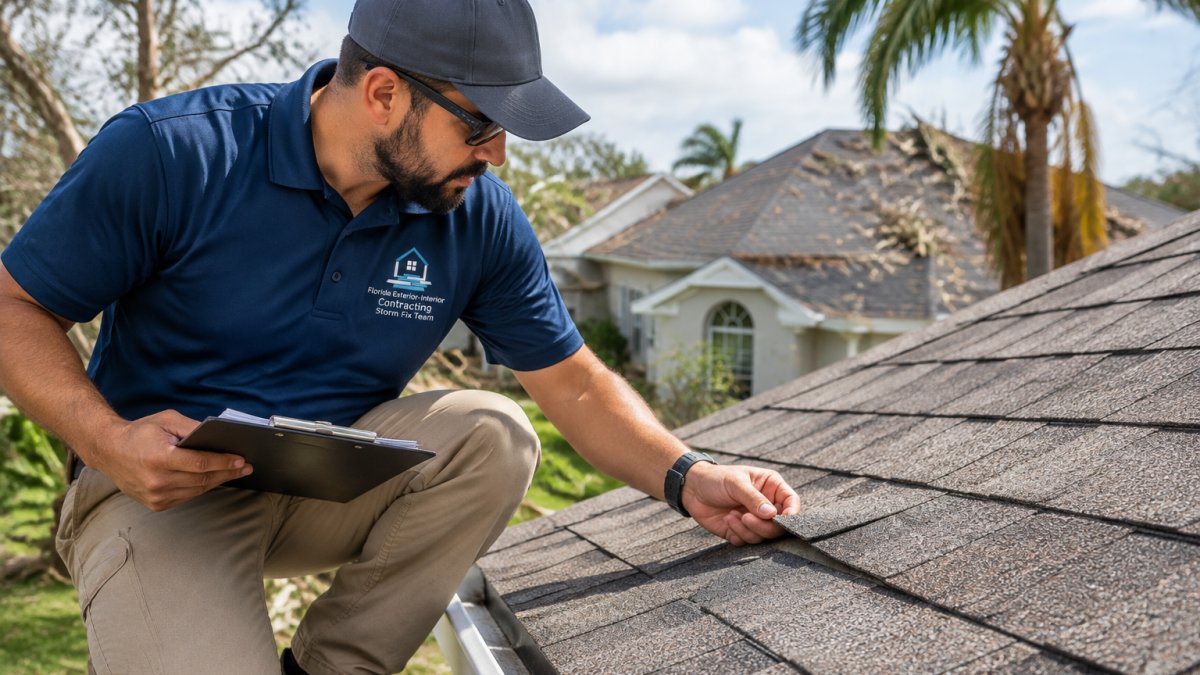
 Listicle
7 Benefits of Professional Roof Inspection After Storms
Last Updated: November 5, 2026
Quick Summary
A professional roof inspection after a storm confirms whether wind, hail, or driving rain have compromised your roofing system, since the most costly damage is almost never visible from the ground. It also produces dated photo documentation and a written report that separates storm damage from normal wear, which insurers require for a claim.
- Storm damage often clusters on one roof elevation, so each plane should be checked separately.
- Water intrusion usually shows in the attic as rafter staining, sagging decking, or rusted nail tips before it reaches your ceiling.
- Making permanent repairs before the adjuster inspects can wipe out your insurance claim.
- A free inspection is usually a sales visit, while a paid inspection gives you a written report you own.
- Verify state licensing and insurance coverage before anyone climbs a ladder.
Table of Contents
- Why a Professional Roof Inspection After a Storm Matters
- Signs of Roof Storm Damage You Should Never Ignore
- What to Expect During a Roof Inspection
- Roof Damage Insurance Claim Documentation That Gets Results
- How Much a Roof Inspection Costs and What You Get
- Early Detection: Preventing Further Damage and Costly Repairs
- How to Choose a Qualified Roof Inspector
- Book Your Post-Storm Roof Inspection
- Frequently Asked Questions
Why a Professional Roof Inspection After a Storm Matters
A professional roof inspection after a storm is the only reliable way to confirm whether high winds, hail, or driving rain have compromised your roofing system.
Wind damage rarely announces itself. A gust peels back the edge of a shingle, the adhesive strip fails, and the next rain pushes water under the layers.
That gap between what a roof shows and what it hides is the entire case for a professional inspection.
What Homeowners Miss From the Ground
Standing in the yard with a phone camera, you can spot a missing shingle or a fallen branch. You cannot see granule loss, lifted flashing, cracked pipe boots, or hairline fractures in the roof decking. Those are the failures that let water into the attic weeks later, long after the storm has left the news cycle.
FEMA guidance on post-disaster roof inspections recommends documenting roof condition before making temporary repairs, since the evidence you collect in the first days carries the most weight with insurers.
Signs of Roof Storm Damage You Should Never Ignore
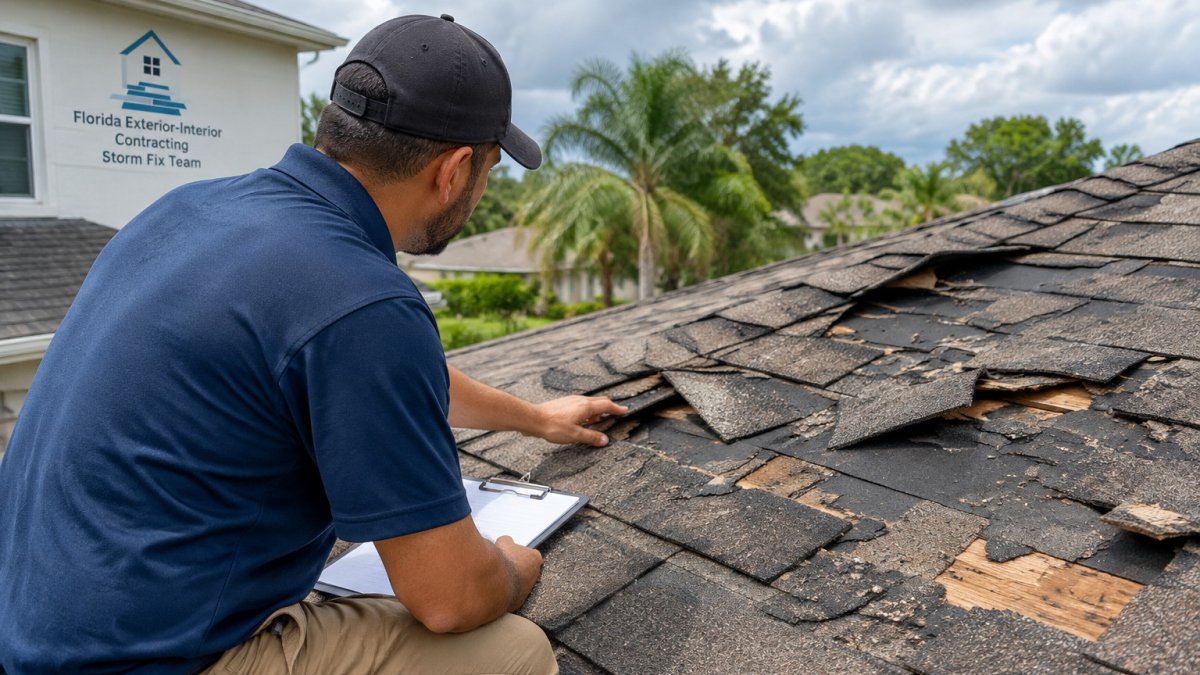
The clearest signs of roof storm damage are missing or lifted shingles, granule buildup in gutters, dented vents and flashing, and water stains on attic rafters. Any one of these justifies a prompt inspection.
Watch for these in the days after a storm:
- Shingles that look wavy or uneven across a slope, a sign the seal has broken
- Granules collecting at downspout outlets, which means the shingle surface is wearing fast
- Dents on metal roof vents, gutters, or fascia, the classic fingerprint of hail
- Daylight visible through the roof deck from inside the attic
- Brown rings or bubbling paint on ceilings and walls below the roof line
- Grit or shingle fragments on the ground after wind
One detail most guides skip: damage often clusters on one elevation. Wind-driven rain hits the same slope repeatedly, so a single compromised plane can leak for months while the rest of the roof stays dry. A qualified roofer checks each plane separately rather than giving the whole roof a single pass-or-fail verdict.
What to Expect During a Roof Inspection
A professional roof inspection covers the roof surface, flashing, vents, gutters, and attic. Pricing and scope depend on the property, so contact Florida Exterior-Interior Contracting for current details. The exact scope depends on why you are booking it, so the sequence below reflects a full post-storm assessment rather than a quick sales walk.
A typical sequence for a post-storm assessment looks like this:
- Exterior walk-around to check gutters, downspouts, fascia, and soffits for impact marks and debris
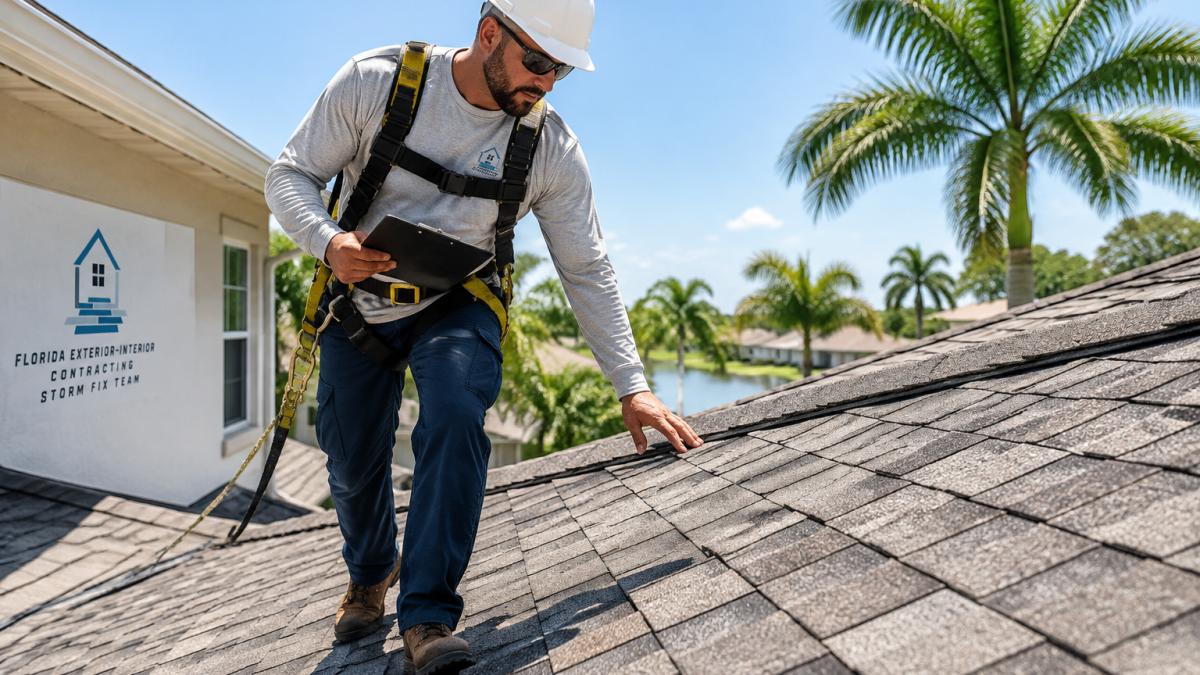
- Roof surface inspection on foot, checking shingle field, ridge caps, and hip lines for wind and hail damage
- Flashing and penetration check at chimneys, skylights, pipe boots, and valleys
- Attic inspection for water intrusion, staining, and decking condition
- Photo documentation of every finding, labeled by location
- Written report with repair recommendations and urgency ratings
Inspection Timing and Urgency by Damage Type
Not every storm calls for the same response time. Distinguishing urgent signs from less visible concerns helps you decide how fast to book, and it also helps you describe the problem accurately when you call.
- Active leak or water dripping inside the home: treat as urgent and arrange an inspection the same day or next day, with temporary tarping if the roofer offers it
- Missing shingles, exposed decking, or a visible hole: urgent, because the next rain will drive water into the assembly
- Dented vents, gutters, or fascia with no interior signs: schedule within the week, since hail damage often shows up as bruising rather than tears
- Granule buildup in gutters or downspouts: schedule within a few weeks, because granule loss signals a shingle surface that is wearing faster than it should
- No visible signs but a major storm passed through: book a routine inspection before the next heavy rain, because hidden damage is the most common pattern after wind events
A common pattern is that homeowners wait for a ceiling stain before calling. By then, moisture has often been sitting in the assembly for weeks, which is why timing matters more than the size of the storm.
Inside the Attic: Where Water Intrusion Shows Up First
Water intrusion shows up in the attic before it reaches your ceiling. Look for dark staining on rafters, sagging decking, rusted nail tips, and damp insulation. Mold and rot follow within weeks in a warm, humid climate, which is why an attic inspection belongs in every storm assessment.
If you want quick answers about how we handle inspections and repairs, our roofing questions answered page covers the details homeowners ask about most.
Roof Damage Insurance Claim Documentation That Gets Results
Strong roof damage insurance claim documentation is photo-heavy, dated, and specific about cause.
Your documentation package should include wide shots of each roof plane, close-ups of every damaged area, attic photos showing water intrusion, and a written narrative tying the damage to a dated storm event.
Watch out: making permanent repairs before the adjuster inspects can wipe out your claim, because the evidence disappears with the damage.
For a deeper look at the denial reasons we see most often, read why homeowners insurance denies roof claims.
How Much a Roof Inspection Costs and What You Get
Roof inspection cost varies by roof size, pitch, accessibility, and the scope of the report, so most roofing companies quote each property individually rather than publishing a flat figure. That said, homeowners deserve a realistic range before they book, plus a clear picture of what the deliverable should contain.
A free inspection is often a sales visit. The inspector's job is to convert you into a replacement contract, which colors the findings and usually means you get verbal observations and a repair quote rather than a report.
Ask what the deliverable is before you agree to anything:
| Inspection Type | Typical Deliverable | Best For |
|---|---|---|
| Free sales inspection | Verbal findings, repair quote | Homeowners already set on replacing |
| Paid condition inspection | Written report, labeled photos | Insurance claims, second opinions |
| Post-storm assessment | Damage narrative, urgency ratings | Active claims and disputes |
What a Professional Inspection Report Should Contain
A report worth paying for is more than a stack of phone photos. It should identify each roof plane separately, label every finding by location, and separate storm damage from normal wear. A usable post-storm report typically includes:
- Roof plan or elevation map showing which slope each finding belongs to, since damage often clusters on one elevation
- Dated wide shots of every roof plane, plus close-ups of each damaged area
- Attic photos showing staining, decking condition, and any active moisture
- A written damage narrative tying findings to a specific dated storm event
- Repair priorities ranked by urgency, from active leak to monitor-only
- A clear repair-versus-replacement recommendation with the reasoning behind it
Watch out: a report that lists damage but never separates storm damage from pre-existing wear gives your insurer an easy reason to deny the claim, because the adjuster cannot tell which line items belong to the storm.
Free-Inspection Caveats and Repair Estimates
Free inspections are common after a storm, and some are legitimate. The caveat is that a free inspection is funded by the repair or replacement it is designed to sell, so the findings tend to lean toward replacement.
Repair estimates are a separate document from the inspection report. Ask for the estimate in writing, itemized by trade and material, with a line for temporary tarping if the roof is actively leaking. For current pricing, contact Florida Exterior-Interior Contracting directly for a quote. Financing is available for those who qualify.
Early Detection: Preventing Further Damage and Costly Repairs
Early detection is the difference between a repair and a roof replacement. A lifted flashing detail costs far less to fix than the rotted decking it causes after a season of leaks.
Water is patient. It enters at a penetration, travels along a rafter, and shows up as a ceiling stain in a room nowhere near the actual breach.
Preventive maintenance pays off here. A short inspection after every major storm, plus a scheduled check before hurricane season, catches small failures while they are still small.
How to Choose a Qualified Roof Inspector
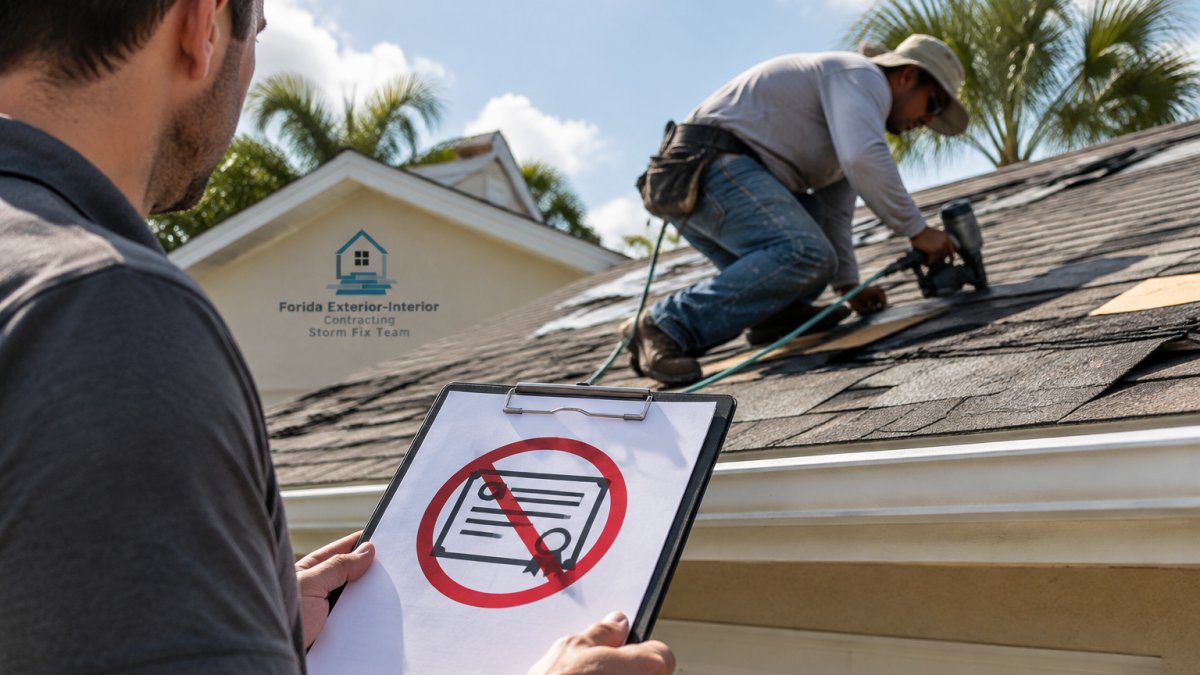
Choose a qualified roof inspector by verifying state licensing, insurance coverage, and local storm experience before anyone climbs a ladder. Ask for the license number and confirm it, rather than accepting a logo on a truck.
Use this checklist before you book:
- License number provided in writing and verifiable with the state
- General liability and workers' compensation coverage confirmed
- Written report and photo package included in the scope
- Inspector walks the roof rather than inspecting from the ground
- No pressure to sign a contract during the inspection
- Clear explanation of what is storm damage versus normal wear
- Local references from comparable properties
A common mistake is hiring the first crew that knocks after a storm. Out-of-area contractors follow storm tracks, collect deposits, and disappear. Ask how long the company has operated in your area and who oversees the work.
To see the standard of work we hold ourselves to, browse our completed re-roofing projects.
Book Your Post-Storm Roof Inspection
Storm damage often looks minor from the driveway and leaks by the first heavy rain. Scheduling an inspection before the damage spreads can help. Our certified professionals offer inspection and repair assessments, with direct owner oversight from start to finish.
Get started with Florida Exterior-Interior Contracting and request your instant quote today.
Frequently Asked Questions
Should you get your roof inspected after a hailstorm?
Yes. Hail damage is often invisible from the ground because it bruises shingle granules and cracks the mat underneath without tearing the surface. A professional roof inspection after a hailstorm checks for soft spots, granule loss, and dented flashing or vents. Catching these early prevents water intrusion during the next rain and gives you photo documentation for an insurance claim while the damage is fresh.
How much does a typical roof inspection cost?
Roof inspection cost varies by roof size, pitch, and whether the inspector uses drone imaging or walks the surface. Many contractors offer free storm-damage inspections, but confirm what the report includes before booking. A written report with photos and repair recommendations is worth more than a quick verbal walkthrough. Ask upfront whether the inspection fee is credited toward any repair work you approve.
When should you inspect your roof after a storm?
Schedule a roof inspection within a few days of any severe storm with high winds or hail. Waiting lets temporary patches fail and water intrusion spread into decking, insulation, and ceilings. If you see active leaks, missing shingles, or granules in gutters, call sooner. Document any interior water stains with dated photos before the inspector arrives to support your roof damage insurance claim documentation.
What should you avoid saying to a roof insurance adjuster?
Avoid guessing at causes or downplaying damage. Do not say the roof is old or that you noticed a leak before the storm, since either can shift the claim toward normal wear. Stick to facts: the storm date, what you observed, and the inspection report. Let your contractor's photo documentation speak for the damage. Keep all communication in writing where possible so the record stays clear.
Storm damage does not wait, and neither should your inspection. If your roof took a hit this season, let our veteran-owned team take a look before the next rain finds the weak spot. Get started with Florida Exterior-Interior Contracting and protect your property with a roof built to withstand harsh weather.