 How-to
7 Signs of Wind Damage on Roof Shingles to Check
Last Updated: November 8, 2026
Quick Summary
You can identify wind damage on roof shingles from the ground using binoculars, looking for seven signs: missing shingles, missing tabs, lifted or curled tabs, flipped tabs, creased shingles, torn edges, and granule loss. Damage tends to cluster on slopes and edges that faced the wind, especially ridges, hips, and rake edges.
- Inspect from the ground at four angles; never walk a wet or wind-damaged roof.
- Plan on 20 to 30 minutes per side, in daylight with the sun at your back.
- Clustered damage on one or two wind-facing slopes points to wind rather than age.
- Shoot five photo frames per slope with location and date stamps turned on.
- Report your claim promptly; most policies require notice within a reasonable time.
Table of Contents
- Start With a Safe Ground-Level Roof Inspection
- 7 Signs of Wind Damage on Asphalt Shingles
- How to Identify Wind Damage on Roof Shingles Pictures Can Confirm
- Wind Damage vs. Aging, Poor Installation, and Other Storm Damage
- Flashing, Soffit, Fascia, and Interior Clues
- Wind Damage Shingles Insurance Claims: How to Document What You Find
- Does Wind Damage to Roof Insurance Coverage Apply?
- Schedule a Professional Roof Inspection
- Frequently Asked Questions
Start With a Safe Ground-Level Roof Inspection
Wind damage on roof shingles is physical harm to asphalt shingle roofing caused by high winds, and most of it is visible from the ground. The National Weather Service guidance on post-storm safety is blunt on this point, and it is right.
Below, we walk through a ground-level inspection approach, the seven signs that matter, and how to document what you find for an insurance claim.
What to Bring and Where to Stand
You need five things: binoculars (8x to 10x is enough), a phone camera with optical zoom, a notebook or notes app, a flashlight for gutter and soffit checks, and closed-toe shoes. That's it. No ladder.
Stand back from the house at four angles, far enough to see a full slope in one view:
- Across the street, facing the front slope. This is your best wide shot for missing shingles and ridge damage.
- At each back corner, looking along the ridge line. Ridge caps take wind first, and corner views reveal lifted or flipped tabs that disappear head-on.
- Beside the garage or an addition, where rooflines meet. Wind swirls at inside corners and step flashing, so damage clusters here.
Use binoculars to scan one slope at a time from ridge to eave in overlapping horizontal bands, and pause on every shadow line.
Watch out: walking a wet roof is the single most common way homeowners turn a repair into an emergency room visit.
Step-by-Step: How to Inspect a Roof for Wind Damage
Here is how to inspect a roof for wind damage in seven steps. Plan on 20 to 30 minutes per side, in daylight with the sun at your back so shadows fall toward you.
- Walk the perimeter first. Note any shingle pieces, granules, or debris on the ground. Mark where each piece landed; debris below a slope points to damage above it.
- Check the gutters. Look inside them from a step stool, and look at the downspout splash zones. Granule piles and shingle fragments in gutters and at splash blocks are evidence of loss higher up.
- Scan each slope with binoculars. Move slowly, top to bottom, left to right, in overlapping bands. Call out each anomaly to your notes as you find it.
- Photograph every slope. Take wide shots first, then zoomed shots of each damaged area. Include one frame that shows the whole house so the slope is identifiable later.
- Look at edges and ridges. These take wind first. Check rake edges, eaves, ridge caps, and hip lines for lifted, creased, or missing pieces.
- Check flashing, soffit, and fascia. Gaps here mean water is getting in. Look for lifted metal, pulled sealant, dented soffit, and fascia separated from the wall.
- Write down what you see and where. Note the slope (front, rear, left, right), the approximate location (near the ridge, mid-slope, at the eave), and the date and time.
Do this before you call anyone. A written record made the same day carries more weight than a memory from three weeks later, and it gives your roofer or adjuster a map to follow.
Why Not to Climb Up
A ground inspection is not a shortcut; it is the correct first pass. A pitched asphalt roof is a fall hazard even in dry weather. After a wind event, the risks multiply: loose granules act like ball bearings, lifted tabs hide soft spots, and damaged flashing can give way. If you cannot see a slope from the ground, call a professional rather than get a ladder.
7 Signs of Wind Damage on Asphalt Shingles
The seven signs of wind damage on asphalt shingles are missing shingles, missing tabs, lifted or curled tabs, flipped tabs, creased shingles, torn edges, and granule loss. Each tells a slightly different story about how the wind hit your roof.
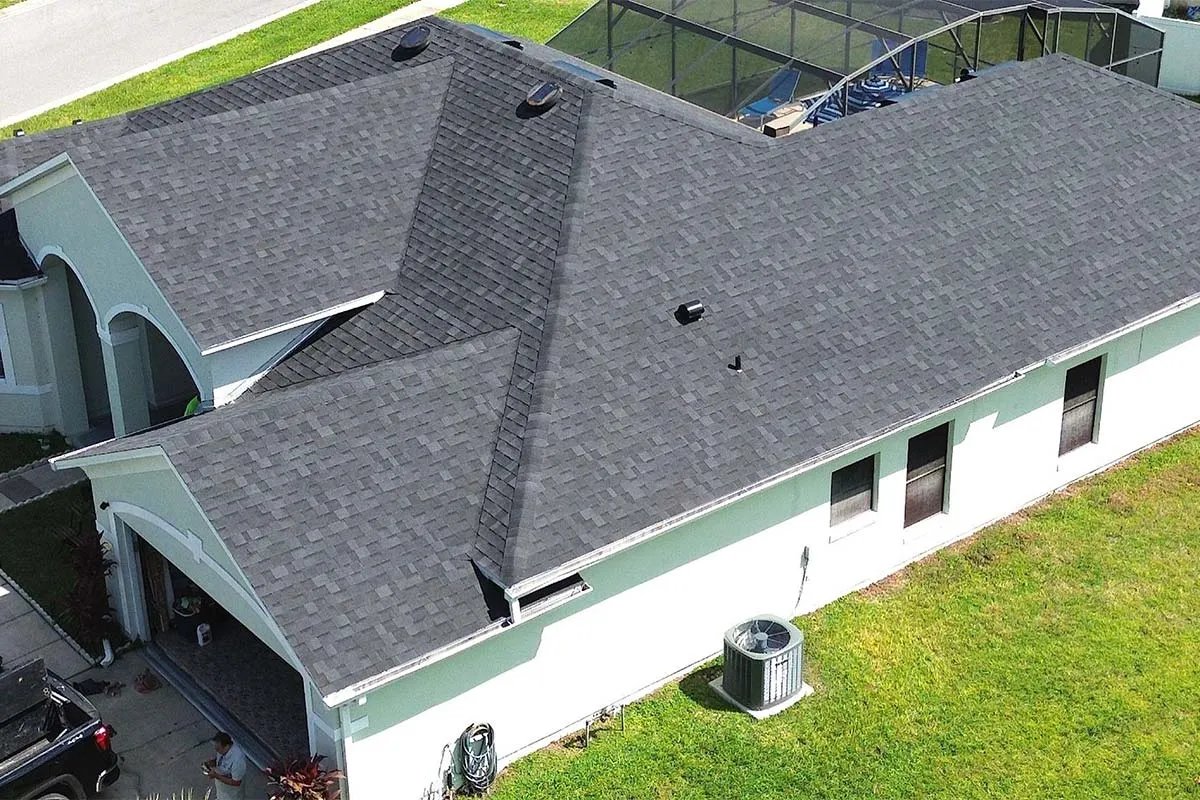
Here is what to look for, sign by sign.
Missing Shingles and Groups of Missing Tabs
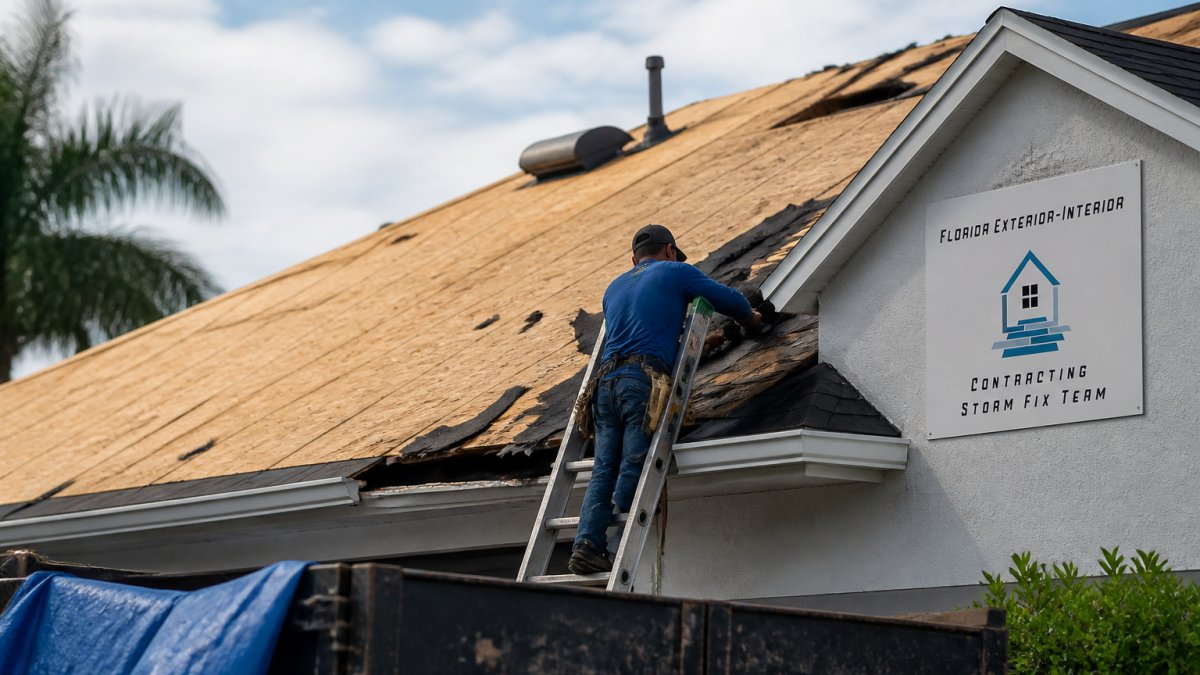
Missing shingles are the easiest sign to spot and the most serious. Wind gets under a shingle edge, peels it back, and tears it free.
Look for:
- Whole shingles gone, exposing the dark underlayment or roof deck
- Groups of missing tabs in a cluster or a line, which points to a wind gust pattern
- Shingle pieces in the yard, driveway, or neighbor's lawn
A single missing tab is a repair. A group of missing shingles usually means the seal on that whole section failed.
Lifted, Loose, Curled, and Flipped Shingle Tabs
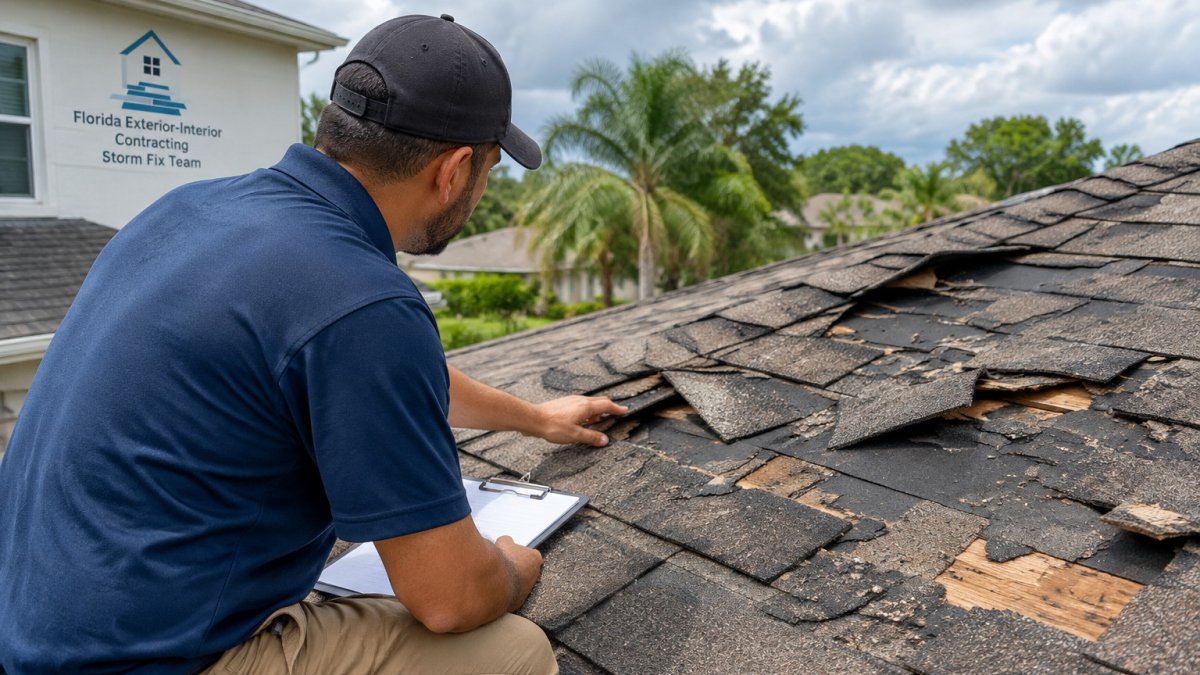
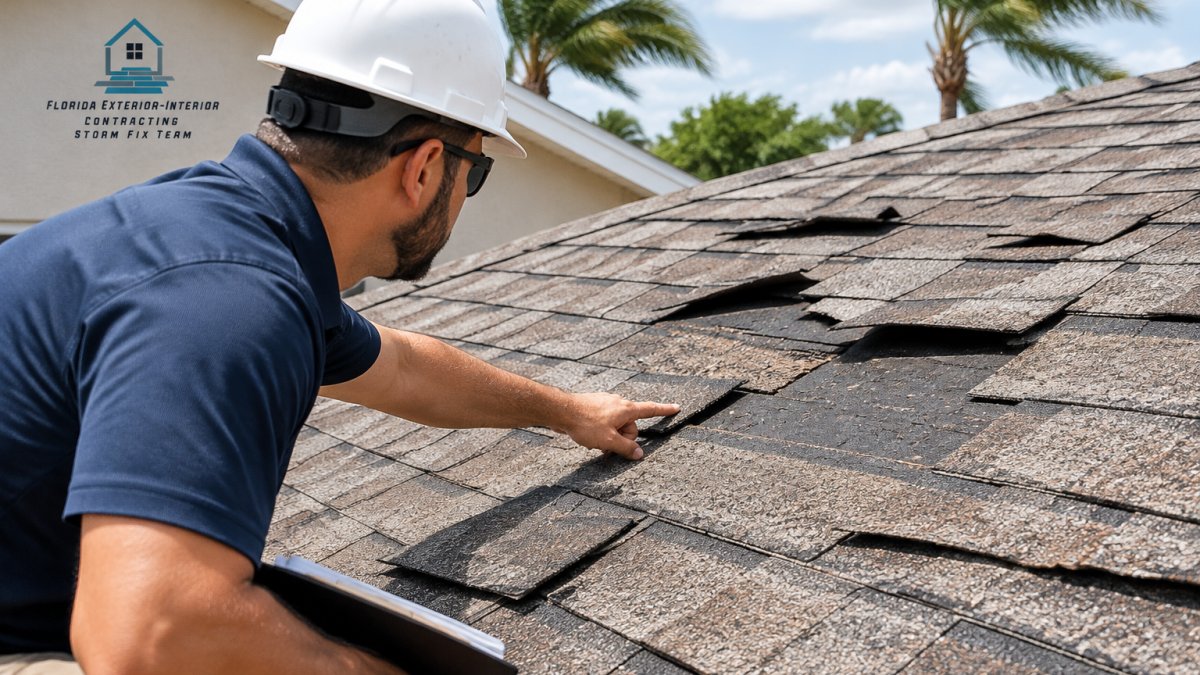
Lifted shingles have lost their seal and raised off the roof surface. They haven't blown off yet, but they will.
From the ground, look for:
- Shadow lines under shingle edges, which mean the tab is raised
- Curled corners where the shingle has started to bend upward
- Flipped shingle tabs, where the tab has folded completely over
Wind-lifted shingles are a warning, not a final verdict. Catch them early and you may be looking at a repair, not a replacement.
Creased, Torn, and Exposed Shingles
Creased shingles have a visible fold line across the tab, usually from wind bending them past their limit. The crease breaks the shingle's structure even if the tab looks flat.
Also watch for:
- Torn shingle edges along the tab lines
- Exposed asphalt where granules have worn or blown away
- Bare roof deck showing through any gap
A creased shingle can look fine from the street and fail within a season. If you see creases, get them looked at.
How to Identify Wind Damage on Roof Shingles Pictures Can Confirm
Photos are the fastest way to confirm what your eyes suspect. When you learn how to identify wind damage on roof shingles, pictures become your evidence file.
Shoot these five frames on every slope:
| Photo | What to Capture | Why It Matters |
|---|---|---|
| 1 | Wide shot of the full slope | Shows overall pattern and location |
| 2 | Zoomed shot of each damaged area | Confirms the specific damage type |
| 3 | Ground-level shot of fallen shingles | Ties debris to the roof |
| 4 | Close-up of granules in gutters | Supports granule loss claims |
| 5 | Interior ceiling stain, if any | Links roof damage to water intrusion |
Take them in daylight with the sun behind you. Turn on location and date stamps in your phone camera settings. Store the originals, and don't edit or crop them.
Wind Damage vs. Aging, Poor Installation, and Other Storm Damage
Not every damaged shingle came from wind. Separating wind damage from wear and installation problems is the difference between a covered claim and a denied one, and it is the step most homeowners skip. Each cause leaves a different pattern, readable from the ground once you know what to look for.
Here is how we sort it out.
Wind Damage: Clustered, Directional, and Edge-First
Wind damage has a signature. It tends to appear in clusters rather than evenly, on the slopes and edges that faced the wind, and on the parts of the roof that catch the most uplift: ridges, hips, rake edges, and the tabs just above the eave.
A useful test is orientation. If the damage is concentrated on one or two slopes and those slopes face the direction the storm came from, wind is the likely cause. If every slope looks equally worn, you are probably looking at age.
Aging: Even, Progressive, and Everywhere
Aging shows up evenly across the whole roof. Granules thin out, shingles curl at the edges, and the surface looks worn everywhere rather than in patches.
A common pattern is a roof past the midpoint of its service life showing uniform granule loss and edge curl on all slopes. That is wear, not a storm, and an adjuster will recognize it quickly.
Poor Installation: Patterned and Predictable
Poor installation shows up in patterns that follow the installer's work rather than the weather. Nails set too high miss the nailing line and let tabs lift in ordinary breezes.
A telltale sign is damage that follows a straight line across a slope or repeats at the same position on every course. Wind does not work in straight lines; installers do.
Hail and Other Storm Damage: Round, Bruised, and Localized
Hail damage leaves round dents and bruised spots where the impact knocked granules loose, not lifted or creased tabs. The bruises often look dark and soft, like a fresh bruise on fruit, and cluster on the slopes that faced the hail.
Watch out: blaming wind for what is really age or installation is the most common self-inflicted wound in a roof claim. An adjuster will spot it in minutes, and it weakens the rest of your claim.
The Quick Differential
When you are standing in the yard trying to decide, ask three questions:
- Is the damage clustered or even? Clustered points to wind or hail; even points to age.
- Is it on one slope or all of them? One or two slopes points to a directional event; all slopes points to wear.
- Are the tabs lifted and creased, or dented and bruised? Lifted and creased points to wind; dented and bruised points to hail.
Write down your answers next to your photos. That record lets a roofer or adjuster confirm the cause quickly instead of starting from scratch.
Flashing, Soffit, Fascia, and Interior Clues
Wind rarely stops at the shingles. It pushes water into places you can't see from the driveway.
Check these four areas:
- Flashing around chimneys, vents, and valleys. Look for lifted metal, gaps, or missing sealant.
- Soffit under the eaves. Look for dents, cracks, or pieces hanging loose.
- Fascia along the roof edge. Look for splits, rot, or sections pulled away.
Water stains on a ceiling are the clearest sign that wind damage has already let water in. That moves your timeline from "soon" to "this week."
Wind Damage Shingles Insurance Claims: How to Document What You Find
Strong documentation is what separates a paid claim from a fight. Most wind damage shingles insurance claims succeed or fail on the homeowner's records, not the adjuster's mood.
Build a claim file with:
- Date-stamped photos of every damaged area
- A written log of what you found and where
- Receipts for any emergency repairs, like tarps
Report the claim promptly. Our team put together a guide on why homeowners insurance denies roof claims that covers the most common reasons a claim gets rejected, so you can avoid them before you file.
Does Wind Damage to Roof Insurance Coverage Apply?
Wind damage to roof insurance coverage usually applies, because most standard homeowners policies list windstorms as a covered peril (Am I Covered?). The catch is in the details.
Coverage often depends on:
- Your deductible, which for wind claims may be a flat amount or a percentage of the dwelling limit
- Your policy form, since some policies handle wind differently than others
- The cause of loss, because wear and poor installation are excluded
Read your declaration page and your policy's exclusions section before you assume anything. If you're unsure, ask your insurer in writing.
Schedule a Professional Roof Inspection
Some damage hides. A ground-level look catches most of it, but a professional inspection catches the rest.
Florida Exterior-Interior Contracting is a veteran-owned and bilingual business with over a decade of hands-on experience in residential and commercial roofing.
If you have questions before you book, our roofing FAQ section answers the ones we hear most. When you're ready, you can get your quote today and schedule an inspection.
Storm season doesn't wait, and neither should your roof. Florida Exterior-Interior Contracting brings over a decade of hands-on experience, direct owner oversight, and bilingual service to every inspection.
Frequently Asked Questions
What does wind damage to roof shingles look like?
Wind damage usually shows up as missing shingles or groups of missing tabs, shingles that are lifted, curled, or flipped, crease lines across a shingle, torn edges, and bare asphalt or roof deck where granules have blown away. You may also find granules collecting in gutters and downspouts. From the ground, look for horizontal lines of damage and shingles that sit higher than their neighbors. Photograph anything you spot before it rains again, since water intrusion can make the damage harder to separate from normal wear.
Can wind lift shingles without tearing them off?
Yes. Wind can break the seal between shingle tabs and the course below without removing them, which is why lifted and loose shingles are so common after a storm. A lifted tab looks raised or wavy instead of flat, and a flipped tab shows its underside. These shingles are still a problem because the broken seal lets water get underneath. If you see lifted or loose shingles, treat them as wind damage even if nothing has blown off yet, and have a professional roof inspection confirm the extent.
Does homeowners insurance cover wind-damaged shingles?
Most standard homeowners policies cover sudden wind damage to roof shingles, but coverage depends on your deductible, your policy terms, and whether the damage is from a covered storm event. Normal aging and wear are typically excluded, which is why documenting the difference matters. Photograph the damage, keep dated notes, and avoid making permanent repairs before the insurer inspects. Rules and policy language vary, so check your own policy and confirm details with your insurer before filing a wind damage shingles insurance claim.
How can I tell wind damage from normal shingle wear?
Normal wear tends to be gradual and spread across the roof: thinning granules, curling edges on sun-facing slopes, and a generally aged look. Wind damage is usually clustered and directional, often on the slopes and edges facing the storm, and can include clean breaks, creases, and missing tabs on otherwise sound shingles. Check the roof age and look at neighboring roofs for comparison. If the pattern is patchy and recent, a professional roof inspection can confirm whether wind caused it.