 How-to
Roof Repair Orlando FL: Costs, Leaks & Storm Damage
Table of Contents
- Roof Repair in Orlando, FL: What You'll Need Before You Call
- Step 1: Respond to an Active Roof Leak Safely
- Step 2: Document Storm Damage Roof Repair in Orlando
- Step 3: Decide Between Repair and Replacement
- Step 4: Understand Roof Repair Cost in Orlando
- Step 5: Read a Roof Repair Estimate Line by Line
- Step 6: Verify Your Contractor and the Warranty
- Common Mistakes Orlando Homeowners Make After Roof Damage
- Frequently Asked Questions
Last Updated: October 4, 2026
Roof Repair in Orlando, FL: What You'll Need Before You Call
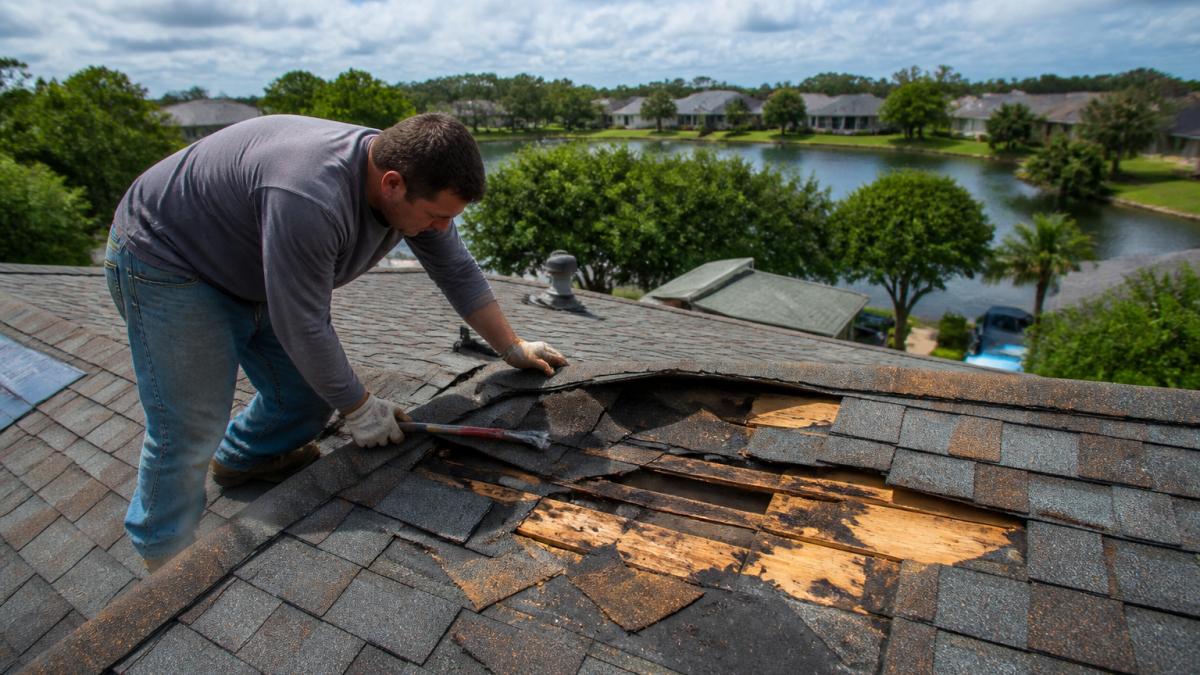
Roof repair Orlando starts before anyone climbs a ladder, with photos, dates, policy numbers, and a written scope of work in hand. At Florida Exterior-Interior Contracting, we've spent over a decade in the industry, watching small leaks become full replacements because nobody documented the damage early. Central Florida storms are hard on asphalt shingles, tile, and metal alike, and the difference between a cheap fix and a five-figure project usually comes down to preparation.
The Documents and Details That Speed Up Any Repair
Before you call anyone, gather six things: the date you first noticed the problem, photos from the ground and attic, your policy number, your roof's approximate age, prior repair receipts, and a record of who you've spoken to.
A common mistake is waiting until the leak is visible inside. By then, water has usually traveled along the decking for weeks. Check the attic after every major storm, even if the ceiling looks dry.
Step 1: Respond to an Active Roof Leak Safely
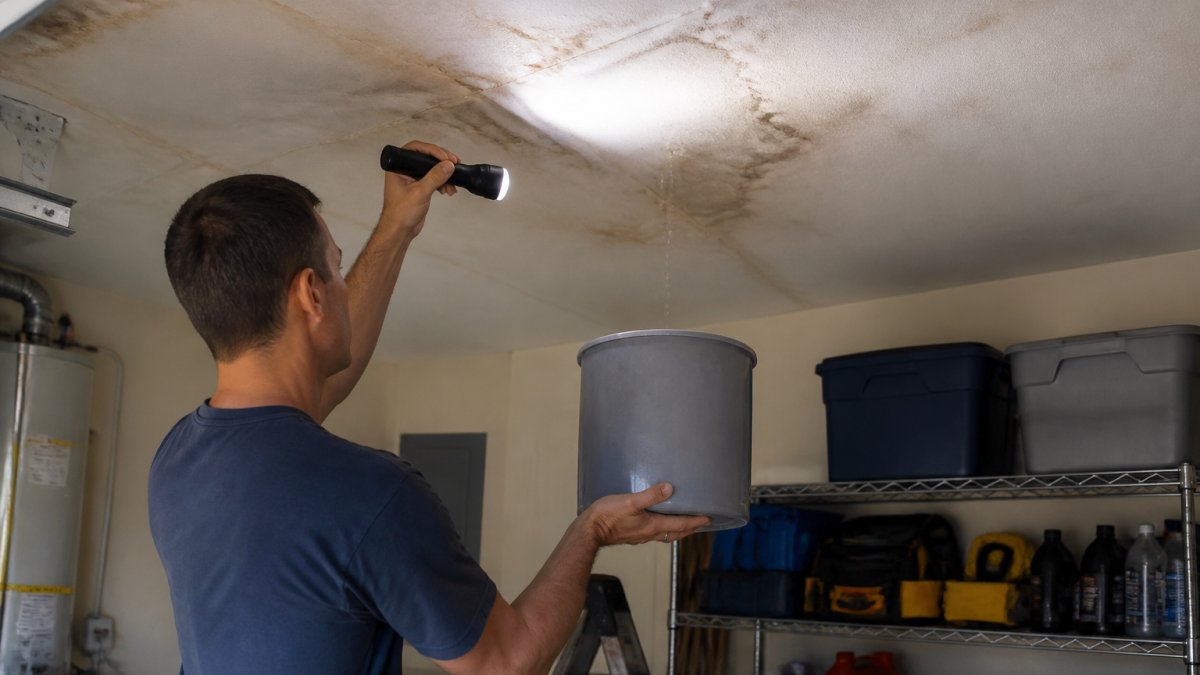
An active roof leak needs three actions in order: contain the water, protect your belongings, and call a licensed contractor. Do not climb onto a wet roof.
What to Do in the First 30 Minutes
- Move furniture, electronics, and rugs away from the drip zone.
- Place a bucket or bin under the leak and lay towels around it.
- Poke a small hole in a bulging ceiling bubble to release trapped water before it spreads.
- Photograph everything before you clean up.
Where DIY Stops and a Licensed Contractor Starts
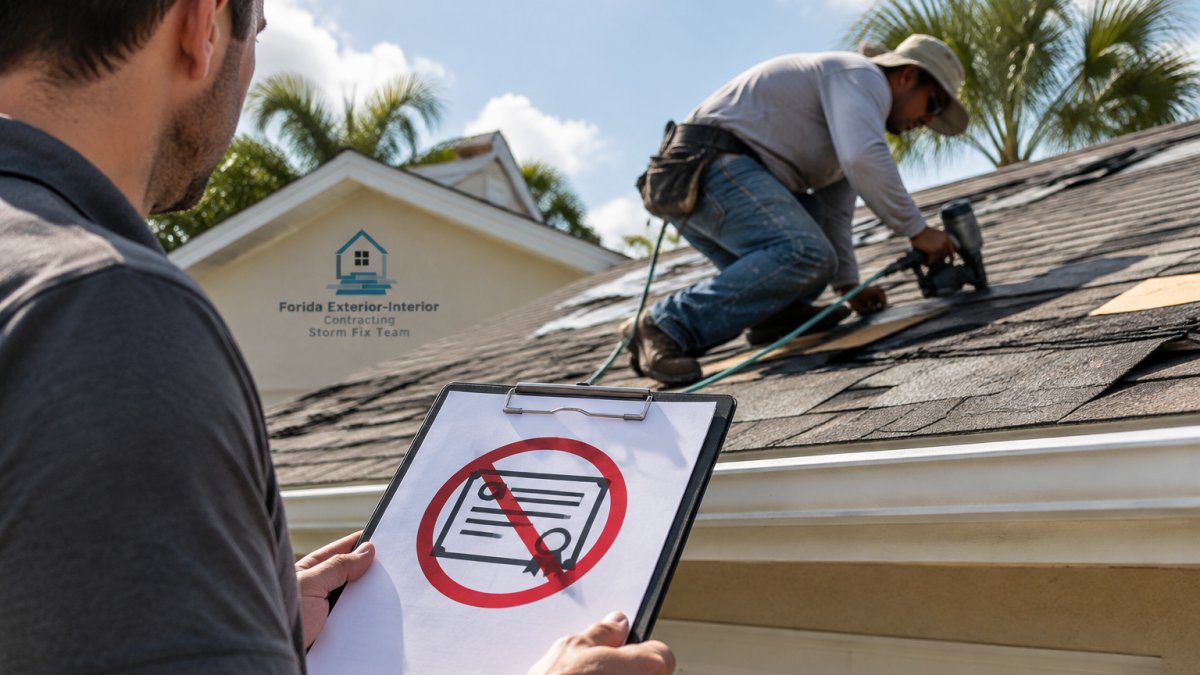
Interior containment is homeowner territory; roof-level work is not. Walking the roof, removing shingles or tile, sealing penetrations, or touching flashing belongs to a licensed contractor. Roofing contractors are required to be licensed and insured, verifiable through the state's Department of Business and Professional Regulation. If someone offers to "patch it real quick" without a license number, walk away.
Step 2: Document Storm Damage Roof Repair in Orlando
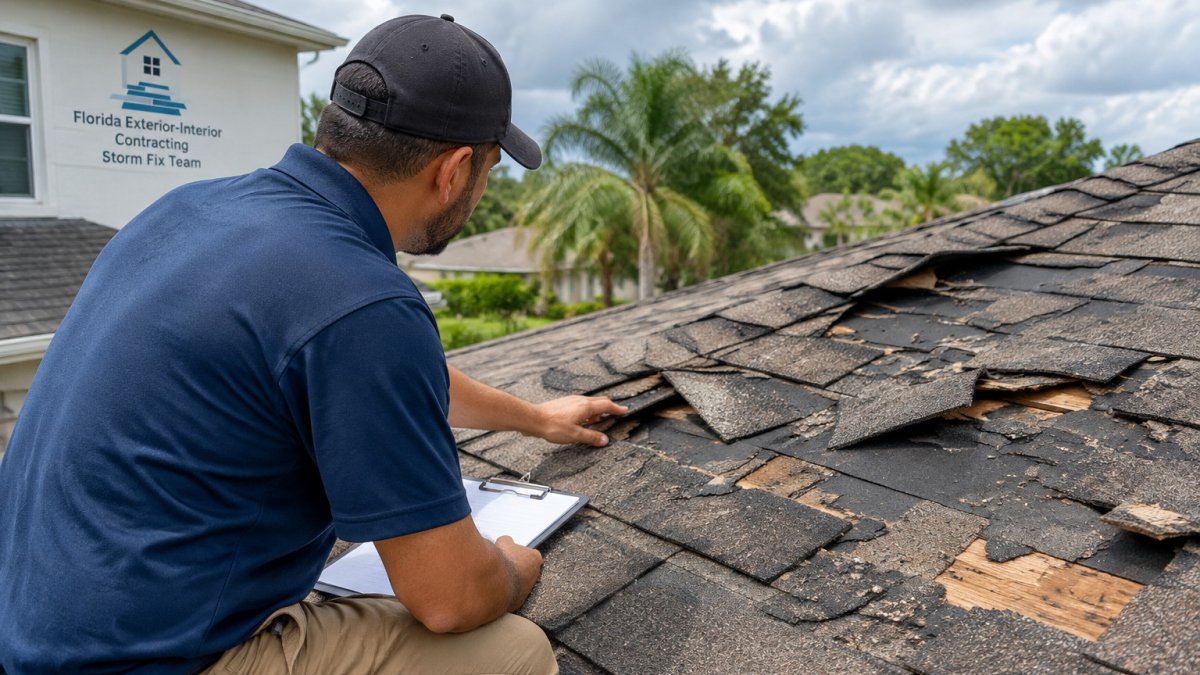
Storm damage roof repair in Orlando lives or dies on documentation. Adjusters work from evidence, and a claim without dated photos, a written timeline, and a contractor's inspection report is easy to deny. Shoot wide roof shots from the ground, then close-ups of missing shingles, lifted flashing, dented vents, and gutter granule loss, noting the storm date and when you noticed each issue.
Wind damage and hail damage look different. Wind tears and lifts. Hail bruises and dents. Both can hide under intact-looking shingles.
Step 3: Decide Between Repair and Replacement
This decision determines whether you spend hundreds or thousands. Here is a framework you can apply before anyone climbs a ladder.
The Four Questions That Decide It
**1.
2. How much of the roof is affected? A single isolated failure, one pipe boot, one cracked tile, one lifted flashing section, is a repair.
3. How many repairs has the roof already had? One repair is normal; three in three years is a pattern.
4. Is the decking sound? This is the one you cannot answer from the ground.
Decision Table
| Situation | Recommended Path | Why |
|---|---|---|
| One leak, roof under 10 years, decking sound | Repair | Localized damage; system has life left |
| Multiple leaks, roof over 15 years | Replacement | Repairs become recurring costs with no end |
| Storm damage on roughly 30%+ of roof | Replacement or large repair | Insurance may cover full replacement |
| Cracked flashing or pipe boots only | Repair | Small, targeted fix |
| Sagging deck or soft spots | Replacement | Structural issue, not surface damage |
| Discontinued tile or shingle with no match available | Replacement (or partial re-roof) | Mismatched repair looks wrong and may not seal |
| Roof already repaired 3+ times in 3 years | Replacement | Pattern of failure across the system |
The Math Most Homeowners Skip
A repair costing a fraction of replacement sounds obvious, until you run it over time. If a roof has five years left and you repair it three years running, the total can approach the cost of a replacement that would have lasted decades. The right question is not "what is cheaper today?" but "what is cheaper per year of remaining roof life?"
When to Get a Second Opinion
Get a second opinion in both directions:
- If a contractor says replace on a young roof with one isolated leak, get another inspection.
- If a contractor says repair on an old roof with widespread damage, get another inspection.
- If a contractor won't put their recommendation in writing with photos, get another inspection.
A written inspection report with photos lets you compare recommendations apples to apples.
Step 4: Understand Roof Repair Cost in Orlando
Roof repair cost in Orlando depends on four variables: what failed, the roof material, how steep and tall the roof is, and how much hidden damage the crew finds once the surface is opened. Here is the breakdown most competitors leave out.
What Drives the Price
- Scope of the failure. A single cracked pipe boot is a one-trip job. A leak running for months may require decking replacement, turning a small repair into a multi-day project.
- Material. Asphalt shingle repairs are the most common and generally least expensive because matching material is stocked locally. Tile and metal cost more because broken or discontinued pieces often must be sourced, and walking a tile roof without breaking more tile takes skill and time.
- Pitch and height. A steep-slope roof requires fall protection, slower movement, and sometimes staging; a two-story home takes longer to access than a single-story one.
- Access. Clear perimeter access and a driveway for a dumpster price lower than landscaping, a pool cage, or a low-voltage wire in the way.
- Permits. Some repairs require a permit and inspection; others do not. Fees and inspection scheduling add cost and time.
Typical Repair Ranges by Issue
| Repair Type | Typical Range | Notes |
|---|---|---|
| Pipe boot / vent boot replacement | Low, single-trip | One of the most common leak sources; usually quick |
| Flashing repair (chimney, wall, valley) | Low to moderate | Cost rises if the flashing has to be custom-fabricated |
| Isolated shingle patch (a few squares) | Low to moderate | Requires matching shingle color and profile |
| Tile repair (broken or slipped tiles) | Moderate | Higher if matching tile is discontinued |
| Metal panel or fastener repair | Moderate | Sealing and re-fastening; panel replacement costs more |
| Flat / low-slope membrane patch | Moderate | Depends on membrane type (TPO, EPDM, modified bitumen) |
| Decking replacement (rotted sheathing) | Moderate to high | Priced per sheet; cost climbs with the square footage affected |
| Large-scale repair (multiple areas) | High | Often approaches replacement cost, see Step 3 |
Why Nobody Should Quote You Over the Phone
A phone quote is a guess dressed up as a price. The honest sequence: free inspection, photos of the actual damage, a written line-item estimate, then a signed scope before work begins. If a contractor refuses to inspect before quoting or pressures you to sign on the spot, get another estimate.
Ways to Keep the Bill Down
- Fix small issues early. A pipe boot that costs little today can become a decking repair if water runs for a season.
- Bundle repairs. If the crew is already on the roof, a second small fix costs far less than a separate trip.
- Ask about financing. Ask about financing options for larger repairs.
- Get the estimate in writing. A line-item estimate protects you against mid-project price changes.
Step 5: Read a Roof Repair Estimate Line by Line
A roof repair Orlando estimate should list materials, labor, tear-off, disposal, permits, and a timeline. If any are missing, ask why, a vague estimate is the biggest source of mid-project price changes.
- Materials: brand, type, and quantity of shingles, underlayment, or membrane
- Labor: number of crew members and estimated days on site
- Tear-off and disposal: how much old material is removed and where it goes
- Permits: who pulls them and who pays
- Timeline: start date, weather delays, completion date
Step 6: Verify Your Contractor and the Warranty
Verify three things before signing: license, insurance, and warranty. Roofing contractors must carry a state license, and legitimate companies carry general liability and workers' compensation insurance.
Warranties come in two layers: the manufacturer's warranty covers materials, the workmanship warranty covers installation.
At Florida Exterior-Interior Contracting, we're a veteran-owned, bilingual team with direct owner oversight on every project. You get the same point of contact from inspection to final walkthrough, in English or Spanish.
Common Mistakes Orlando Homeowners Make After Roof Damage
The most expensive mistake is waiting. A small leak patched quickly is a minor expense; the same leak ignored for a season becomes rotted decking, attic mold, and a full replacement.
Here are the errors we see most:
- Filing an insurance claim before documenting the damage
- Hiring the first contractor who knocks on the door after a storm
- Accepting a verbal estimate instead of a written one
- Skipping the permit because a contractor says it's "not needed"
- Ignoring attic ventilation, which shortens roof life
For property managers handling multiple commercial buildings, the same rules apply at scale: a documented maintenance schedule beats emergency repairs, and commercial roofing systems last longer when small issues are caught during routine inspections.
Storm season doesn't wait for a convenient moment, and neither should your roof repair plan. Our certified professionals handle residential and commercial roofing across Orlando and Central Florida, and we'll tell you honestly whether you need a repair or a replacement.
Frequently Asked Questions
How can I tell whether my roof needs repair or replacement?
Age is the first filter: asphalt shingles in Central Florida often last 15 to 20 years, and a roof past that range with widespread granule loss, curling, or multiple leaks usually points to replacement. Isolated damage, like a few lifted shingles after wind or a single flashing leak, is typically a repair. Ask any roof repair Orlando contractor for a free inspection and a written recommendation that explains the reasoning, not just a verdict.
What should I look for in a roof repair estimate?
A usable roof repair estimate names the materials and quantities, separates labor from materials, states whether permits are included, and lists what is excluded. It should also spell out the workmanship warranty and how long it lasts. If two quotes differ by thousands of dollars, ask each contractor to walk through the scope line by line. Pricing depends on roof size, pitch, material, and access, so treat any quote without an inspection as a guess.
What should I do if my roof is leaking after a storm?
Move valuables and electronics away from the leak, place a bucket underneath, and photograph the ceiling stain or dripping water before it spreads. Do not climb onto a wet roof. Call a licensed contractor for roof leak repair in Orlando and ask them to document the damage while they are on site. Keep those photos, plus receipts for any emergency tarping, because insurers usually want documentation of the damage before repairs begin.
Does homeowners insurance cover storm damage roof repair in Orlando?
Most policies cover sudden damage from wind, hail, or fallen debris, but not wear and tear or neglect. Report the claim promptly, photograph everything before repairs start, and keep a written record of every contractor visit. Florida law requires insurers to give you a reasonable time to document the loss, and a contractor who understands the claims process can help you present a complete picture. Never sign anything that assigns your claim benefits without reading it fully.