 How-to
How to Verify a Florida Roofing Contractor License
Table of Contents
- Step 1: Find the Contractor's License Number
- Step 2: Run a DBPR License Search
- Step 3: Check Florida Roofing Contractor Insurance Requirements
- Step 4: Confirm the License Type Matches the Work
- Step 5: Understand Unlicensed Contractor Penalties
- Red Flags That Signal a License Problem
- What to Do After You Verify
- Frequently Asked Questions
Last Updated: October 3, 2026
Step 1: Find the Contractor's License Number
Knowing how to verify Florida roofing starts with one number. Every licensed roofer in the state carries a license number, and that number is your key to checking everything else.
Ask the contractor for it directly. A licensed roofer will hand it over without hesitation.
Where to find it:
- On the contractor's written estimate or contract
- On their business card or website footer
- On their truck or yard signs
- On any permit application they file
Florida roofing contractors hold a Certified or Registered license through the state. Certified contractors can work anywhere in Florida. Registered contractors are limited to specific local jurisdictions.
Write the number down exactly as given. One wrong digit sends you to the wrong record.
If a contractor gets defensive about that request, that alone tells you something.
Step 2: Run a DBPR License Search
The DBPR license search is the fastest way to check any contractor in the state. The Department of Business and Professional Regulation runs a free public database at Florida DBPR license lookup portal.
Here's how to use it:
- Go to the DBPR license search page
- Choose "Search by License Number" or search by the contractor's name
- Enter the number exactly as written
- Open the matching record and read it carefully
The record shows the license status, expiration date, and any complaints or disciplinary actions. Look for "Current, Active" status. Anything else needs an explanation.
A common mistake is stopping at the name match. Two contractors can share a name. Always confirm the license number matches the one on your contract.
Step 3: Check Florida Roofing Contractor Insurance Requirements
Florida roofing contractor insurance requirements protect you when something goes wrong. A license alone does not cover damage or injury on your property.
Ask for two documents:
- General liability insurance covering property damage
- Workers' compensation covering injuries to crew members
Do not accept a verbal promise. Request a Certificate of Insurance and call the insurer to confirm it is active. Policies lapse, and a lapsed policy leaves you exposed.
If a worker gets hurt on your roof and the contractor has no workers' comp, your homeowner's policy may be on the hook. That is a risk no homeowner should take.
Step 4: Confirm the License Type Matches the Work
A valid license is not enough if it covers the wrong type of work. Florida separates roofing from general contracting, plumbing, and other trades.
Check these details in the DBPR record:
- The license category says "Roofing"
- The scope covers the work you need, like roof replacement or repair
- The license is active for your county
A general contractor's license does not always authorize roofing work. Hiring someone outside their licensed scope can void permits and create insurance problems later.
Step 5: Understand Unlicensed Contractor Penalties
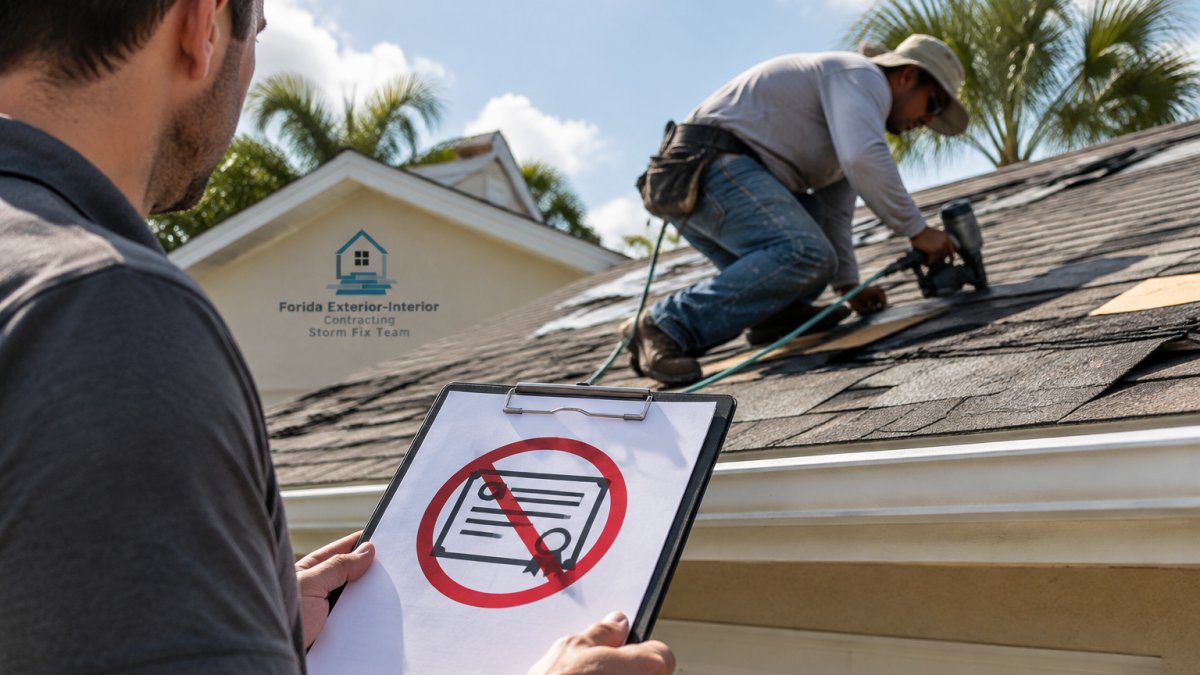
Unlicensed contractor penalties in Florida are serious, and they cut both ways. The state can fine or charge the contractor, but the homeowner often absorbs the real damage.
Unlicensed work can lead to:
- Failed inspections and torn-out work
- Denied insurance claims after a storm
- Trouble selling the home later
- No legal path to recover money paid
Under Florida law, unlicensed contracting is a criminal offense, and homeowners have limited recourse when things go wrong. The Florida Statutes on contractor licensing set out these rules in detail.
The lesson is simple. A cheap bid from an unlicensed roofer rarely stays cheap.
Red Flags That Signal a License Problem
Certain warning signs show up again and again. Watch for these before you sign anything:
- No license number on the estimate or contract
- Pressure to pay a large deposit upfront in cash
- No physical business address, only a phone number
- A DBPR record that shows expired or inactive status
- Refusal to provide proof of insurance
- Door-to-door sales after a storm with same-day signing pressure
Any one of these deserves a pause. Two or more means walk away.
What to Do After You Verify
Once you verify Florida roofing, insurance, and license type, put everything in writing. A clear contract protects both sides.
Your checklist before work begins:
- License number written into the contract
- Insurance certificates on file
- Permit pulled in the contractor's name
- Payment schedule tied to completed milestones
- Written scope of work, including materials
A contractor who pulls the permit in their own name is accountable to the local building department. That is a good sign.
This is where a licensed, veteran-owned team like Florida Exterior-Interior Contracting makes the process easier. We handle permits, provide proof of insurance, and keep the owner involved from start to finish. Our bilingual crew means clear communication for every homeowner, in English or Spanish.
Frequently Asked Questions
How do I check if a roofing contractor is licensed in Florida?
Ask the contractor for their license number, then look it up on the Florida Department of Business and Professional Regulation (DBPR) website. Enter the number or the contractor's name in the license search tool. The results will show whether the license is active, the license type, the expiration date, and any disciplinary history. If the contractor cannot provide a license number or the search returns no results, do not hire them.
What is the official website to verify a Florida contractor license?
The official source is the DBPR license search at the Florida Department of Business and Professional Regulation website. You can search by license number, contractor name, or business name. The DBPR database is the state's authoritative record for contractor licensing. Third-party review sites may show outdated information, so always confirm directly through the DBPR before signing a contract.
What happens if I hire an unlicensed roofing contractor?
Hiring an unlicensed contractor in Florida carries serious risks. You may have no recourse if the work is defective, your homeowner's insurance could deny a claim for damage caused by unpermitted work, and you could be held liable for injuries that occur on your property. Florida law also allows penalties against unlicensed contractors, including fines and potential criminal charges. Always verify the license before any work begins.
How can I tell if a roofing contractor is insured?
Ask the contractor for a Certificate of Insurance showing general liability and workers' compensation coverage. Call the insurance company listed on the certificate to confirm the policy is active and covers roofing work. Florida roofing contractor insurance requirements mean a legitimate contractor should carry both types of coverage. If the contractor cannot produce a certificate or the insurer cannot confirm the policy, treat it as a red flag.
Verifying a license takes ten minutes and can save you thousands. At Florida Exterior-Interior Contracting, we make that easy with a veteran-owned team, direct owner oversight, and bilingual service across Orlando and Central Florida. We provide our license number, insurance proof, and permits upfront, and we build durable, code-compliant roofs designed to handle harsh weather. Get started with Florida Exterior-Interior Contracting and hire a roofer you can actually check out.